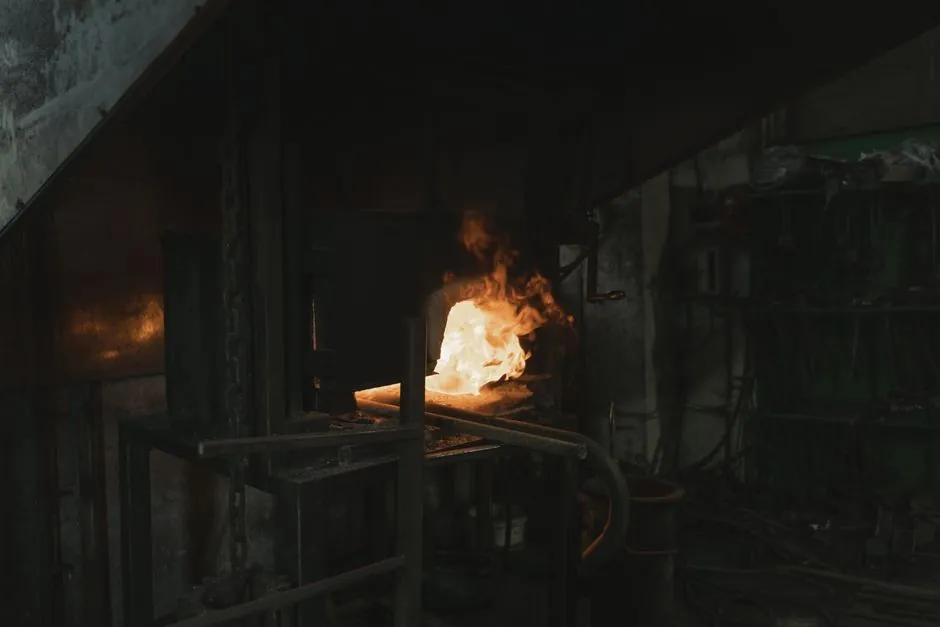
Specifying a heat treatment furnace for a telecom enclosure is a low-temperature, high-uniformity problem: outdoor cabinets, RRU housings, and small-cell chassis undergo bake-out, conformal-coat cure, and solder-joint stress relief in the 60-250 °C window, not the 1100-1500 °C window of a metal-melting furnace [S5].
The dominant equipment class for that window is a box-type resistance muffle furnace, sized from 15 kW/80 kg (model RX3-15-9) up to 115 kW/1000 kg (RX3-115-12), with rated top temperatures of 950 °C or 1200 °C and a 380 V three-phase supply [S1]. The 950-1200 °C ceiling is a safety headroom for the heating element, not the setpoint an enclosure line should ever run at.
Why a Telecom Enclosure Line is Not a Heat-Treat Line in the Metallurgical Sense
Telecom enclosures are usually die-cast Al-Si (A380, A383) or extruded aluminium, and their thermal work is post-casting stress relief, paint cure, and conformal-coat cure, which a 250 °C forced-air oven handles [S4]. The metallurgical quench/temper operations that justify a 1200 °C chamber furnace (model RX3-45-12 at 45 kW, 950 × 450 × 350 mm chamber, 200 kg max load [S1]) belong in aerospace, automotive, and tool-and-die plants, not on a telecom enclosure finishing line.
Engineers who arrive at "heat treatment furnace" for an enclosure are usually solving for one of three real jobs: moisture drive-off after humidity exposure (per ETSI EN 300 019-1-4 class 4.1/4.2), gasket cure for EMC gaskets at 150-200 °C, or solder-joint stress relief for IP55-IP66 cabinet sub-assemblies [S5]. All three sit below 250 °C, so the heater is oversized headroom rather than the active control range.
Specification Gates That Actually Matter for an Enclosure Bake-Out Furnace
Four specification gates separate a usable enclosure oven from a lab muffle furnace: chamber volume matched to pallet size, temperature uniformity, atmosphere control, and ramp rate. A 600 × 500 × 600 mm (W × D × H) SUS304 chamber with ±3 °C uniformity at a 400 °C platform and ±1 °C stability is the published benchmark for electronic-component rapid-annealing work and translates cleanly to small telecom sub-assemblies [S3].
For uniformity at lower temperatures, Hangzhou-style box resistance furnaces quote ±5 °C across the chamber depending on chamber size, with a 30-segment program profile, a 1 °C/h to 40 °C/min heating rate, and an S-type platinum-rhodium thermocouple covering 0-1700 °C [S2]. A double-layered air-cooled shell keeping the case below 50 °C is a useful safety gate for a clean-room enclosure line.
Heater power density should land in the 1-5 W/L range for a cabinet oven, not the 100+ W/L of a small induction crucible, because conformal-coat and silicone-gasket chemistries cannot tolerate the radiative flux a high-density lab muffle delivers [S5]. The 75-150 kW power band documented for industrial heat treatment in CNFX catalogue lines, paired to 5-15 m³/h cooling water flow, is sized for 950-1200 °C metallurgical duty and is excessive for an enclosure bake-out [S6].
Chamber Furnace vs Muffle Furnace vs Box Resistance: A Decision Map
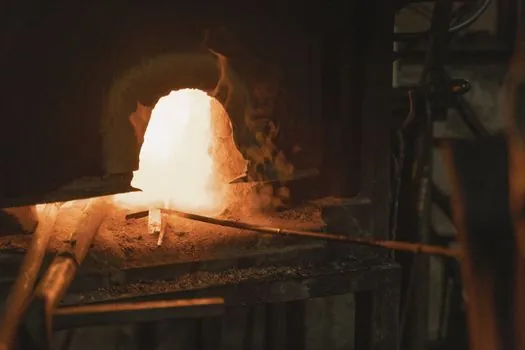
Three equipment names float around enclosure procurement, and they describe overlapping rather than identical machines. A chamber furnace is a generic box with a swing or lift door used for quench/temper/anneal in air; a muffle furnace isolates the work from the heating element with a ceramic shell for cleaner atmosphere; a box-type resistance furnace is the Chinese-market synonym that can be either, depending on lining [S7].
For telecom enclosure duty, the muffle-furnace variant is the safer buy: the ceramic shell keeps heating-element volatiles off the PCBAs and gaskets, the lining is typically full-fiber zirconia composite, and the standard package includes a K-type or S-type thermocouple, PID control with over-temperature alarm, and a 1-year warranty excluding the heating element [S2]. Large box-type muffle furnaces are explicitly sold for metal-part annealing, powder sintering, and brazing at low cost and high throughput, which is the right economic tier for an enclosure line running under 250 °C [S9].
For a rapid-annealing or drying-only duty, a 450 °C electric holding furnace (model HRF180-05, drawer-style tray, 50 sets/year supply capability) is the correct shape, with 400 °C rated, 450 °C max, and a 600 × 500 × 600 mm effective chamber for small batches [S3]. That hardware is closer to what a conformal-coat cure line actually needs than a 1200 °C metallurgical chamber.
Control, Communication, and Options That Buyers Miss
Standard controllers on Chinese box resistance furnaces are PID with on-board setpoint display, but the options list on the Hangzhou AS-1400 is where telecom buyers should spend their money: RS485 comms, computer control software, a touch-screen controller, a paperless recorder, and a crucibles/corundum-pad set for fixturing [S2]. RS485 plus a paperless recorder is the minimum bar for an ISO 9001 enclosure line that needs to prove cure profiles to auditors.
An exhaust port is also an option, not a default on every box resistance furnace, and it is mandatory for any conformal-coat or silicone-gasket cure line where solvent vapours need to be vented. Forced-air cooling on the double shell is standard on the 1400 °C-class machines, but for 200-250 °C enclosure duty a passive exhaust plus a small extractor fan on the roof is sufficient [S2][S9].
Sizing the Furnace to the Enclosure Line, Not the Catalog
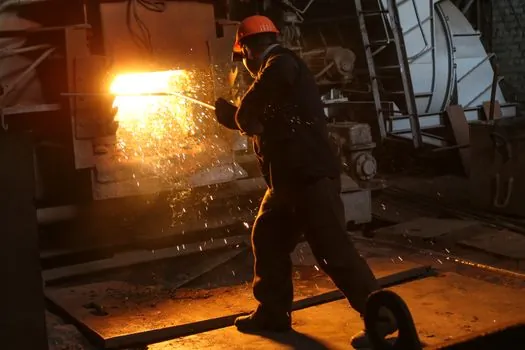
The catalog is full of large box resistance furnaces with 1200 °C ratings, but telecom lines run at 150-250 °C, so the right sizing rule is chamber volume matched to the largest sub-assembly plus 25-30 % clearance, not chamber volume matched to the maximum load. The RX3-75-9 at 75 kW with a 1800 × 900 × 550 mm chamber and 1200 kg max load is sized for batch metallurgical work, and most enclosure lines will sit between RX3-15-9 (15 kW, 80 kg) and RX3-30-9 (30 kW, 200 kg) [S1].
Power consumption should be modelled against 1.0-1.6 MPa cooling-water supply (if water-cooled) or 380 V AC three-phase at 50/60 Hz, and a temperature-control accuracy of ±1 °C is achievable only with an advanced PID loop on a small chamber, not on a 1200 kg metallurgical bath [S6]. For a 200 kg-class enclosure oven, expect 20-30 kW connected load and a single-phase 380 V tap, not the three-phase 75-150 kW seen in heavy-industry datasheets.
Common Selection Errors and Failure Modes
Three errors recur in enclosure-furnace procurement: specifying a 1100-1500 °C crucible or induction melting unit for a cure duty, omitting atmosphere control for solvent-baring coatings, and under-sizing the heater so a cold start cannot reach the cure setpoint inside a shift. The first error is a category mistake: a 1400 W induction gold-melting crucible with a 2-3 kg graphite pot has no defined role in an IP55-IP66 outdoor cabinet line and will destroy any polymer it touches [S5].
The second error shows up as cloudy or under-cured conformal-coat films, because solvent vapour needs forced exhaust or N2 purge, not just a hot box. The third error shows up as a 4-hour ramp to 180 °C on a 200 kg chamber with a 15 kW heater, which is too slow for a single-shift production schedule and signals undersized heating element banks.
Standards, Sourcing, and Lead-Time Reality
Relevant codes are AMS 2750E for process furnace calibration discipline and ISO 5208 for pressure-test validation of any sealed-joint enclosure that comes out of the oven, not for the furnace itself [S6]. For the enclosure itself, ETSI EN 300 019-1-4 classes 4.1 and 4.2 define the non-condensing and condensing environmental envelopes that drive the bake-out and humidity-drive-off cycle in the first place [S5].
For buyers comparing heat treatment furnace lines to enclosure-focused holdings, the electronics housings spec map covers the same chamber-and-muffle architecture at PCB-scale. Procurement windows on Chinese OEM build-to-order box resistance furnaces sit at 1-2 months for standard ratings, with FOB pricing clustered around 15-115 kW sizes; payment is normally L/C or T/T, and the heating element is the standard warranty exclusion [S2][S4]. Verify in writing that the quoted chamber is the effective (internal) chamber, not the outer shell, and that the ±3-5 °C uniformity figure is at the cure setpoint, not at full rated top temperature.
The underlying component specifications are covered under ballast water treatment, and heat detector.