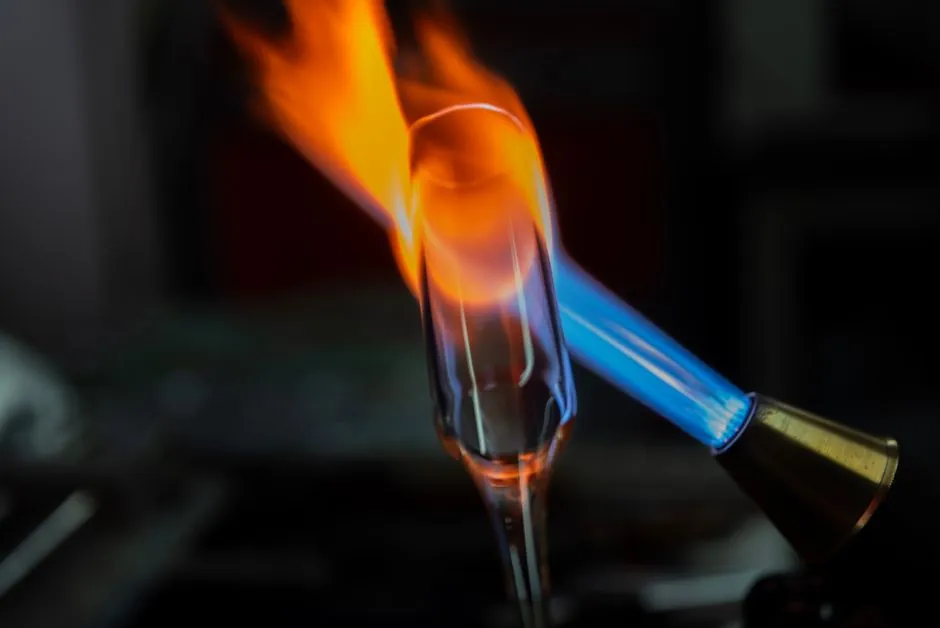
For hardware plants specifying a heat treatment furnace, the binding constraints in 2026 are workload chemistry, atmosphere purity, refractory zoning, and verified control logic, not generic temperature range claims [S1][S2][S3].
Forging furnaces for steel operate between 1,205-1,315°C (2,200-2,400°F), versus vacuum graphite hot zones that sustain up to 3,000°C in inert gas, so a single furnace class cannot cover both forming and high-purity heat treating [S4][S5].
Workload-driven furnace class selection
SECO/WARWICK frames furnace selection as a function of the customer's charge, i.e. the metal product to be heat treated, which then drives technology, process recipe, and safety class, with vacuum, atmosphere, and melting furnaces each requiring distinct automation logic despite similar hardware structure [S1]. Sławomir Wachowski, Director of the Automation Division at SECO/WARWICK, states: "vacuum heat treatment furnaces are programmed quite differently from equipment used for aluminum processing or vacuum metallurgy, despite having a similar hardware structure" [S1].
IQS Directory separates the temperature envelope cleanly: industrial ovens cap at 121-482°C (250-900°F), while industrial furnaces routinely exceed 1,093°C (2,000°F) and reach 1,649°C (3,000°F) in the heating zone, the threshold that defines whether a piece of equipment belongs in a hardware plant at all [S2]. For hardware work that sits below the forging envelope (e.g. annealing, tempering, stress-relief after machining), a batch or continuous box furnace sized 800-1,100°C is typically the cost-effective match; for surface hardening of fasteners and bolts, a sealed-quench atmosphere furnace with endothermic gas generator is the conventional spec [S2].
Atmosphere, vacuum, and graphite hot-zone trade-offs
Atmosphere control is the second gate, and IQS Directory flags it as one of three primary selection variables alongside process uniformity and temperature control precision [S2]. For carbon-steel hardware that cannot tolerate decarburization, a vacuum furnace with graphite hot zone is the prevailing spec: graphite maintains structural integrity up to 3,000°C in vacuum or inert gas because it sublimates rather than melts, and it tolerates rapid quench and heat cycles without cracking [S5].
The hot zone is not a single graphite part but a system: graphite heating elements carry the electrical load, graphite felt insulates the chamber, and graphite fixtures, racks, and retorts hold the workpieces during brazing, sintering, or annealing [S5]. The hard limit is oxidation: if air ingresses above roughly 400°C, graphite burns and the element fails, so vacuum integrity and inert backfill are safety-of-process requirements, not optional refinements [S5]. For a hardware plant running stainless or aerospace-grade fasteners, the same logic applies, but leak-rate acceptance criteria tighten and purity-grade graphite felt (low ash, low sulfur) is typically specified to avoid surface contamination [S5].
Refractory zoning for the working, permanent, and insulating layers
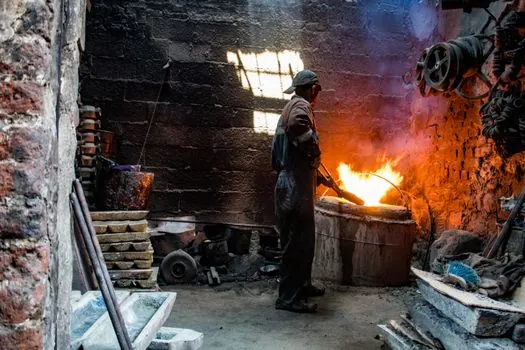
Refractory selection is the third gate, and Highland Refractory describes a three-layer zoned lining: working lining (hot face) takes direct flame, slag, and abrasion; permanent lining (safety lining) catches any breach; insulating lining (cold face) cuts shell heat loss [S3]. High-alumina bricks with 48% to over 90% Al₂O₃ content withstand up to 1,750°C (3,182°F) and are the standard workhorse for structural arches, burner blocks, and blast-furnace working linings [S3].
Monolithic refractory castables are gunned or cast into place and are the preferred repair material for worn linings because they eliminate brick-layer joints that would otherwise open under thermal cycling [S3]. For hardware furnaces that cycle daily between 200°C and 1,050°C, the castable-versus-brick decision is driven by geometry: complex burner ports, door sills, and charge-carrier rails favor castables; large flat roofs and walls favor brick for stability [S3]. Ceramic fiber covers the cold face where thermal conductivity matters more than compressive strength, and it is the typical choice behind the permanent lining in electrically heated batch furnaces [S3].
Forging versus heat-treating furnace distinction
Epcon Industrial Systems' 2026-06-30 reference draws a hard line between a forging furnace and a heat-treating furnace: a forging furnace delivers high, sustained heat and rapid, uniform through-heating so billets reach plastic state, typically 1,205-1,315°C (2,200-2,400°F) for steel, while a heat-treating furnace targets specific metallurgical phase changes at lower, more controlled setpoints [S4]. Fuel choice (coal, natural gas, propane, or electric induction) drives both emissions profile and heating rate, and induction is now common in hardware plants for its precision, cleanliness, and faster cycle time relative to gas [S4].
For hardware manufacturers that need both capabilities, the practical split is a forging furnace feeding a press, then a separate batch or continuous heat-treat furnace for normalizing, annealing, or tempering downstream; combining both into one furnace compromises both, because the thermal mass and atmosphere control needed for forging are wrong for tight-tolerance heat treat [S4]. Epcon's reference, drawn from 4,500+ installed process heating systems over 48 years, treats the two as separate process steps in automotive, aerospace, construction, and tool-room workflows [S4].
Digital-twin commissioning for control-software risk reduction
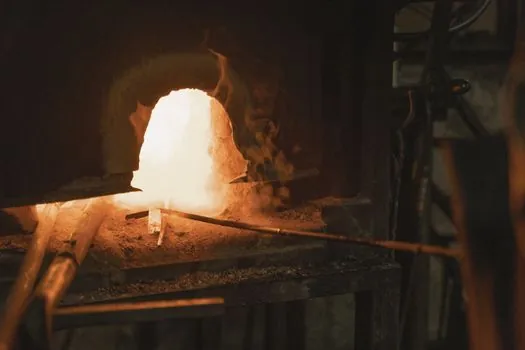
The fourth 2026 gate is verification of automation logic before the furnace leaves the factory. SECO/WARWICK uses Siemens SIMIT to build digital twins of vacuum, atmosphere, and melting furnaces, runs full cabinet-test simulation via SIMIT Unit, and uses Simcenter Amesim for vacuum-pump sizing on advanced models [S1]. Radosław Gorowy, Digital Modeling and Simulation Engineer at SECO/WARWICK, explains: "many of these issues only became apparent during testing and commissioning, that is, in the final stage, when the equipment had already left our facility," a problem the digital twin was introduced specifically to catch upstream [S1].
For a hardware plant procuring a new line, the practical spec is to require evidence of cabinet-level simulation and pump-system sizing as a FAT deliverable, not an optional service [S1]. A related synthetic-resin selection guide for energy equipment covers the complementary material decisions around chemical resistance, and a heat treatment furnace spec map for automotive parts details the parallel gates for higher-volume carbon-steel components.
Criteria-based comparison of furnace classes for hardware work
Across the four main furnace classes a hardware plant will compare, the decision matrix lines up as follows: (1) Box/batch furnace, 800-1,100°C, air atmosphere, low capital cost, suited to general annealing and stress relief of carbon-steel parts; (2) Sealed-quench atmosphere furnace, 800-950°C, endothermic or nitrogen-methanol atmosphere, medium capital cost, suited to carburizing and through-hardening of fasteners; (3) Vacuum furnace with graphite hot zone, up to 1,300°C in standard configuration, vacuum or inert gas, high capital cost, suited to tool steel, stainless, and aerospace hardware where decarburization is unacceptable; (4) Induction forging furnace, 1,205-1,315°C for steel, electric, very fast cycle, suited to hot heading of bolts and short-cycle forging [S2][S4][S5].
Selection is therefore not a single question but a stack: pick atmosphere purity first, then temperature envelope, then refractory zoning, then commissioning verification, and only then price [S2][S3]. A 2026 additive-manufacturing material guide is the natural reference for plants that pair a heat-treat furnace with a powder-bed or DED printer, because the same vacuum-and-inert logic governs the debind-and-sinter cycle.
Limitations and failure modes to spec against
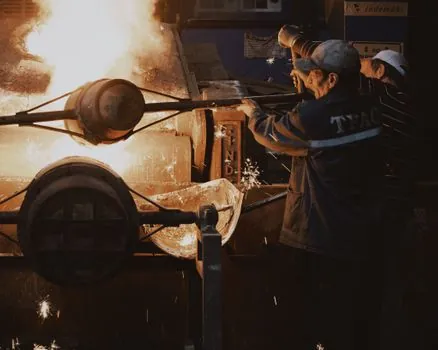
Three failure modes dominate hardware-plant furnace service: graphite oxidation from air ingress above ~400°C in vacuum units; refractory spalling from thermal cycling when the cold-face insulating layer is undersized; and control-software defects that surface only during commissioning, which is exactly the risk class the SECO/WARWICK digital twin was built to retire [S1][S3][S5]. Spec language should require leak-rate acceptance, vacuum integrity test before FAT sign-off, and refractory cold-crushing-strength certificates tied to the working-lining zone, not generic product brochures [S1][S3].
Trackable signals for the next buying cycle: furnace OEMs publishing SIMIT or equivalent digital-twin deliverables as standard FAT scope (not options); refractory suppliers standardizing Al₂O₃ grade and cold-crushing-strength data in digital datasheets; and consolidation of vacuum-furnace safety standards around oxidation-prevention lockouts rather than rely on operator discipline [S1][S3][S5].
The underlying component specifications are covered under architectural hardware.