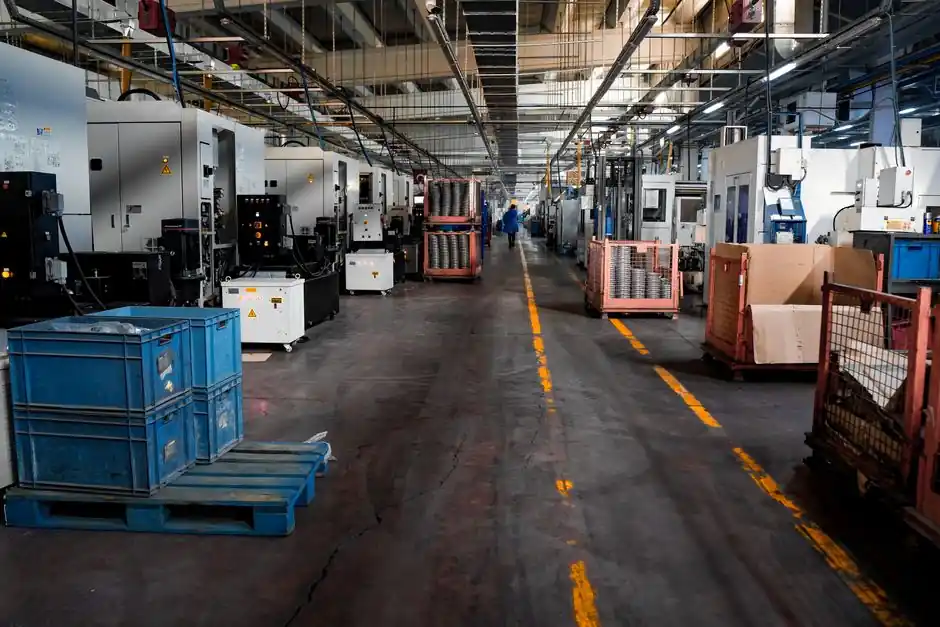
US buyers can pull from more than 4,380 fastener suppliers indexed on Thomasnet and roughly 370 domestic manufacturers producing over 230 million pieces per year, a base wide enough to support nearly every mechanical assembly line [S1][S2].
The four principal product families remain screws, nuts, washers, and bolts, with stainless steel as the default material for corrosion and temperature resistance, plus brass, bronze, titanium, and engineered plastics for specialised duty [S2][S4].
Defining the US Industrial Fastener Supply Base
The Industrial Fasteners Institute (IFI) member directory and the IQS Directory together list hundreds of US-based producers, distributors, and import-relabel operations, with Thomasnet showing 4,380+ active suppliers across all 50 states [S1][S6].
PowerTelcom's industry count of about 370 US manufacturers and over 230 million pieces per year is the most cited domestic-volume figure, though it is now a 2021 baseline and has likely grown with reshoring incentives [S2]. Stainless steel fasteners dominate general-purpose specs, plastic screws are limited to light-duty trim, and cold heading plus thread rolling remain the dominant forming routes because they preserve strength and avoid the oxidation risk of hot working [S4].
Selection Criteria Process and Quality Engineers Should Apply
A spec-first fastener audit lines up four decision gates: material and grade declaration, dimensional standard (ASME, ASTM, DIN, ISO, or proprietary), traceability documentation, and supply reliability measured on on-time delivery and Mill Test Report (MTR) availability [S2][S3].
For critical-service buyers, ASME/ASTM/ISO conformance is non-negotiable. National Bolt & Nut, for example, manufactures to ASME B18, ASTM A193/A320, DIN, and ISO 898-1 classes, with material traceability backed by an ISO-compliant quality program, a baseline most petrochemical and energy OEMs demand [S2]. Plastic fasteners are restricted to low-load trim because their creep and temperature ceilings are far below those of cold-worked steel [S4]. For buyers mapping fastener sourcing to adjacent MRO spend, this impact drill spare parts shortlist shows the same part-level traceability logic applied to rotating-tool consumables.
Comparison: Top US Industrial Fastener Manufacturers, 2026
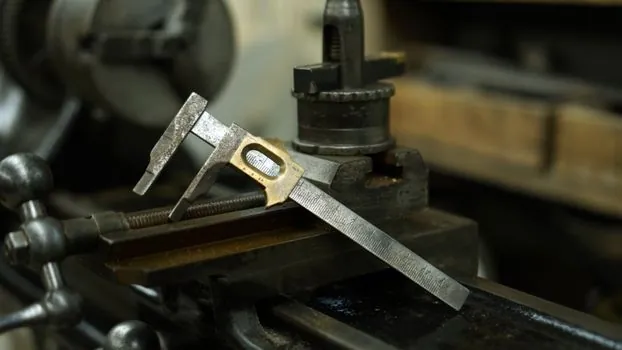
The 2026 shortlist, drawn from the Thomas Publishing, IQS, Federal Group, and Haizol industry rankings, sorts the main contenders against four decision criteria: standard coverage, specialisation, traceability, and global reach [S1][S4][S5][S7].
The Federal Group USA, Threaded Fasteners, T&Y Hardware Industry, Birmingham Fastener, and MW Components lead the domestic mid-market for general bolt and screw volume, while Penn Engineering dominates precision engineered fasteners (PEM self-clinching, micro-pitch, and sheet-metal captive hardware) [S5]. On the specialty side, National Bolt & Nut covers large-diameter non-standard bolts for mining, rock crushing, and petrochemical service; KD Fasteners serves metric and custom lots; and Dale Fastener Supply runs as an authorised stocking distributor for Unbrako, Flexloc, SPIROL, and Simpson Strong-Tie brands [S2]. Globally, Bufab, CSG, Shanghai Shengsheng, and Shenzhen Full Linking handle export-scale volume and just-in-time kitting for OEM and tier-one customers [S3][S7].
Material and Standard Map Buyers Should Pin to the PO
Steel grades below SAE J429 Grade 5 (roughly 120 ksi / 827 MPa ultimate) cover general assembly, while Grades 8, 8.2, and ASTM A193 B7/B16 cover high-temperature and pressure service up to about 450 degC; ASTM A320 L7/L43 is the standard pick for low-temperature cryogenic bolts down to roughly minus 196 degC [S4]. Stainless 18-8 (A2) and 316 (A4) dominate corrosion-resistant specs, with 316 specified where chloride exposure is sustained [S2][S4].
On the metric side, ISO 898-1 property classes 8.8, 10.9, and 12.9 map closely to the SAE J429 strength ladder, and DIN 976 covers stud bolts. Plastic screws, typically nylon 6/6 or PEEK, are limited to roughly 80-100 degC continuous and low-load trim, well below the 400 degC-plus ceiling of stainless A4-80 [S4]. For buyers cross-checking fastener sourcing against adjacent MRO spend categories, the lithium battery procurement workflow and cobalt sulfate shortlist use the same spec-first gate logic on materials traceability.
Who This Shortlist Is For, and Where It Falls Short
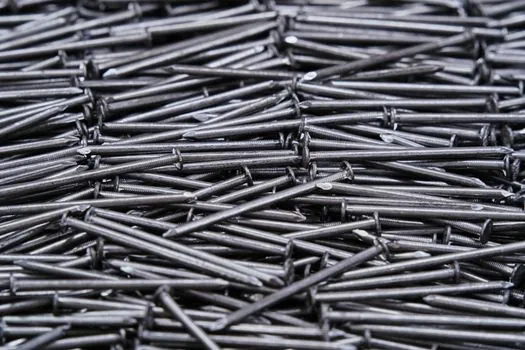
Standard hex bolts, cap screws, U-bolts, studs, and washers in steel and stainless are widely covered by the named suppliers with on-time delivery rates in the 95-99 percent range on catalogue SKUs [S1][S2][S3]. Buyers needing traceable MTRs, custom exotic alloys (Monel, Inconel, titanium Gr2/Gr5), or NACE MR0175 sour-service compliance should default to specialty shops such as National Bolt & Nut or to IFI members that publish material declarations lot by lot [S2][S6].
The shortlist is weaker for high-volume JIT kitting to overseas assembly plants, where European distributors (Bufab, CSG) and Chinese exporters (Shanghai Shengsheng, Shenzhen Full Linking) carry the volume and EDI/VMI tooling, and for Mil-spec aerospace hardware, where domestic QPL-listed suppliers or OEM-licensed sources remain the only accepted route [S3][S7]. Plastic fastener sourcing for chemical exposure is also thin: the IQS Directory and IFI members cover nylon, PEEK, and PVDF basics, but chemical-resistance vetting has to be done application by application because no single distributor carries the full polymer matrix [S4].
Standards and Compliance Anchors to Demand on the PO
Every critical-service PO should reference the controlling dimensional standard, the material specification, and the inspection regime. ASME B18.x covers inch-series bolts, screws, and nuts; ASTM A193/A320 cover alloy and stainless bolting for pressure and temperature service; ISO 898-1 and ISO 3269 cover metric mechanical properties and acceptance inspection; and DIN 976 covers stud bolts [S2][S4]. For sour-service oil and gas, NACE MR0175 restricts hardness to roughly 22 HRC max for carbon and low-alloy steels, and FEA/FFA fatigue data is required for cyclic-loaded joints.
Quality clauses to include: MTR per heat lot, 100 percent dimensional check on first article, AQL 1.0 sampling per ISO 3269 on production runs, and a Certificate of Conformance traceable to the heat number [S2][S3]. The IFI member directory is the cleanest cross-check that a supplier is bound to the IFI Fastener Quality Act and current ASTM/ASME standards [S6]. Buyers running parallel industrial procurement programs will recognise the same spec-first logic in the SCADA procurement playbook.
Verification Signals and Trackable Next Nodes
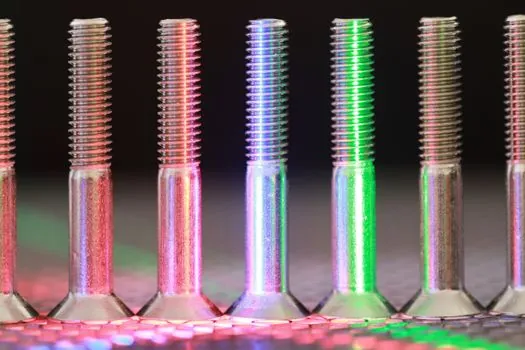
Two signals are worth tracking into late 2026: the Industrial Fasteners Institute's quarterly shipment and member count, which tracks domestic reshoring momentum, and the ASTM F16 / IFI Mechanical and Corrosion Test committee ballots, which usually land revised acceptance criteria each Q3 [S6]. Buyers can also audit any shortlisted supplier against the IQS Directory's manufacturer profile page, the IFI membership roster, and the supplier's own AS9100, IATF 16949, or ISO 9001 certificate scope before issuing a PO [S4][S6].
For high-mix assembly lines, the lowest-risk next step is to qualify two suppliers per critical part number, one domestic specialty shop for traceable lots and one global distributor (Bufab, CSG, or a Haizol-listed Chinese OEM) for volume and price, then split orders 60/40 and rebalance after four quarters of on-time delivery data [S3][S7].
For component-level specifications, see construction machinery and equipment, lamps and light fittings, and lighting equipment and electric lamps.