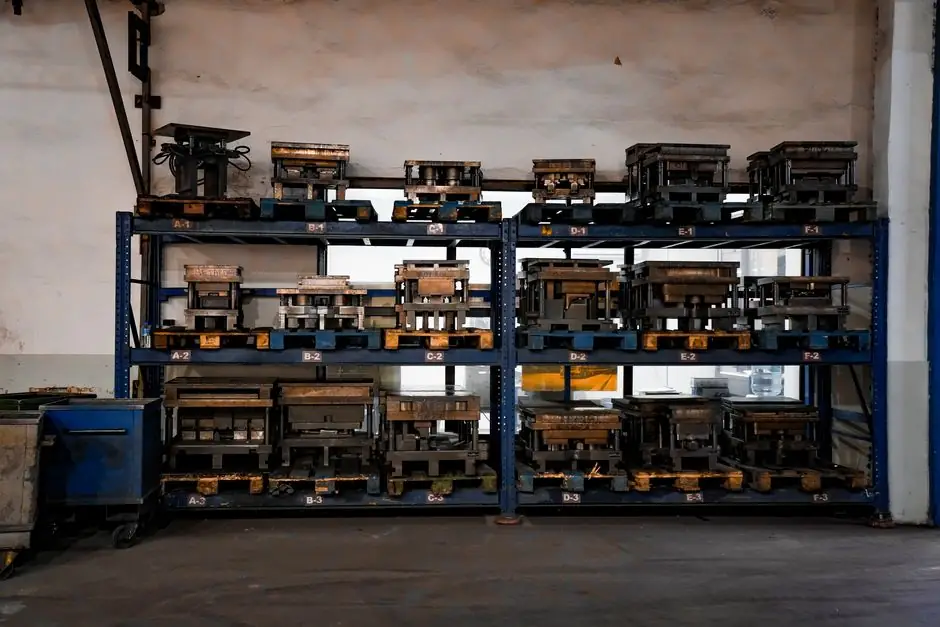
A die casting die is a hardened tool-steel mold that receives molten non-ferrous alloy at 10-150 MPa injection pressure, and the four engineering decisions that determine whether the tool pays back are steel grade, shot weight versus machine locking force, cooling line layout, and expected shot life [S3][S4].
Die casting produces more castings globally than any other casting process and concentrates on small- to medium-sized non-ferrous parts in zinc, aluminum, magnesium, and copper alloys, with aluminum alloys (AA 380, 383, 384, 386, 390, B390, 360, 413) and magnesium AZ91D being the dominant specification families on the shop floor [S4]. The capital cost of the die and machine is high, which restricts the process to high-volume runs where the per-part tooling amortization stays workable [S4].
Match Die Steel to the Alloy You Pour, Not the Other Way Round
Tool steel choice is the single biggest lever on die life: H13 (DIN 1.2343 / JIS SKD61) is the default hot-work die steel for aluminum and magnesium die casting because it holds hardness through thermal cycling, while a hypereutectic Al-Si alloy like B390 must be held above 1300 degF in the melt and erodes dies roughly 20% faster than the 380 family [S4][S5].
The 380 alloy family (380, 383, 384) is the price-per-pound baseline because it sits naturally in the secondary aluminum recycle stream, fills cavities well, minimizes soldering, and runs at lower melt temperatures than specialty alloys [S5]. When the part will see temperatures above 500 degF, sliding wear, or sustained structural load, the spec moves to a hypereutectic B390 (16-18% Si), where the excess silicon above the 13% saturation point forms primary crystals that act as bearing material; the trade-off is that those same crystals grow above 150 microns if melt handling slips, which destroys machining tools and creates stress risers [S5].
For corrosion-exposed service such as marine pumps and outdoor housings, copper content must be cut, and 360 alloy at roughly 0.6% Cu is the conventional pick, whereas a pressure-tight casting such as a hydraulic valve body points to 413, the Al-Si eutectic that solidifies over the narrowest temperature range and lays down a sound skin against the die surface [S5]. These alloy-driven temperature and chemistry constraints feed back into the die casting die steel selection before any CNC machining time is booked.
Size the Shot to the Machine, Not to the Part
A cold-chamber die casting machine is specified by locking force (tonnage) and shot weight capacity, and a die that overruns the machine's shot volume forces the operator to slow fill, which costs surface finish and porosity; the high-pressure die casting window sits between 1,000 and 20,000 psi (roughly 7-140 MPa) injection pressure with fill speeds of 10-50 m/s [S2][S3].
High-pressure die casting part weight spans from under 1 lb (450 g) to over 30 lb (14 kg) and part length from a few inches to about 60 in (1.5 m), but typical wall thickness is narrow: 0.08-0.16 in (2-4 mm) is the design sweet spot, which is why gating, overflow, and biscuit geometry take up as much die real estate as the cavity itself [S2]. A thin-wall, large-footprint die on an under-tonnage machine is the classic mis-spec; the aluminum die casting machine must be able to hold intensification pressure through solidification, not just at fill.
Hot-chamber machines suit low-melting-point alloys (zinc, magnesium, lead, tin) where the gooseneck can sit immersed in the melt, while cold-chamber machines are mandatory for aluminum and copper alloys because molten aluminum attacks iron and would dissolve a submerged plunger; the die is identical in both cases, but the die casting machine interface (platen size, tie-bar spacing, ejector stroke) constrains die footprint and has to be locked before die design starts.
Cooling, Venting, and Vacuum: What Happens Inside the Cavity
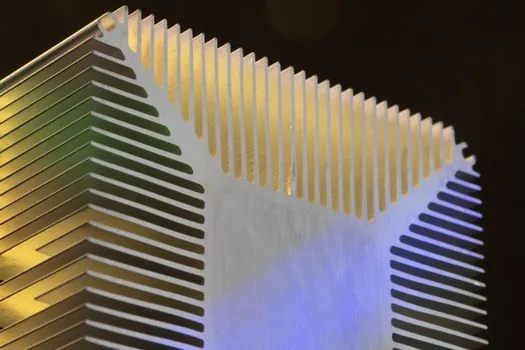
High-vacuum die casting drops die-cavity air pressure to 50 mbar or less (about 5% of atmosphere) by pairing sealed dies with a vacuum pump, which eliminates the air entrapment that would otherwise show up as porosity and reduces oxide inclusions from merging metal fronts [S2]. This is the difference between a structural casting that can be heat-treated and one that cannot, and it dictates whether the die needs vacuum-seal lands on every parting line.
Cooling channels must be laid out so that the solidification front progresses inward toward a thermal center without hot spots, and conformal cooling (printed or machined close to the cavity contour) is now standard for high-pressure die casting dies where cycle time and die life both matter [S2][S5]. For magnesium, the magnesium die casting machine tends to run hot-chamber with shorter cycle times and lower thermal load on the die, but the die still needs the same waterline rigor because magnesium's high thermal conductivity pulls heat out of the cavity fast.
Gravity and low-pressure variants run a much softer thermal profile. A gravity die casting machine typically uses a permanent or semi-permanent metal die with metal poured by ladle or low-pressure feed, the die is simpler (no high-pressure intensification), and tolerances relax accordingly, so the die-buy decision pivots on volume threshold rather than tolerances: under a few thousand parts per year, gravity dies often beat the unit economics of a full HPDC die despite higher per-part labor.
Compare the Die Casting Process Options Against the Real Decision Criteria
The die-cast process family is not interchangeable: conventional HPDC, high-vacuum HPDC, low-pressure die casting, and gravity die casting each fit a different duty, and the table below lines them up against the four criteria a buyer or process engineer actually weighs [S1][S2][S3][S4].
1. Injection pressure: conventional HPDC runs 1,000-20,000 psi (7-140 MPa); low-pressure die casting is roughly one-tenth of that; gravity die casting uses only the head pressure of the metal itself, on the order of 0.05-0.10 MPa. 2. Tolerance capability at 25 mm feature size: HPDC holds about plus or minus 0.050 mm while investment casting holds plus or minus 0.250 mm at the same feature length, with HPDC gaining roughly 0.025 mm of additional tolerance for every extra 25 mm of part length [S1]. 3. Surface finish and skin integrity: high-vacuum HPDC produces the densest skin because entrained air is removed before fill, which is why the same die that makes a structural bracket in conventional HPDC may be specified as a vacuum die when the bracket is also pressure-tight [S2]. 4. Tool life and amortization: a hardened steel die is good for anywhere from 150,000 shots to over 1,000,000 shots before repair or replacement, with hypereutectic B390 cutting that figure by about 20% versus 380-family alloys [S1][S5].
For non-ferrous volumes above roughly 5,000-10,000 parts per year with wall thicknesses in the 2-4 mm range and tolerances near plus or minus 0.1 mm, HPDC wins on cost per part despite higher tooling spend [S3][S4]. For ferrous metals, stainless steels, copper alloys, and any geometry that has internal passages too complex for a die core, investment casting is the better process and a die casting die is simply the wrong tool, which is why [investment casting](drumbeat) belongs in the process shortlist whenever the alloy list includes steel [S1].
Who Should NOT Pick a Standard HPDC Die (and Why)
Anyone needing ferrous castings, sub-1,000 parts per year, or single-piece prototypes under plus or minus 0.25 mm tolerance will lose money specifying a conventional die casting die, because the tooling amortization requires the high-volume run that HPDC exists to serve [S1][S3][S4].
The same warning applies to anyone specifying thin-wall cosmetic parts in B390 hypereutectic alloy on the assumption that they will also machine the cast surface: the primary silicon crystals above 150 microns are not just a machining problem, they become stress risers in the casting, so the alloy choice must be locked before the die steel and machining allowance are quoted [S5]. A buyer chasing a price-per-pound saving by choosing the 380 family for a part that will run above 500 degF in service is signing up for premature softening and dimensional drift; the alloy checklist of wear, heat, corrosion, pressure tightness, structural load, and heat treat must all be answered "no" before 383 is the right default [S5].
Standards, Sourcing, and Tool-Life Math
Most production die casting dies are machined from H13 / DIN 1.2343 / JIS SKD61 hot-work tool steel, and the Aluminum Association designation (AA 380, AA 384, AA 386, AA 390) plus magnesium AZ91D are the alloy callouts that bind the die design, the machine selection, and the post-cast heat treatment into one specification [S4]. Dimensional tolerances follow NADCA conventions and the linear tolerance benchmark is plus or minus 0.050 mm at 25 mm for die casting, versus plus or minus 0.250 mm at the same feature for investment casting, with an extra plus or minus 0.025 mm allowed for each additional 25 mm of part length [S1].
On the sourcing side, most die casting dies for non-ferrous parts are machined in tool-steel blocks by specialist die shops in China, Germany, Japan, and the United States, and the same spec-first workflow used for industrial OEM parts applies: lock the alloy, the annual volume, the critical wall thickness, and the dimensional tolerance before requesting die steel quotes, because every one of those four inputs changes the price by double-digit percentages [S3][S4]. The full selection chain runs from die casting process choice through die steel, machine tonnage, cooling layout, and post-cast operations, and treating that chain as one decision rather than four separate purchase orders is what separates a die that hits 1,000,000 shots from one that cracks at 150,000.
Track the next die-buy decision against three signals: confirm the alloy family (380, B390, 360, 413, or AZ91D) is named on the drawing before the die steel is quoted, verify the cold-chamber machine's locking force and shot volume against the part's projected footprint plus biscuit, and require the die maker to publish a thermal-management layout with conformal cooling for any die expected to run past 500 degF service temperatures.
Background reading: Road roller spare parts and consumables: a spec-first buying guide.