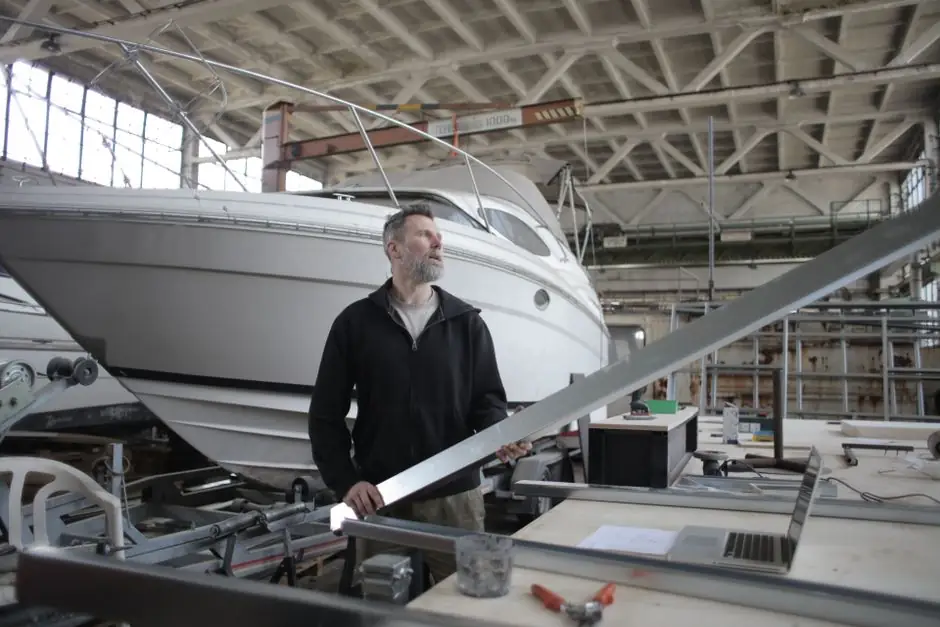
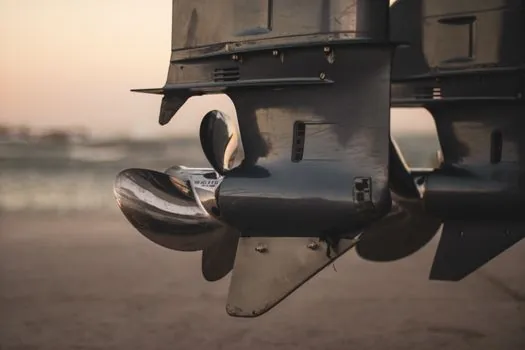
Marine service kills die castings through galvanic attack, salt-spray fatigue, and sustained thermal cycling around outdrives, heat exchangers, and pump housings [S2]. Picking the wrong alloy or tooling steel for a marine die casting die shortens service life by 2-3x compared with salt-fog-tested tooling on the same part [S2].
The 2026 marine spec window runs roughly A360/A383 aluminum for hull hardware and pump bodies, ZA-8 or Zamak 3/5 zinc for small brackets and electronic enclosures, plus H13 tool-steel inserts hardened to 46-50 HRC with PVD or nitrided surfaces for high-wear slides and cores [S2][S3]. Mercury Marine's 4,500-ton high-pressure machine is now the largest in North America and gives a useful ceiling for the size envelope marine tier-1 buyers are qualifying on [S1].
What "marine grade" actually means in 2026
Marine-grade die castings are defined by three test lines, not by a single alloy code: ASTM B85 mechanical properties, ASTM B117 neutral salt-spray performance (typically 500-1,000 h rating for grade A, 250-500 h for grade B), and a documented pressure-tightness test on the as-cast part [S2]. A 360 alloy (A360) is the default choice for marine pressure housings because it offers above-average corrosion resistance in saltwater, better ductility, and tighter pressure tightness than A380 or A383 [S2][S5].
Zamak and ZA alloys (Zamak 3, Zamak 5, ZA-8) are specified when part weight is under roughly 1 kg and the design needs high dimensional accuracy plus a smooth as-cast surface, common on marine electronic enclosures, deck hardware, and sensor bodies [S3]. Zinc's lower melt temperature (~380-420 °C vs ~620-660 °C for aluminum) lets producers use hot-chamber die casting machine cells, but it also sets a ceiling for any part that runs near an engine or exhaust manifold [S3].
Die, machine, and material selection criteria
Four criteria separate a marine-spec die from a generic industrial die: alloy system, die steel and surface treatment, machine tonnage class, and process controls. Use the table below as the default rubric on any new marine RFQ. [S3]
Alloy system: A360 / A383 aluminum for corrosion-critical structural parts; Zamak 3 / Zamak 5 / ZA-8 zinc for small precise parts under roughly 1 kg and lower operating temperatures; magnesium only where weight dominates corrosion budget and a coating system is part of the drawing [S3]. Die steel: H13 (DIN 1.2344) cores and cavities, pre-hardened to 46-50 HRC, with PVD coatings (CrN, TiAlN) or plasma nitriding on slides, ejector pins, and gate areas; for production runs above roughly 100,000 parts per die, specify a forged rather than cast H13 die block [S3].
Machine class: cold-chamber aluminum die casting machine cells from roughly 800 to 2,500 tons cover most marine hardware, with high-tonnage 2,500-4,500 ton presses reserved for large outdrive and gear-housing castings [S1]. Hot-chamber zinc cells from 50-800 tons cover small marine fittings. Process controls: real-time shot monitoring (plunger position, velocity, intensification pressure), vacuum venting to below 100 mbar cavity pressure, and conformal-cooled beryllium-copper or copper-alloy inserts around hot spots [S3][S5].
High-pressure vs gravity die casting for marine
High-pressure die casting on a cold-chamber cell is the default for marine production runs above roughly 5,000 parts per year, because it delivers 0.1-0.3 mm typical wall thickness, repeatable dimensional control, and pressure-tightness on hydraulic and coolant passages [S5]. For lower-volume, heavier-section parts, a gravity die casting machine setup with steel or iron permanent molds is often cheaper per part and gives a coarser grain that machines cleanly for prototype and short-run marine hardware [S3].
Pick high-pressure die casting when you need fine features, thin walls, and surface finish below roughly 6.3 µm Ra, and the part is exposed to salt-fog cycling or pressure-tight fluid service [S2][S5]. Pick gravity die casting for low-to-medium volumes of thicker, heavier parts where porosity tolerance is loose and tool cost must stay low, and where the casting is mostly structural rather than sealing [S3]. Avoid magnesium die casting on submerged or splash-zone marine parts unless the drawing explicitly calls for a chromate/epoxy coating system, since bare magnesium corrodes rapidly in salt water [S3].
Corrosion-resistant alloys compared
Alloy choice is the single largest driver of marine service life, and it trades off against weight, machinability, and castability. A360 has the best saltwater corrosion resistance in the common Al-Si family and roughly 25-30% better ductility than A380, at the cost of slightly higher melt temperature and marginally lower fluidity [S2][S5]. ZA-8 sits between aluminum and zinc on strength and gives the best creep resistance of the zinc family, which matters for marine hardware that holds a sustained load near an engine bay [S3].
For a typical marine bracket or housing under 1 kg, zinc-alloy die casting (Zamak 3 or ZA-8) wins on cost and tolerance, while aluminum A360 wins on corrosion and temperature margin [S2][S7]. For marine magnesium die casting machine work, the use case is narrow: lightweight parts that are fully sealed from salt exposure, such as electronic equipment housings with gasketed joints, where weight saving justifies the extra surface protection [S3].
Who a marine die is for, and who it is not for
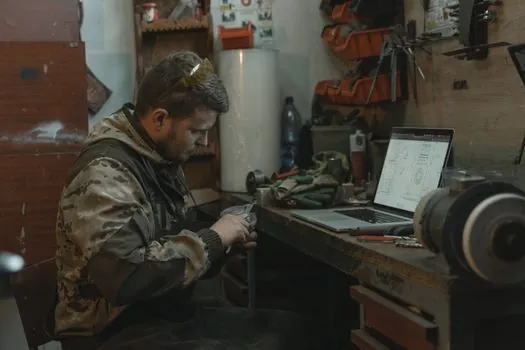
A marine-spec die casting die is built for tier-1 and tier-2 marine OEM buyers that need 50,000+ parts per year, salt-spray validated tooling, and pressure-tight housings; examples include outdrive and gear-housing programs, seawater pump bodies, and certified marine electronics enclosures [S1][S2]. Mercury Marine's investment in a 4,500-ton press is a clear signal that the marine tier-1 supply chain is consolidating around very large, tightly-controlled cold-chamber cells rather than a long tail of mid-tonnage shops [S1].
It is not the right tool for one-off or short-run marine work (under roughly 1,000 parts per year) where a sand casting or 3D-printed pattern is cheaper; nor is it the right tool for any marine part that will see sustained service above roughly 200-250 °C, where creep in zinc alloys and softening in H13 die steel become limiting [S2][S3]. The complete die build-up also has to include post-machining capacity, so a buyer without access to a CNC partner that can hold marine drawing tolerances (often ±0.05 mm on critical features) is not ready to qualify a marine die [S4].
Real production examples and sourcing signals
Elimold positions itself as a one-stop marine die casting supplier covering rapid prototyping through production runs, with in-house CNC machining and surface treatment [S2]. Elimold's published marine scope explicitly states: "Metal die castings are ideal for marine applications. Our castings offer excellent corrosion resistance when the correct alloy is selected and the proper [process is used]" [S2]. This is a useful buyer-side filter: if a supplier cannot articulate alloy selection vs service environment, the rest of the qualification is uphill.
In the US tier-1 supplier base, the recurring names in 2026 die-casting roundups include Beska (ISO 9001:2015 and IATF 16949:2016 certified, hot- and cold-chamber), A&B Die Casting (aluminum and zinc, low-to-medium volume, founded 1924), Apex Aluminum Die Casting (14 die cast cells with dedicated furnaces, low-to-mid volume), Gibbs, Dynacast, Pace Industries, Ryobi Die Casting (USA), Dura-Shiloh, and Empire Die [S4][S6]. Kinetic Die Casting has separately earned aerospace trust on aluminum die cast components, a useful proxy for shops that can hold marine-adjacent quality systems [S8]. For process engineers sizing a new line, related heat treatment furnace sizing guidance and pneumatic tubing classifications often sit one cell over from the die casting cell and inform the same uptime math. For buyers also evaluating adjacent marine fluid-control hardware, the clutch and brake selection for pulp and paper spec map mirrors the same criteria-based approach used to rank marine die suppliers.
Limitations, failure modes, and standards
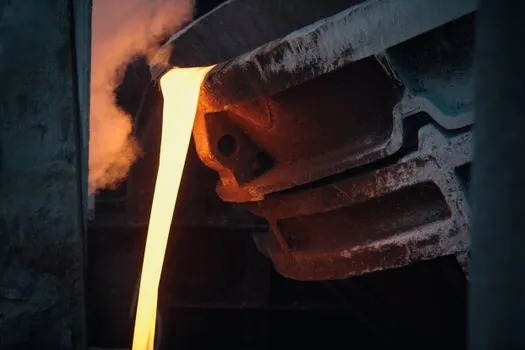
The dominant marine failure modes on die castings are galvanic corrosion at dissimilar-metal joints, die soldering on aluminum tooling above roughly 4,000-5,000 parts per shift, and porosity-driven leaks on pressure-tight housings [S2][S5]. Each one has a known mitigation: dielectric isolation at the joint, release-agent and coating management on the die, and vacuum-assist venting plus real-time shot monitoring on the machine [S3][S5]. A drawing that ignores any of the three will hit the same failure in the field.
On the standards side, ASTM B85 governs aluminum and zinc alloy die castings, ASTM B117 governs the neutral salt-spray test, and IATF 16949:2016 is the automotive-grade QMS that most marine tier-1 buyers also require [S4]. ISO 9001:2015 alone is no longer sufficient as a sole certification for marine die casting work at tier-1 buyers [S4]. Buyers should also confirm the supplier can issue PPAP or equivalent documentation, and that the alloy traceability reaches back to a specific heat and not just a generic "marine grade" label.
Trackable signals to watch over the next 6-12 months: any new 2,500-4,500 ton cold-chamber press commissioning announcements from US tier-1 marine suppliers, follow-on moves around the 4,500-ton Mercury Marine installation [S1], and any ASTM B85 or B117 revision activity that would change the salt-spray hours required for "marine grade" parts.