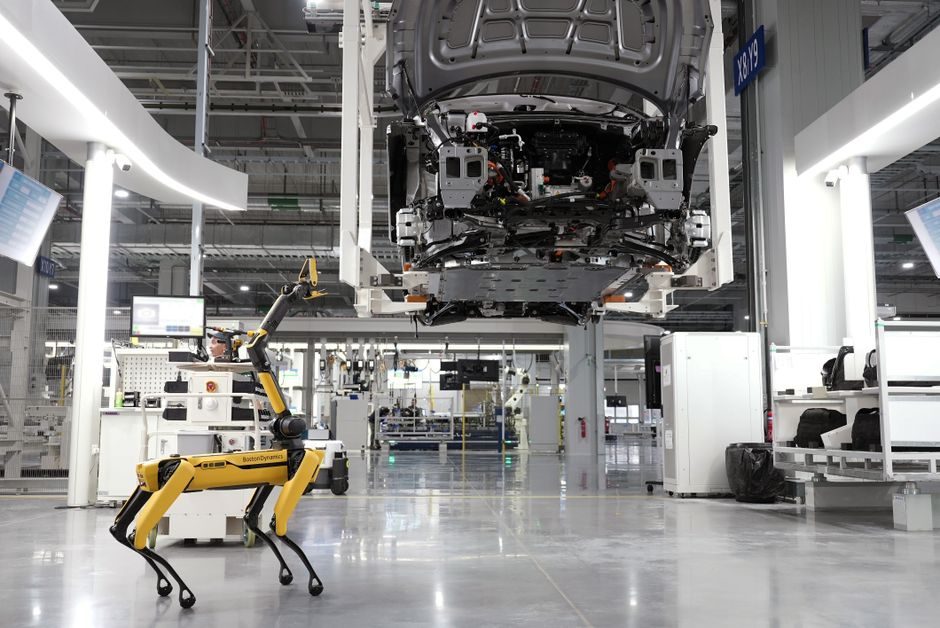
Izumi International's Greenville, SC automation practice is delivering turnkey carbon-fiber cells that combine tabletop and six-axis robots, high-end dispensing heads and machine vision to replace hand lay-up and resin-transfer molding steps on Tier-1 composites lines [S1].
The same 40-year textile-engineering house now offers electronic creels, pilot-to-production composite winders and a three-tier carbon-fiber furnace family (LT, HT, and ultra-high temperature models rated to 3000 °C), positioning it as a single-vendor integrator for a complete precursor-to-ply line [S1].
Scope: What "Smart" Actually Means on a Carbon-Fiber Line
Smart manufacturing in the carbon-fiber domain is the integration of automated material handling, in-process sensing and data-driven process control across the precursor oxidation, carbonization, surface treatment, sizing, winding and lay-up stages — not just bolt-on robotics [S1].
Izumi's automation stack now lists Tabletop and six-axis robot platforms, vision systems for creel and winder alignment, and electronic creels sized for both towpreg and dry-tow feedstock, with high-end dispensing systems for resin and binder application [S1]. The carbon-fiber furnace portfolio brackets the three thermal regimes the industry needs: low-temperature (LT) stabilization, high-temperature (HT) carbonization, and ultra-high temperature graphite-capable units rated to 3000 °C for specialty fibers [S1].
ASTM F42's seven additive manufacturing categories (VAT photopolymerization, material jetting, binder jetting, material extrusion, powder bed fusion, sheet lamination, directed energy deposition) are the reference framework most US and EU composites engineers cite when qualifying additive cells alongside legacy hand lay-up, RTM and autoclave processes [S3].
Cell Architecture: Robots, Creels, Winders, Furnaces
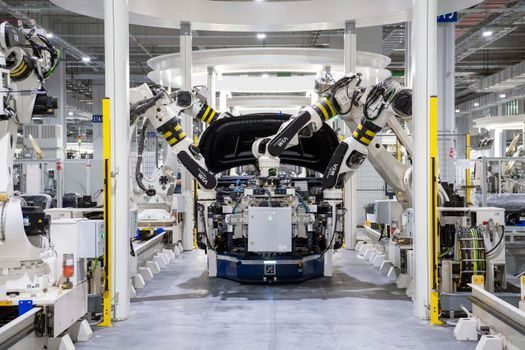
A reference smart cell pairs a Tone-sourced spindle/creel system, a RobotUnits linear axis, and a Musashi Engineering dispensing head under one PLC, with vision systems flagging missing tows and slubs before they reach the winder [S1].
Izumi's product matrix breaks the line into four matching equipment groups: mechanical and electronic creels (carbon-fiber creels), pilot and full-scale composite winders, and the LT/HT/3000 °C furnace family — meaning a buyer can scale from a 1 m pilot creel to a multi-mandrel winder without changing integrator [S1]. For wider context on how adjacent process industries are absorbing similar MES and robotic patterns, the engineering brief on magnesium ingot smart manufacturing walks the same MES-integration logic applied to metal casting lines.
Additive and Recycled-Fiber Routes
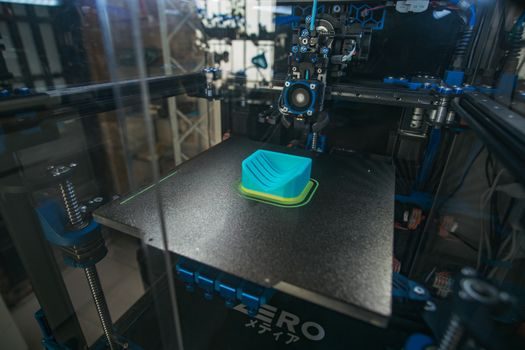
Carbon-fiber-reinforced thermoplastic additive manufacturing — including FDM of recycled carbon fiber (RCF) recovered from end-of-life CFRP — is moving from lab to production cell, with documented work on grinding recovered fibers and re-extruding them into reinforced filament [S6].
The technical case is direct: AM drops the mold and special-fixture step, builds a near-net-shape part from a 3D CAD model, and reduces both material waste and geometric inaccuracy relative to hand lay-up and RTM [S3]. The Purdue 2026 dissertation on "Additive manufacturing of carbon fiber-reinforced thermoplastic composites" formalizes the process category and reviews competing extrusion-based platforms now reaching pre-production [S6].
FDM of RCF has been demonstrated to "improve the reuse value of carbon fiber" while offsetting the mechanical-performance gap of neat-FDM prints, with soft, fluffy recovered fibers produced under optimized recycling parameters and then re-compounded into composite filament [S6]. For a complementary look at how robotic material handling is bleeding into other process industries, see the die casting machine types and classifications reference, which covers cell layouts with comparable six-axis and linear-axis assignments.
Who's Using It: Aerospace, Medical, RF/EMI, UAV
Light Composites, an AS9100:D and ISO 9001:2015 registered shop, runs carbon-fiber lay-up and cure for aerospace and medical-device customers, advertising "state of the art equipment and software" and "next generation processes" for regulated end-markets [S2].
Real Carbon, Inc. of Washougal, Washington has been designing and manufacturing custom carbon-fiber composite parts for over 30 years, with a current specialization in RF/EMI-shielded enclosures for UAVs and other high-frequency systems, plus broader aerospace, automotive and industrial programs [S2]. The UAV/RF-shielding niche is a useful early-adopter signal — the part mix demands tight fiber orientation control, thin-wall consistency, and metallic-coating interfaces that human lay-up struggles to repeat [S2].
Decision Criteria: Legacy Lay-Up vs RTM vs AM
Specifying a carbon-fiber process in 2026 comes down to four criteria: geometric complexity, scrap rate, lot size, and qualification regime. [S1]
Hand lay-up and resin transfer molding remain the baseline for hand-built parts but impose "technological barriers such as curvature of laminates" and deviations from predicted microstructural models; conventional methods can also "lead to the wastage of material, the formation of a variety of defect types and geometric inaccuracy in the final product" [S3]. AM — VAT, MJ, binder jetting, extrusion, PBF, sheet lamination and DED under ASTM F42 — is the route of choice when the buyer needs no mold, minimal fixturing and a shorter design-to-part cycle, and accepts the mechanical and surface-finish trade-offs that come with layer-wise build [S3]. Robotic creel/winder/dispense cells with vision sit between the two, taking hand lay-up out of the loop while keeping the material form (towpreg, dry tow) that aerospace and medical qualification regimes already accept [S1].
Standards, Quality Gates and Limits
ASTM F42 is the categorical reference for AM process selection, splitting the field into seven process families and giving engineering teams a common vocabulary when qualifying extrusion-based or powder-bed routes against hand lay-up baselines [S3]. On the equipment side, the binding specs buyers can verify are 3000 °C ultra-high-temperature furnace rating for graphite-grade fiber work, electronic-creel tow tension control, and the robot payload/reach envelope (typically a six-axis arm plus a linear gantry axis from RobotUnits-class suppliers) needed to cover the winder width [S1]. [S3] is explicit that conventional methods still set the mechanical-property baseline that AM has yet to match in every direction: AM "is able to transform a 3D CAD model into the final part without requiring any process planning, extra tooling and fixtures," but the same source notes that performance "may exhibit some deviations from the predicted model" when fiber architecture is the load-bearing feature [S3].
Sourcing Signals and Trackable Next Nodes
Two signals to watch in the next 90 days: Izumi's Greenville, SC engineering line is the most accessible US integrator for adding vision-guided creel/winder cells to an existing carbon-fiber line, and the Purdue 2026 dissertation on extrusion-based CFRTP AM is the most recent academic anchor for buyers scoping a recycled-fiber extrusion cell [S1][S6].
Trackable next nodes: AS9100:D recertification cycles at composites shops like Light Composites, and any new Musashi/Tone/RobotUnits platform release that shifts the dispensing or creel payload envelope above the current six-axis-plus-linear-axis baseline [S1][S2].