
Standby diesel genset lead times for 1,250-3,250 kW units now sit at 52+ weeks, with major OEM power-generation slots allocated into 2027-2028 [S1][S5]. U.S. data center diesel nameplate capacity nearly tripled from 20 GW in 2018 to 55 GW by 2024, and Virginia alone had permitted 10,500+ units (27 GW) by the end of 2025 [S2][S4].
Natural gas is not a drop-in substitute: it needs pipeline access, carries longer ramp times than diesel, and is being evaluated by hyperscalers for prime or bridge duty rather than NFPA 110 Type 10 emergency standby. Procurement teams now rank diesel, natural gas, and battery energy storage (BESS) on permit-ability and slot availability, not on kWh density alone.
Why Diesel Still Dominates the 2026 RFQ
Diesel wins the emergency-standby spec because it can reach full load in under 10 seconds, satisfying NFPA 110 Type 10, while fast-response natural gas units typically need around 7 seconds and require a longer ramp envelope under real load steps [S5]. On-site diesel fuel storage (commonly specced at 12-96 hours) decouples the genset from any pipeline, removing gas-supply curtailment risk during regional events [S4][S5].
Hyperscale node sizing clusters on a narrow OEM bench: Cummins DQKAN, Cat C175-16, Rehlko KD3250, and Generac's 2.25-3.25 MW standby lineup [S4]. That concentration, paired with bulk hyperscaler slot reservation, has pushed Caterpillar's backlog to roughly $63 billion and left large-frame queues allocated into 2028 [S1]. Buyers should note published standby-to-continuous derates when sizing, including the 16.7% drop on the Cat C175-16 (3,000 ekW mission-critical down to 2,500 ekW continuous) [S4].
2026 Lead Time and Price Reality
Lead times for new equipment in 2026 run materially above the pre-2020 baseline: 12-26 weeks for 25-400 kW standby diesel (vs. 4-8 weeks historically), 26-52 weeks for 500-1,000 kW, and 52+ weeks for 1,250-3,250 kW frames, with medium-voltage switchgear quoted up to 72 weeks and large automatic transfer switches at 20-40 weeks [S1].
Pricing has escalated on a separate curve. Low-hour used large gensets that historically sold at 40-50% of new now command 60-75% of new price, and observed secondary-market asking prices on 2,000 kW Tier 2 standby sets sit around $685,500 for Cummins DQKAB and $666,765 for MTU 16V4000 DS2000 [S1][S4]. Even so, a tested used unit delivered this month is often the lowest total-cost option when the downtime cost of a 52-week wait is included. The cooling tower side of the same build is splitting the same way, as tracked in cooling-tower lead times 2026.
Where Natural Gas Wins in 2026
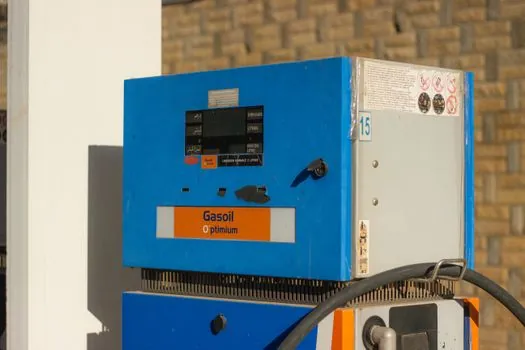
Natural gas earns its 2026 procurement momentum where three conditions line up: continuous-run air permits are obtainable, pipeline capacity exists, and the site is interconnection-queued for years. A gas plant running inside an air permit lets a site reach commercial operation independent of the utility load-study queue, which on gigawatt-scale campuses can run multiple years [S5].
Permit friction is the deciding constraint, not fuel cost. Natural gas carries lower NOx and CO2 than diesel at comparable output, which makes continuous operation easier in restricted air districts, and OEM slot pressure is lighter than for large diesel frames, but the units still need a 7-second-class fast-response build to handle data center load steps [S3][S5]. Engine manufacturer statements also note that the certification tier (EPA Tier 2 or Tier 4) plus local rules govern allowable run-time, so the procurement team must fix the duty case before locking the engine [S3].
Tier 4, Virginia DEQ, and the December 1, 2026 Cutoff
Illinois Tier 4 begins biting new applications on December 1, 2026, and draft Virginia DEQ NOx guidance would compress the set of permittable platforms further, both of which directly affect what can be ordered in 2026 and commissioned in 2027 [S4]. EPA stationary-engine requirements and Uptime Institute Tier classifications are not the same thing, and conflating them is a common RFQ error; engine applicability depends on engine type, source classification, and the proposed operation, not on the facility's resilience tier [S3][S4].
For most data centers, generators are permitted for emergency use plus up to 100 hours per year of testing and maintenance, with intermittent grid-support operation allowed only when the unit meets the applicable EPA certification level and any local conditions [S3]. Diesel set emissions performance must be matched to that duty case, and selective catalytic reduction (SCR) is one option Tier 4 retrofits use to reach near-zero emissions on existing units [S3].
Diesel vs Natural Gas vs BESS: Decision Snapshot
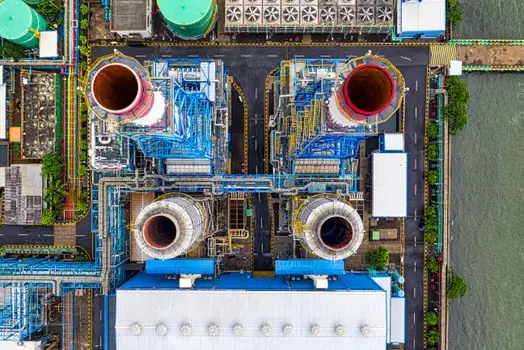
Three technologies, three decision criteria. Diesel: full load under 10 seconds (NFPA 110 Type 10), 12-96 hour on-site fuel autonomy, highest NOx/PM and Tier 4 required for many sites, and the longest 2026 lead time (52+ weeks for 1,250-3,250 kW). Natural gas: ~7 seconds to full load on fast-response builds, continuous run via pipeline, lower NOx and CO2 than diesel, shorter OEM queue, and best fit for prime or bridge duty behind a constrained interconnection. BESS: sub-second response, 1-4 hour duration at rated discharge, zero direct emissions, CAPEX band ~$1,300/kW for a 4-hour system, NFPA 855 fire-code driven siting, and best fit as a transient buffer for AI load steps and peak shaving [S5].
On cost, diesel CAPEX is in the ~$1,000/kW band with natural gas running 20-30% above diesel and BESS at ~$1,300/kW for 4-hour duration [S5]. The procurement trap is to price Tier 2 diesel in Q1, miss the December 1, 2026 Illinois applicability date, and rebid the package months later; pairing the genset RFQ with a parallel control-valve lead time review on the same critical path avoids that slip.
Procurement Tactics That Hold a 2026 Commissioning Date
Three tactics consistently surface in 2026 buyer guidance. First, load-bank-tested used or surplus units with documented hours ship in weeks, not quarters, and the same AI boom pushing lead times is also feeding low-hour inventory into the secondary market [S1]. Second, parallel smaller frames (e.g. two 500 kW in place of one 1,000 kW) shorten the queue and add N+1 redundancy that a single large unit cannot provide, at the cost of extra switchgear and controls [S1]. Third, order at the design stage rather than at construction, and negotiate caps on price-escalation clauses alongside firm slot commitments [S1][S5].
For sites that can permit continuous gas run and have pipeline access, layering BESS for sub-second AI transients and a natural gas block for prime power is increasingly specified, with diesel retained for NFPA 110 Type 10 emergency duty. The 550-750 new U.S. data centers expected over the next five years make this mix a planning baseline, not a niche design [S3].
Trackable signals for the rest of 2026: any finalization of Virginia DEQ NOx guidance and the next round of Illinois Tier 4 application decisions after December 1, 2026, both of which will reset which platforms are permittable and therefore orderable in early 2027 [S4]. Hyperscaler capex pacing, profiled in AI capex 2026: hyperscaler spend and what slows first, is the upstream variable that ultimately decides whether 55 GW of diesel nameplate becomes 70 GW or stalls at the current build rate.
Component reference pages worth checking: data logger, gas analyzer, and gas cabinet.