
Lithium-ion (LFP) UPS battery cabinets are now specified as default for new hyperscale builds, with the data-center Li-ion segment sized at USD 6.68 billion in 2026 and projected to USD 17.69 billion by 2034 at a 12.94% CAGR [S4]. VRLA retains roughly 40% of 2025 data-center battery revenue and is forecast to reach USD 1.65 billion by 2035 in a slower-growth path [S8].
For a stationary float-service UPS at 5-15 minute runtime, the decision still hinges on weight, footprint, refresh interval, fire code, and 15-year TCO. The 2026 engineering case is closer than marketing suggests: lead-acid is 50-70% heavier and bulkier than lithium for the same kWh [S2], but VRLA has no thermal-runaway failure mode and is covered by mature codes [S2].
Core technical gap: energy density and weight per kWh
Lithium-ion cells deliver roughly 150-200 Wh/kg versus 30-50 Wh/kg for lead-acid, a 3-5x energy-density advantage [S2]. Translated to a data-center cabinet, that means a li-ion pack at the same kWh rating weighs about 60-80% less than a VRLA string [S3] and occupies 50-80% less floor area in the UPS room [S3].
For retrofits in older white space, the weight delta matters even more: VRLA strings often require reinforced bearing structures and pull extra load on the air-conditioning system because their performance degrades at higher ambient [S3]. Specifying li-ion in an existing distribution cabinet footprint typically halves the structural load per kWh, which is one reason hyperscalers standardize on li-ion for greenfield builds. A 2026 reference design typically targets less than 3 kW of battery-room cooling per kW of IT load, which is much easier to hit with li-ion's wider operating-temperature window [S1].
Refresh interval: 5 years vs 15 years
VRLA float-service life is generally 3-6 years at data-center operating temperatures, with one source citing a 5-year design refresh as the planning baseline [S1][S3]. Li-ion in the same duty is rated at roughly 10-15 years service life [S1][S3], and LFP cells can deliver 3,000-5,000+ cycles versus 700 cycles for typical VRLA [S2][S3].
The downstream effect on the MCC cabinet and the battery-monitoring wiring is also non-trivial: fewer refreshes mean fewer planned shutdowns for cell swaps, fewer crane-lift operations into the battery room, and a flatter spare-parts inventory. A hyperscale operator running 100 MW of UPS with a 5-year VRLA refresh would schedule 3 full battery-string replacements inside a 15-year window; the same operator on li-ion would schedule 1 [S1].
Charge time, self-discharge, and runtime behavior
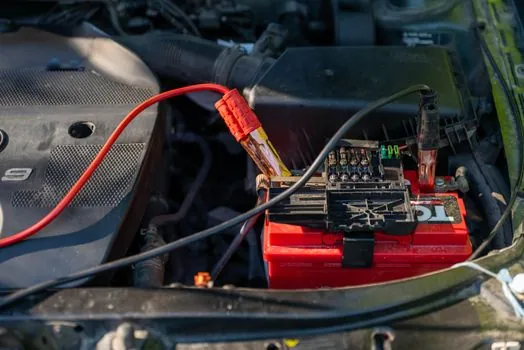
A typical li-ion UPS string recharges in roughly 2 hours, while a VRLA string needs 10-12 hours to reach full state of charge after a discharge event [S1]. Self-discharge while sitting on float is about 1-2% per month for li-ion, a much lower number than VRLA, which is critical for sites that experience frequent but short outages [S3].
For ride-through of utility sags and generator-start transients, the 2-hour recharge figure means a li-ion cabinet can absorb a second event on the same day without operator intervention. A VRLA cabinet, after a deep discharge, typically needs to be brought back to 100% SoC before the next credible event window opens. This is the main reason control cabinet interlock logic on new UPS skids often enforces a 4-hour minimum recharge lockout for VRLA but allows immediate re-test for li-ion.
Total cost of ownership over a 10-15 year horizon
Upfront, li-ion runs roughly 1.75x the price of an equivalent VRLA string as the historical benchmark, although that gap is narrowing [S5]. Over a 10-year window, li-ion TCO has been measured at 39% below VRLA in one published comparison, with at least 10% savings as a conservative floor [S3].
The TCO ledger on the li-ion side must include fire-suppression upgrades, BMS monitoring, and thermal-runaway mitigation to satisfy NFPA 1 and IFC 2018 spacing rules [S5]. On the VRLA side, line items include more frequent cell replacement, higher cooling energy, reinforced floors, and a larger battery room. For float-duty UPS at 5-15 minute runtime, advanced VRLA (AGM, pure-lead thin-plate) can still beat li-ion on risk-adjusted TCO once monitoring, suppression, insurance, and disposal are fully loaded [S2].
Safety, fire code, and chemistry choice inside the cabinet

VRLA has no thermal-runaway mode and is governed by mature installation codes, which is the main reason many risk-averse data-center operators still specify it for critical UPS duty [S2]. Li-ion requires continuous cell-level BMS monitoring of voltage, current, and temperature, and the cabinet itself must integrate gas detection, aerosol or clean-agent suppression, and a fire-rated enclosure where required [S3][S5].
Inside the li-ion segment, lithium-iron-phosphate (LFP) led the 2024 data-center battery market by chemistry, and is preferred for its lower thermal-runaway risk and longer cycle life; NMC is forecast to grow at the fastest CAGR but is more sensitive to abuse conditions [S4]. For new European builds, specifying LFP inside a sealed gas cabinet-style enclosure is increasingly the default because it simplifies the fire-marshal approval path under evolving NFPA 1 and IFC 2018 rules [S5].
Decision matrix: when to pick which chemistry
For hyperscale and colocation builds with high power density, target 15-year refresh cycles, and the budget to absorb a 1.5-1.75x upfront premium, li-ion (LFP) is the 2026 default [S1][S4]. For edge sites, telecom central offices, and utility-substation-adjacent data halls running in pure float service with infrequent discharge, VRLA remains the lowest-risk and lowest-upfront option, particularly in retrofits where floor loading, cooling, and code complexity are constrained [S2].
Hybrid fleets are common: li-ion for the primary UPS string and VRLA retained as a secondary or ride-through string. The bigger 2026 trend, visible in the data-center PPA volume shift toward AI-driven hyperscalers, is that new capex is flowing disproportionately into the li-ion tier, and the cable distribution cabinet layouts in those new halls are being designed around li-ion dimensions from day one [S4][S7]. The trackable 2026 signal to watch is LFP cabinet pricing per kWh closing toward 1.3x VRLA; once that lands, the TCO argument for VRLA on new builds largely disappears [S5].