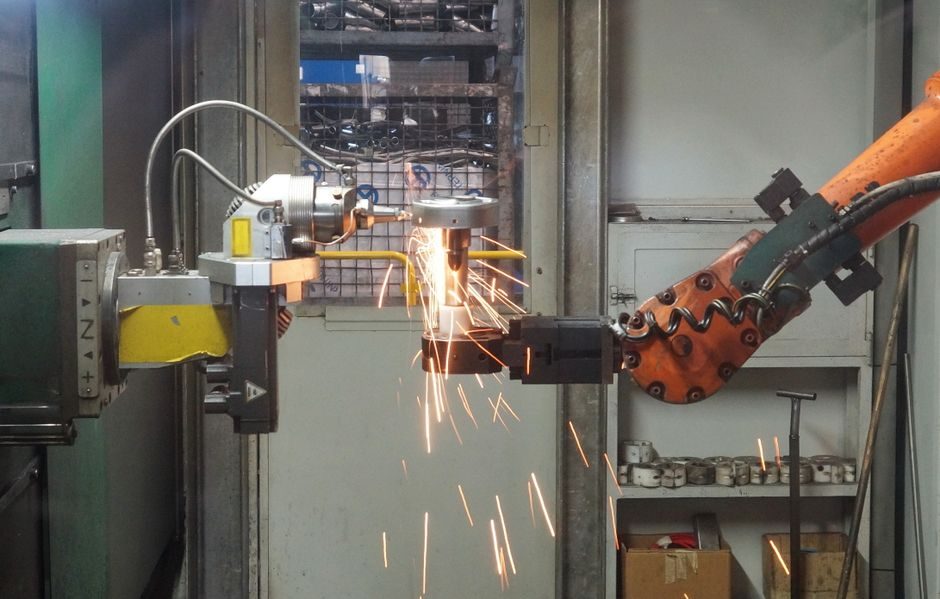
Robotic workcells in 2026 use 1/8 DIN digital panel meters with 0.01% of reading ±2 counts accuracy to display force, torque, and temperature values from sensors monitoring end-of-arm tooling, servo loop status, and pneumatic supply pressure.
Compact footprint, signal compatibility with pressure transmitter outputs, and fieldbus or Ethernet connectivity to the cell's PLC are the three filters that determine fit per [S1] AutomationDirect buying guide.
Input Signal Compatibility and Sensor Matching
Digital panel meters must accept the exact electrical specification and range of the upstream sensor; supporting a measurement type without matching the input range produces no valid reading per [S1] AutomationDirect.
Common workcell inputs include 4-20 mA loops from pressure transmitter and pressure sensor devices, 0-10 V analog from servo motor drives, thermocouple and RTD inputs for spindle or gripper heater temperature, and millivolt inputs from strain gauges measuring grip force per [S1] AutomationDirect and [S2] Laurel Electronics.
Accuracy, Read Rate, and Display Resolution
1/8 DIN process meters from Laurel Electronics deliver 0.01% of reading ±2 counts accuracy at up to 60 conversions per second, sufficient for closed-loop grip force and torque readback per [S2] Laurel Electronics.
Applications demanding precise readouts typically select digital meters with 0.05% accuracy over analog alternatives, gaining control features and communication outputs in the process per [S3] Panelshop.
Form Factor and Panel Cutout for Cell Cabinets
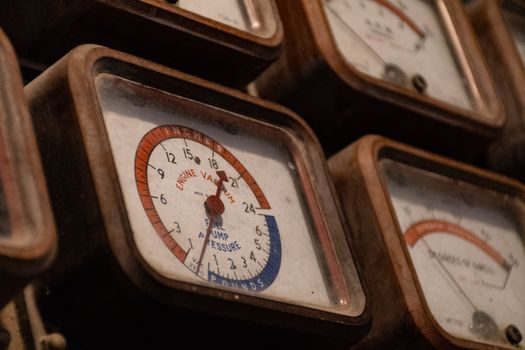
1/8 DIN digital panel meters (96 × 48 mm bezel) fit the door cutouts commonly machined into robotic cell safety enclosures, where larger HMIs cannot be installed per [S1] AutomationDirect and [S6] Laurel Electronics.
Jewell Instruments panel meters are designed for quick access mounting on control panels, reading AC parameters (current, voltage, frequency, power, energy, power factor) and DC parameters on the same display per [S4] Jewell Instruments.
Comparison of Meter Categories by Workcell Function
Process meters accept 0-10 V and 4-20 mA signals, DC digital voltmeters and ammeters measure DC voltage and current, and True AC RMS meters monitor AC parameters on the workcell supply per [S2], [S4], and [S6] Laurel Electronics.
Across the workcell, process meters read pressure transmitter and flow transmitter output, DC meters monitor 24 V supply and servo motor bus voltage, and AC RMS meters read robot controller input current and weld inverter output; the same 0.01% of reading ±2 counts accuracy is quoted for both the DC voltage/current meter family and the strain gauge meter family per [S2] Laurel Electronics.
Communication and Integration with the Cell Controller
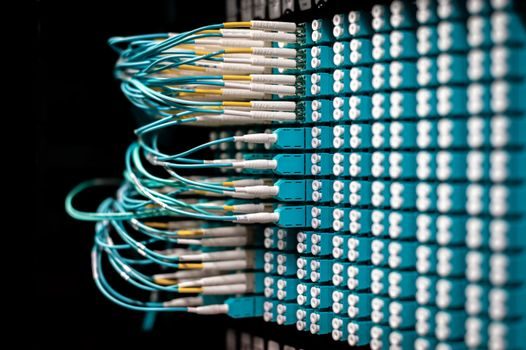
Modern digital panel meters expose alarm relays, analog retransmission, and serial or Ethernet interfaces that feed cycle data directly to the cell PLC for OEE tracking per [S3] Panelshop.
The March 2020 release of OMRON's Sysmac Studio 3D simulations was, at the time, the industry's first platform to integrate and verify the movements of robots and peripheral devices, with digital panel meters used for monitoring purposes; the broader market view from GMInsights confirms that smart factory rollouts are pulling demand for meters with diagnostic data outputs at the cell edge per [S5] GMInsights.
Robotic Workcell Use Cases Beyond the Robot Itself
Beyond the arm, panel meters read EOAT vacuum level, weld current, gripper air pressure, coolant flow, and safety-scanner status, none of which the robot controller natively displays. [S1]
Murata Manufacturing develops sensor and meter combinations targeted at robotics, automotive automation, and compact industrial systems, reflecting the broader smart-factory demand for intelligent monitoring at the cell edge per [S5] GMInsights.
Limitations and Sourcing Discipline
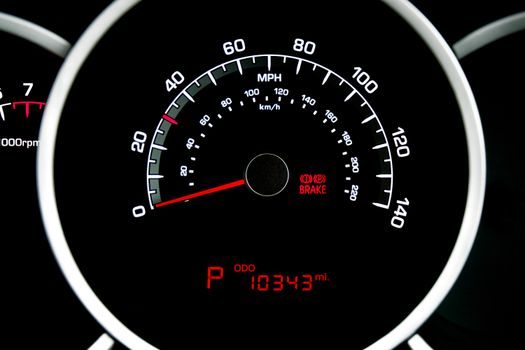
Digital panel meters are not a substitute for the robot teach pendant or HMI; they lack motion path visualization, program editing, and safety-rated I/O required for direct robot control per [S3] Panelshop.
Selection should be cross-checked against the cell's signal list, panel cutout drawing, and the PLC tag database; spec sheets from [S2] and [S6] Laurel Electronics, [S1] AutomationDirect, and [S4] Jewell Instruments provide the input ranges, accuracy, and read rate data needed for that cross-check, while the GMInsights March 2026 market report and the Fortune Business Insights 2034 forecast establish the supply-side context per [S5].
Two trackable signals to watch: whether controller vendors extend 3D simulation environments to verify panel meter tag streams during 2026 cell commissioning, and whether digital twin platforms such as the Robotiq IQ Platform accept panel meter readouts as a first-class simulation input alongside cycle time and EOAT geometry.