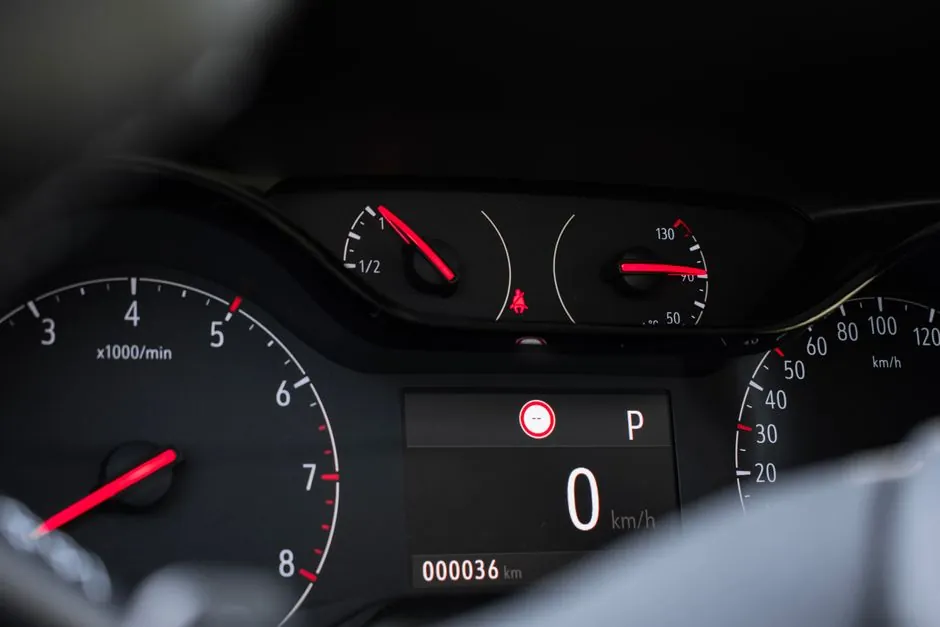
A digital panel meter (DPM) typically specifies ±0.05% full-scale accuracy, while a conventional analog panel meter specifies ±1.5% or ±2% full-scale accuracy, a roughly 30–40× difference that defines most of the selection logic between the two [S6][S7].
Accuracy alone does not settle the choice: digital accuracy holds across the entire input range, whereas analog accuracy is referenced to full scale, so a 1000 V analog meter reading 10 V can carry a 30% error band even when the dial is marked ±2% [S3]. The decision is governed by required reading precision, environmental stress, integration with control systems, and total installed cost.
How Each Technology Produces a Reading
An analog panel meter uses a D'Arsonval moving-coil or moving-iron mechanism: input current deflects a pointer across a graduated scale, with a typical accuracy class of 1.5 or 2.5 (percent of full scale) [S4]. A digital panel meter samples the input through an analog-to-digital converter (ADC), processes it in a microcontroller, and displays a numeric value on an LCD, LED, or TFT readout, with common accuracies from ±0.05% to ±0.1% of reading plus a fixed digit count [S6][S2].
For a deeper primer on the digital category itself, see the digital panel meter reference page, which covers ADC topology, display options, and common input ranges used in industrial control panels. The core mechanical difference matters because analog readings depend on observer position, introducing parallax error, while digital readouts are unambiguous regardless of viewing angle [S2].
Accuracy Specification: Full-Scale vs Reading
Analog accuracy is almost always stated as ±X% of full scale, not of the displayed value, so error magnitude stays constant as the signal drops; a 100 A meter rated ±2% will show ±2 A regardless of whether the actual current is 100 A or 10 A [S3][S4]. Digital panel meters typically specify accuracy as ±(X% of reading + Y digits), so absolute error shrinks with the signal, and a 5-digit DPM can resolve 0.001 in the units of interest [S2].
For DC values, a properly designed and calibrated digital meter can exceed 18-bit resolution with 16-bit accuracy, around 0.002% of range, orders of magnitude beyond what a moving-coil dial can resolve [S3]. On heavily distorted AC waveforms, low-cost true-RMS digital meters have been documented showing over 30% error against a calibrated reference, while older moving-vane AC voltmeters handle moderate distortion more gracefully, so the application waveform matters as much as the headline accuracy number [S3].
Selection Criteria Beyond Accuracy

Reading ease, durability, functionality, and cost each shift the decision. Digital meters provide an unambiguous readout and eliminate parallax and interpolation error; analog meters show rate of change intuitively because a moving pointer conveys trend at a glance [S1][S2]. Analog meters generally have lower upfront cost and require no power supply on passive models, while digital meters add alarm setpoints, data logging, and communication interfaces that integrate directly with SCADA and PLCs [S2][S4].
Durability splits along technology lines: analog electromechanical movements are prone to wear and tear from continuous vibration, while digital solid-state devices resist shock and vibration but can suffer display failure in extreme heat, dust, or RF interference [S2][S1]. For panels in control rooms adjacent to HMI panels and control panel components, digital readouts also reduce operator error, which is often the dominant human-factor input to measurement quality.
Decision Matrix: When to Pick Each
Use this four-criterion comparison when writing a specification: [S4]
1) Accuracy and resolution: digital at ±0.05% full scale with multi-decimal resolution wins; analog at ±1.5–2% full scale loses, especially below 25% of range [S6][S3].
2) Environmental stress: analog moving-coil and taut-band mechanisms tolerate sustained vibration, dust, and temperature swings with no firmware dependency; digital meters with conformal-coated PCBs and IP65 fronts close most of the gap at higher unit cost [S4][S1].
3) Integration and IIoT: digital is the only practical option for Modbus RTU, Ethernet/IP, or 4–20 mA retransmission, alarm relays, and logged data; analog is read-only and must be paired with a separate transducer for any networked use [S2][S4].
4) Cost and lead time: analog units are typically 20–50% cheaper for basic indication and ship faster from stock; digital units cost more but consolidate display, alarm, and communication into one DIN-rail device [S1][S2].
Select analog when the reading is a quick status check, a trend indicator, or a backup for a digital channel that may fail; select digital when the value drives a process setpoint, an energy report, or a regulatory meter [S4][S6].
Use Cases and Limits in Real Panels
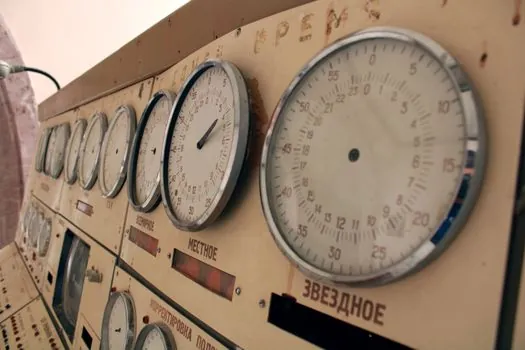
Analog panel meters remain the right call in three situations: legacy switchboards wired for 1 A or 5 A CT secondaries with no space for retransmitters, fail-safe generator panels where a passive dial still works after control power is lost, and training panels where students need to see the pointer move to learn motor starting behaviour [S4][S5]. Digital panel meters dominate anywhere a measured value feeds billing, alarm logic, or a regulatory report, and they are mandatory when a digital multimimeter bench reference is the calibration source for the same loop [S2][S4].
Limits worth flagging: a digital meter's stated accuracy only holds when the input is within its specified common-mode voltage, temperature, and warm-up window, and an LCD in a sub-zero cabinet becomes slow or unreadable, a real failure mode in unheated outdoor enclosures [S2]. Analog meters drift with age and need periodic re-calibration, typically semi-annually in metrology-grade service, while digital meters can hold calibration for a year or more [S3]. For comparison work on rotary control hardware, this trade-off map mirrors the choices in detent rotary encoders for HVAC control panel knobs, where reading precision and mechanical wear point in opposite directions.
Standards, Sourcing, and Trackable Signals
No single IEC or ISO standard governs panel-meter accuracy class uniformly across vendors; instead, manufacturers publish per-model datasheets with accuracy stated as ±(% of reading + digits) or ±% of full scale, and the procurement spec must pin the exact format and reference conditions [S4][S6]. For AC energy and power applications, relevant metering standards such as IEC 62053-21/22 class 1 or class 0.5 apply to the measurement chain, and the panel meter becomes the display element downstream of the certified transducer.
Trackable signals for the next buying cycle: vendor datasheets listing true-RMS AC accuracy with crest-factor specification (not just "±0.5%"), availability of Modbus RTU or Ethernet/IP gateways as standard rather than options, and published MTBF figures for digital meters in high-vibration panels, which today most manufacturers still omit [S3][S4]. For procurement engineers mapping out the broader instrument bill of materials alongside a new digital panel meter, the HMI panel ecosystem is the natural next specification to align, since shared communication protocols reduce integration time on the same panel build.