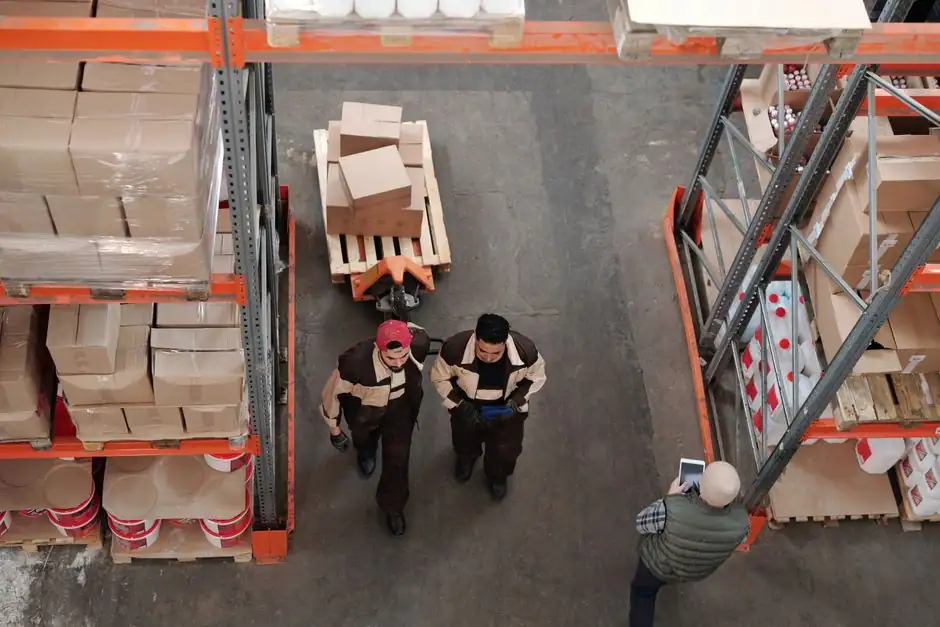
Double-deep pallet racking stores two unit loads deep from a single aisle, which roughly doubles the pallet positions of a comparable selective rack layout by cutting the number of forklift aisles roughly in half [S4]. A selective rack with the same footprint and beam count gives 100% immediate access to every pallet position, while a double-deep arrangement drops that to about 50%, because the rear pallet in each lane is only reachable after the front pallet is moved [S4][S3].
Cost spreads with the density: budget selective rack runs $50 to $80 per pallet position, while double-deep sits at $80 to $200 per pallet position, with the premium driven by deeper frames, heavier beams, and reach-style forklifts [S5]. Beyond the rack itself, the second-pallet reach forces the use of a double-reach or turret truck with telescopic forks or a pantograph mast, which is the single biggest hidden cost swing on a conversion project [S4][S5].
How each system is built and how it is picked
Selective pallet rack is a single-row, single-deep configuration where every pallet position is open to a forklift aisle, giving operators direct, unimpeded access to each load with a standard counterbalanced or reach truck [S5]. Double-deep racking uses the same upright and beam components arranged back-to-back, two pallets deep per level, so the front pallet in each lane is reached from the working aisle and the rear pallet is reached only after the front pallet is removed [S4]. Storage discipline under double-deep is LIFO: the last pallet placed in a lane is the first one picked, which is why multi-pallet-per-SKU inventory with predictable rotation is the natural fit [S4][S7].
Because double-deep cuts the aisle count of an equivalent selective layout by roughly half, the system gains about 80% to 90% location utilization in typical operations, versus the lower utilization seen when selective rack bays are held partially empty for SKU churn [S4]. The trade is selectivity: double-deep racking is described as "selective with reduced pick face" rather than a true high-density compact system like drive-in or push-back, so it is positioned as a midpoint between single-deep selective and full drive-in rack [S4][S3].
Decision criteria lined up side by side
For a purchasing engineer comparing the two on a single page, the practical comparison runs across four axes drawn from the research: storage density, selectivity, inventory rotation, and equipment cost. On density, double-deep roughly doubles pallet positions per square foot relative to selective by eliminating one aisle in two [S4][S6]. On selectivity, selective gives 100% direct access, double-deep gives about 50% because the rear pallet in each two-pallet lane is blocked until the front pallet is pulled [S4][S3].
On rotation, selective rack supports both FIFO and LIFO with no restriction, while double-deep is functionally a LIFO system: the rear pallet is effectively a slow-mover relative to the front face, which is fine when the SKU ships at high volume but punishing when individual pallets need to be picked in receipt order [S5][S7]. On equipment cost, selective is the cheapest pallet-position option in the catalog at $50 to $80, while double-deep costs $80 to $200 per position and may force a fleet addition if the site runs only standard counterbalanced trucks [S5].
Where each system earns its keep
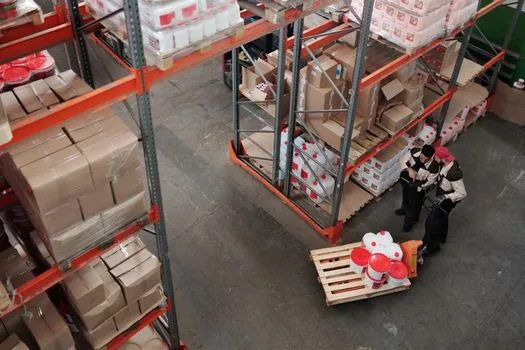
Selective rack is the right call for operations carrying a high SKU count, low pallets per SKU, FIFO demand, and frequent stock rotation where every pallet must be reachable without disturbing a neighbor. Common fit-outs include general manufacturing, retail replenishment, fashion and apparel, food and beverage, and pharmaceutical distribution, where picking accuracy and SKU mix change faster than storage density targets [S5].
Double-deep racking fits the opposite profile: warehouses with many pallets per SKU, predictable demand, and a LIFO rotation policy, where two or more pallets of the same product sit in the same lane and the operator only needs to touch the front face most of the time. Cold storage and freezer operations sometimes pair double-deep with a reach truck, but the densest true FIFO cold storage is more often drive-in or pallet flow, not double-deep [S3]. For a deeper look at how rack density decisions interact with lifting equipment choice in a warehouse, see the pallet stacker selection reference.
Limits, failure modes, and the forklift constraint
Double-deep's biggest operational risk is operator error during the second-pallet reach: if a truck without a telescopic fork or pantograph is used, the operator either has to pull the front pallet to access the rear one (defeating half the density benefit) or risks striking the rear upright. The OEM guidance is explicit: double-deep racking must be used with reach-style or turret forklifts specifically prepared for the system, fitted with telescopic forks or an equivalent pantograph mechanism [S4][S5].
Damage risk is asymmetric. Selective rack spreads impact energy across many accessible positions and is generally the lowest-risk option for product damage. Double-deep concentrates forklift activity on a deeper face, so beam deflection, fork-tip contact, and frame damage on the rear bay are common failure modes if the fleet is not trained for the reach cycle. For sites standardizing on manual low-volume handling, the manual pallet jack page is a useful cross-check on whether the picking fleet is even compatible with a double-deep retrofit. For a structural spec view of how selective frames and beams are typically configured, the pallet rack encyclopedia entry lays out the baseline.
Standards, codes, and the sourcing footprint
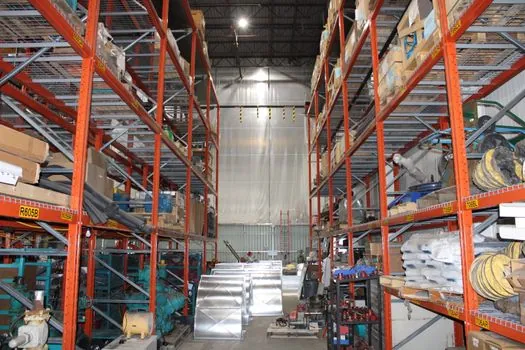
Pallet rack engineering in North America is anchored by the Rack Manufacturers Institute (RMI) ANSI MH16.1 specification for the design, testing, and utilization of industrial steel storage racks, and by the RMI-published "Specification for the Design, Testing, and Utilization of Industrial Steel Storage Racks" as the load-table reference most engineers cite when sizing beams and uprights. Seismic zones in the U.S. additionally require compliance with AISC 360 for steel and IBC chapter 16 for anchorage and bracing, while European deployments typically work to EN 15635 for rack use and inspection and EN 15512 for rack design. None of these standards differentiate selective from double-deep as a separate load case, but they do govern the increased frame and beam sections that double-deep typically requires. [S3]
For sourcing, the double-deep market is served by a mix of European and North American rack manufacturers (AR Racking, Mecalux, Constructor, Interlake, Unarco, Ridg-U-Rak, and others) and by integrators who also supply the matching reach or turret trucks. The decision is rarely a single-vendor question, because the rack spec, the truck spec, and the floor flatness spec all have to align before a double-deep bay is signed off. A broader view of how storage rack systems fit into a full warehouse layout is in the storage rack reference page.
Selection recommendation by use case
For a greenfield warehouse above 5,000 pallet positions, carrying more than 4 to 6 pallets per SKU, and operating on LIFO, double-deep racking is the right default: it returns the same SKU density as a drive-in system while preserving 50% selectivity and a straightforward reach-truck picking cycle [S4][S7]. For a brownfield retrofit, the same rule applies only if the site already runs, or is willing to add, a double-reach or turret forklift with telescopic forks, because standard counterbalanced trucks cannot complete the second-pallet reach without compromising safety [S4][S5].
For mixed-SKU distribution centers, 3PL operations, and any application needing strict FIFO rotation or individual pallet traceability, selective rack remains the correct choice, and the $50 to $80 per position cost and 100% selectivity outweigh the density penalty of wider aisles [S5]. The decision is rarely either-or: many large sites run selective rack at the pick face for fast movers and double-deep in the reserve area for high-volume SKUs, which is a useful middle ground when neither pure selective nor pure double-deep fits the SKU profile on its own. For a complementary view of the picking equipment that ties these two systems together, the electric pallet truck entry and the plastic pallet reference are worth cross-checking against the rack spec before sign-off.
Trackable signals for the next planning cycle: 2026 RMI MH16.1 revision notes on seismic anchorage for double-deep frames (confirm with the manufacturer before quoting), and any site-specific reach-truck fleet addition tied to a double-deep retrofit, since the truck line item typically decides the project ROI more than the rack line item.
Background reading: DBA vs Rebar for Welded Stud Connections: Spec-Driven Selection.