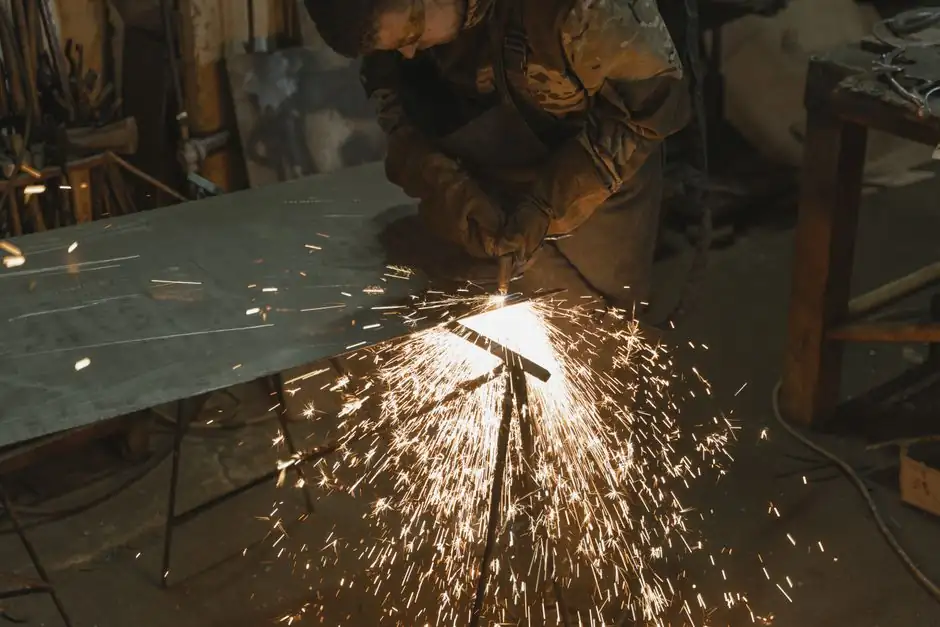
Capacitor discharge (CD) stud welding power units are sold as fixed-output boxes rated in joules, and a standard MIG or stick welding machine cannot directly substitute because the discharge contour, gun connector, and stud lift geometry all differ [S4].
The process actually runs on three power-supply topologies: transformers, engine-driven generators, and inverters, each tied to either drawn-arc, short-cycle, or CD stud welding [S6]. For shops that lack 240 V three-phase, or that weld in the field, that taxonomy defines what substitutes are physically possible and at what stud diameter they cap out.
The Three Power Topologies and the Stud Diameter Each One Reaches
Transformer-based stud welding power supplies are the legacy workhorse: a step-down transformer plus a welding rectifier feeding the stud gun, and they have historically dominated shops welding 3/8 in. diameter studs to fixed steel structures [S2][S6]. Engine-driven generators cover sites with no grid at all but add fuel logistics, and inverter-based units are the youngest class, packaging the rectifier and switching stage into a smaller, lighter cabinet that can sometimes run on single-phase mains [S6].
A standard CD stud welding gun requires a capacitor discharge power unit rated in joules, and a generic MIG or stick output cannot be used as a drop-in substitute because the timing, contactor, and capacitor bank are not present in those machines [S4]. Drawn-arc stud welding, by contrast, uses an arc welding rectifier as the power source, which is why a transformer or inverter arc unit can weld larger-diameter studs than most CD boxes can [S7]. For reference on what a CD gun actually does inside the weld sequence, see this stud welder gun trigger timing breakdown.
110 V Single-Phase Inverter Units: The HBS Visar 650 Benchmark
The HBS Visar 650 welds 3/8 in. diameter studs from a standard US 110 V wall outlet when paired with the HBS A-12 gun, weighing roughly 40 lb in portable form [S2]. PFS distributes the Visar 650 in the United States and rents it across the Gulf South region, and the unit can also be adapted to accept arc welding guns fitted with 4-pole R&S connectors [S2].
This is the clearest proof point that an inverter-based stud welding power supply, not a fixed-output CD box, can hit the 3/8 in. stud benchmark on 110 V single-phase. Historically, 3/8 in. stud welding demanded three-phase power because transformer-rectifier arc units in that rating class assumed industrial mains, which is exactly the gap the Visar 650 closes [S2]. For shops weighing that 110 V arc path against staying on a CD process, base-metal burn-through on thinner sheet is a separate decision and is covered in the base-metal minimum thickness guide.
Battery-Powered DIY CD Banks and Alibaba-Sourced 220 V Units
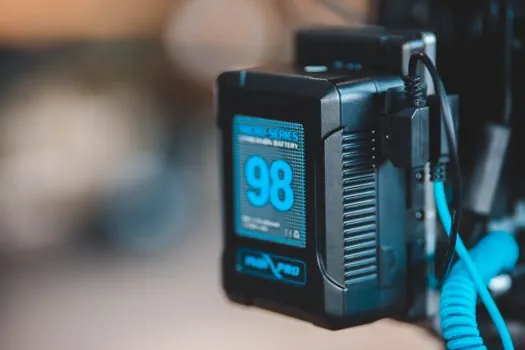
A hobbyist path documented on the Fireball forum uses an 18 V M18-style battery feeding a buck converter, then a high-current resistor to limit the charge rate of a capacitor bank, paired with a $55-75 stud welding gun sourced separately from Amazon or eBay [S5]. The same thread proposed an alternative route of a variac feeding a bridge rectifier, then an induction coil charging the bank, and the user reports the resulting build works for sub-1/4 in. stud ranges [S5].
The commercial low end shows up in the $527 Alibaba 2500-series CD unit shipped to a US buyer in roughly six weeks, rated 220 VAC and shipped with a Schucko EU plug; the buyer re-wired it for two-leg 120 VAC US mains, fusing both legs, and reports an 8 mm stud maximum capacity [S3]. That is well above the 1/4 in. (about M6) cap most DIY battery builds hit, and it lands at roughly half the $800 entry price the same buyer found on domestic CD boxes [S3][S5]. Reference on stud welder duty classes is useful when sizing a capacitor bank for either path.
Cordless Powder-Actuated Drivers as a Process Substitute, Not a Drop-In
The Hilti BX3 BT is a cordless, lithium-battery-driven fastening tool that drives threaded X-BT studs into coated or high-strength steel 8 mm (5/16 in.) and thicker, replacing the older powder-actuated X-BT booster workflow [S2]. On a single B22 battery charge, the BX3 BT drives 800, 500, or 400 fasteners depending on the 5.2, 3.0, or 2.6 Ah battery pack selected, with no powder cartridges to store or dispose of [S2].
This is a process substitute rather than a stud welder: the X-BT threaded stud is mechanically driven and friction-locked, not fusion-welded, so it is specified for grating, cable tray, channel strut, light-duty electrical, fire-coated (PFP) beams, and bonding or earthing applications rather than for structural arc-welded studs [S2]. Shops trying to use the BX3 BT to replace a CD box will find the stud diameter ceiling (5/16 in./8 mm base material) and the base-material ceiling (coated or treated steel only) are both hard limits that rule out most structural steel stud welding work [S2]. For the underlying process mechanics on drawn-arc stud welding and the role of the ceramic ferrule around the arc, see the ferrule use guide.
Selection Matrix: CD Box vs 110 V Inverter Arc vs DIY Battery CD vs Cordless Driver
On four decision criteria (input power, stud diameter ceiling, base-material range, and approximate cost), the four paths separate cleanly. A fixed-output CD unit needs 220-240 V single-phase and reaches M8 (8 mm) on thin sheet, with entry pricing around $800 and up [S3][S5]. A 110 V inverter arc unit like the HBS Visar 650 welds 3/8 in. (~M10) studs from a US wall outlet at roughly 40 lb portable weight [S2]. A DIY 18 V battery CD bank covers sub-1/4 in. (M6 and smaller) and costs mostly the gun ($55-75) plus a battery and buck converter [S5]. A cordless powder-actuated driver like the BX3 BT stops at 5/16 in. (8 mm) base material on coated or treated steel, but runs on a 5.2 Ah B22 battery for 800 fasteners per charge [S2].
For studios that already own a hydraulic power unit for a CNC table, an inverter arc stud welding head can ride on the same 110 V outlet the hydraulics use, which is one of the practical reasons single-phase inverter arc units have displaced fixed CD boxes in small shops. TIG welder and electroslag pressure welder power stages share inverter topologies with stud welding, so a multi-process inverter that covers TIG, stick, and stud arc is now a realistic one-box solution for low-volume shops, although it will not match a dedicated CD box for thin-sheet, cosmetic-side stud work. Sourcing decision (110 V arc vs CD box vs cordless driver) should track the largest stud diameter on the BOM and the worst-case base-material thickness, not the average.
Failure Modes and Constraints Buyers Overlook
Two-leg 120 VAC on a 220 V CD unit is workable only because the first stage is a toroidal transformer that does not care about line-to-line vs line-to-neutral, but the second-leg fuse and the cord gauge (14/3 in the documented build) are mandatory safety modifications, not optional [S3]. A standard MIG or stick machine wired to a CD gun will not produce the capacitor discharge timing the gun's contactor expects, and the stud lift geometry will be wrong, so the substitution fails mechanically before it fails electrically [S4].
Cordless drivers like the BX3 BT cannot be used where a fusion-welded stud is specified, and the 8 mm base-material floor means most painted structural steel under 5/16 in. thickness is out of reach regardless of stud size [S2]. DIY battery CD banks with a buck converter are also limited by the converter's output range; a simple buck stage alone cannot match the wide voltage window a purpose-built CD supply delivers, which is why the documented build added extra circuitry beyond the basic converter [S5].
The next trackable signals to watch are: HBS or Hilti releasing a 220 V three-phase Visar-class unit that pushes past 3/8 in. on single-phase, lower-cost Chinese OEM CD boxes gaining UL listing for direct US 120/240 V sale without field rewiring, and Hilti extending BX3 BT fastener counts above 800 per charge on a higher-Ah B22 pack. The 110 V arc path is the one most likely to keep eating fixed CD-box share in small shops through 2026.