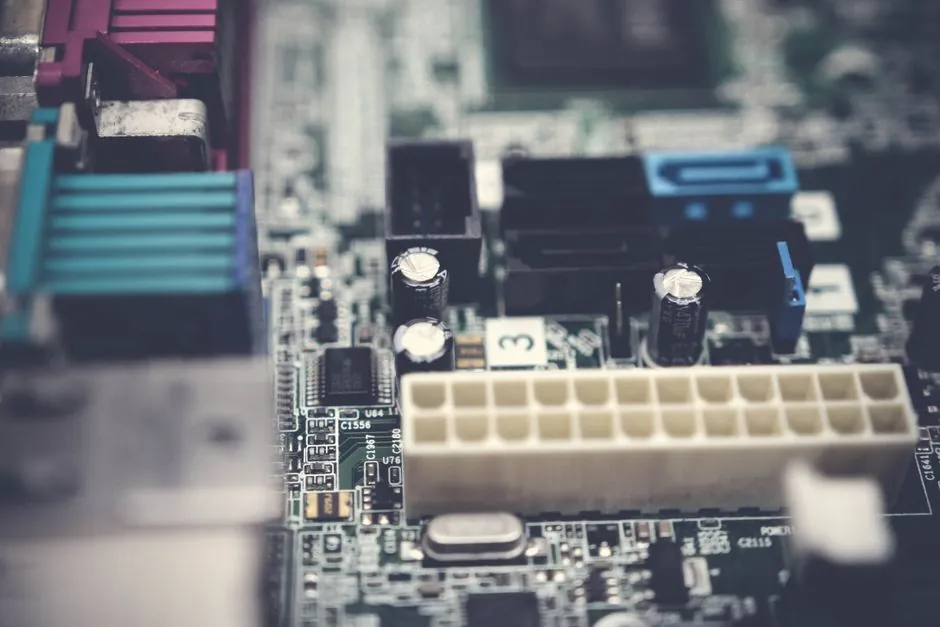
Discrete LPDDR4 and LPDDR4X SDRAM is being shipped in 16 Gb and 32 Gb densities on a 200-ball FBGA (10.0 × 14.5 × 0.8–1.0 mm) at 3733 Mbps and 4266 Mbps data rates, 1.1 V core, with industrial temperature grades of −40°C to +95°C, per Kingston's embedded catalog and Etron Technology's industrial DRAM line [S1][S4][S8].
The offering covers the densities (8–32 Gb) and timing variants that NXP i.MX 8M, Rockchip RK3568/RK3588, and other common Linux-capable application processors reference, making it the lowest-friction main-memory option for new industrial gateways, HMIs, and edge nodes when the design does not need LPDDR5-class bandwidth [S2][S3].
Why LPDDR4 is still the default for new embedded designs
LPDDR4 and LPDDR4X remain the safer default for cost-sensitive embedded Linux boards because the standard is mature, the SoC BSPs and DDR training tools (e.g. NXP's i.MX 8M DDR tool) cover it, and the supply chain for industrial-grade parts is wider than for LPDDR5 [S2][S3].
Micron's LPDDR4/4X specification lists I/O voltages of 1.1 V (LPDDR4) and 0.6 V (LPDDR4X), and the family spans 2 Gb to 128 Gb densities, so a single vendor roadmap can carry a design from an 8-bit data-logger up to a 32-bit vision gateway without changing memory technology [S3].
LPDDR4X is the de facto pick for soldered-down SoM designs because of the lower 0.6 V I/O supply, which trims power on byte-wide channels and is what most NXP i.MX 8M Plus, i.MX 8M Mini, and Rockchip RK3568/RK3588 variants are validated against [S2][S3].
What industrial-grade LPDDR4 actually looks like on paper
Kingston's discrete LPDDR4 catalog shows 8 Gb and 16 Gb parts in 200-ball FBGA at 3733 Mbps, 1.1 V supply, with both a commercial/industrial grade at −25°C to +85°C and an extended grade at −40°C to +95°C in the same 10.0 × 14.5 mm footprint [S1][S4].
The denser Kingston and Etron listings move to 16 Gb and 32 Gb in 512Mx32 / 1Gx16 / 1Gx32 organizations, the same 200-ball package, and either 3733 Mbps or 4266 Mbps speed bins, with the 4266 Mbps option giving a roughly 14% headroom over 3733 for designs that push the channel [S1][S8].
Etron publishes an LPDDR4/4X SDRAM industrial DRAM line that explicitly covers 1 Gb to 32 Gb densities, designed for "novel circuit design" and high-quality long-life embedded use, which is the spec range most ARM Linux SoMs ask for [S8].
LPDDR4 vs LPDDR5: where the line actually sits

Micron rates LPDDR5 at up to 6.4 Gb/s pin speed with roughly 20% better power efficiency than LPDDR4X, and Samsung's published LPDDR5 numbers reach 6400 Mbps pin speed and 51.2 GB/s transfer bandwidth, about 51% more than LPDDR4X [S3].
In practice that bandwidth premium only matters for edge AI, multi-camera vision, robotics, automotive HMI, and 4K/NPU-driven displays; for gateways, simple Qt HMIs, data loggers, routers, and most industrial IoT nodes, the LPDDR4/4X path is faster to design, easier to source, and lower cost per bit [S3].
Designers should also remember that LPDDR is normally soldered directly to the PCB, so the memory choice locks in at board bring-up, not in the field: picking a generation the BSP and DRAM-controller training tool actually support is more important than chasing peak Mb/s [S3].
ECC and ruggedized options for safety-relevant boards
Intelligent Memory has released LPDDR4 SDRAM devices with on-chip integrated ECC, targeted at industrial, automotive, and medical applications that cannot rely on system-level SECDED alone [S7].
On-die ECC is meaningful for industrial boards where single-bit soft errors from cosmic rays or background radiation become non-trivial at high altitude, in unshielded outdoor enclosures, or in long-life installations that run for 10+ years without DRAM swap [S7].
For boards that need both ECC and an industrial temperature window, the Kingston W-suffix 8 Gb and 16 Gb LPDDR4 parts in the −40°C to +95°C grade are the closest commercial fit, and they share the same 200-ball FBGA footprint as the 8/16 Gb standard parts, simplifying second-source qualification [S1][S4].
Sourcing reality: lifecycle, second source, and temperature grades
Kingston explicitly markets its embedded discrete DRAM line as supporting commercial, industrial, and automotive temperature-grade variants, with a roadmap intent aimed at long-term availability and stable system integration for lifecycle-driven designs [S1].
The catalog breaks DDR3, DDR3L, DDR4, and LPDDR4 into a single matrix, so a board designed today on LPDDR4 has a clean migration path to a lower-power or higher-density LPDDR4X without re-laying out the channel, and an upgrade path to LPDDR5 only when the SoC and BSP catch up [S1][S3].
The wider LPDDR DRAM market was reported at $33.0 billion in 2025 and is projected to reach $63.27 billion by 2034 at a 7.5% CAGR (2025 Dataintelo), so even as the high end moves to LPDDR5 and LPDDR5X, the LPDDR4 installed base in industrial and embedded is not going away [S5].
Selection checklist for an industrial board in October 2026
For a new industrial design, the practical spec is: LPDDR4X in 16 Gb or 32 Gb density, 200-ball FBGA at 10.0 × 14.5 mm, 3733 or 4266 Mbps, 1.1 V core / 0.6 V I/O, and an industrial temperature grade of at least −40°C to +85°C (or −40°C to +95°C for outdoor or cabinet-less enclosures) [S1][S4][S8].
Add on-die ECC LPDDR4 if the board sits in a safety-relevant path, a medical device, or an automotive subsystem, and confirm with the SoC vendor (NXP i.MX 8M, Rockchip, etc.) that the chosen density and speed bin is on the validated parts list before locking the BOM [S2][S7].
Track two signals through Q4 2026: the breadth of LPDDR4X 32 Gb parts shipping in industrial temperature grades from a second source, and the published density of ECC-enabled LPDDR4 in the 16–32 Gb range, both of which determine whether LPDDR4 or LPDDR5 wins the next industrial SoM refresh [S1][S7][S8].
For component-level specifications, see embedded part, checking and testing apparatus, and construction machinery and equipment.
This topic is covered further in 5083-H116 vs 5083-H321: Temper, Sensitization and Marine Plate Selection.