Industrial Ethernet stacks are now caught in a cross-category squeeze in Q2 2026: power management IC lead times have stretched beyond 50 weeks, MCU families sit at 26-40 weeks, and the memory that buffers every managed switch and edge gateway is in the red across every quarter on Commodity IQ forecasts [S1][S2].
For procurement, design, and operations teams, the bottleneck has migrated from price negotiation to allocation, and the BOM line items most exposed are the analog and mixed-signal parts sitting alongside the Ethernet PHY, including the magnetics, DC-DC converters, PoE controllers, and the optical transceivers that connect switch uplinks to fiber backbones [S2][S3].
Which BOM Lines Are Tightest in the Industrial Ethernet Stack
The 2026 component squeeze is a structural reallocation rather than a price cycle: Tier-1 foundries have rotated advanced-node capacity toward AI accelerators, and the overflow pressure has cascaded onto the 28nm, 40nm, and 90nm mature-node processes that produce the MCUs, analog ICs, power devices, and passives that industrial Ethernet designs depend on [S2]. A representative scarcity map for European OEM buyers as of May 2026 puts power management ICs and automotive-grade ICs at 40-52+ weeks, MLCCs at 20-35 weeks, MCUs at 26-40 weeks, DRAM/NAND at 20-30 weeks, IGBTs and MOSFETs at 20-26 weeks, and industrial FPGAs at 18-26 weeks [S2].
Commodity IQ data through Q1 2027 shows DDR3, DDR4, DDR5, DRAM, HBM, and LP DDR1-4 in the red on demand, lead time, and pricing simultaneously, with the Demand Index up 70% quarter-on-quarter, lead times up 25%, and pricing up 57% [S1]. Memory has effectively been escalated from a routine component to a tier-1 procurement risk alongside the Ethernet PHY, the switching regulator, and the PoE PD controller that share its bill of materials [S1]. Buyers should be aware that the same industrial-grade DDR4 module a switch was sourced from in 2023 is no longer a guaranteed open-market line item in 2026, which changes the meaning of "second source" for the power supply and memory subassemblies on every managed switch SKU [S2].
Optical Fiber and Transceiver Lead Times Reshape the Uplink
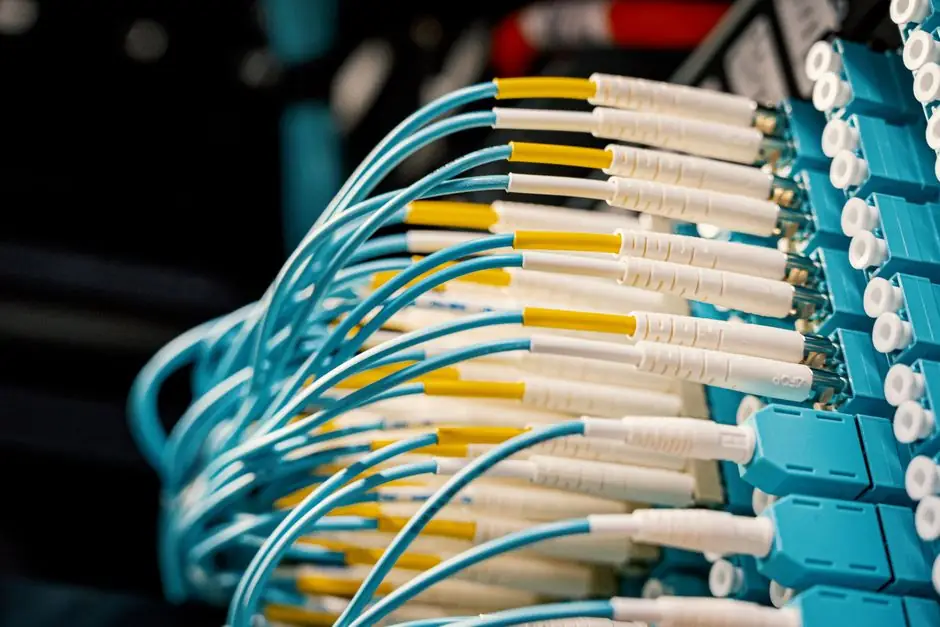
Optical fiber availability, not quoted price, is the 2026 bottleneck for the physical-layer upstream of every industrial Ethernet deployment that rolls into a data center, FTTH, or hyperscale campus, with 6-10 week lead times reported across China, North America, and parts of Europe [S3]. The supply tightness is structural: Corning's 2024 partnership with Nvidia committed to expanding U.S. optical connectivity manufacturing capacity tenfold and lifting fiber production capacity by more than 50%, a signal that hyperscalers are pulling fiber directly out of the open market rather than competing for the same allocation pool as everyone else [S3].
Inside a single AI training cluster, backbone trunks that historically ran 12 or 24 cores are now routinely specified at 144, 288, or higher fiber counts delivered as MPO/MTP trunk assemblies, and the raw-material squeeze has spread from glass to aramid yarn strength members, PBT and PE loose-tube compounds, water-blocking fillers, and LSZH jacket compounds, all of which stack further lead time on the finished cable even when fiber itself is allocated [S3][S6]. For the switching power supply feeding a managed switch that terminates these uplinks, the constraint at the fiber and transceiver level now propagates backward into the cabinet schedule, so the BOM and the build sequence have to be planned on the same Gantt chart rather than as separate workstreams [S3][S7].
Memory, PHY, and MCU: A Tier-1 Risk Comparison
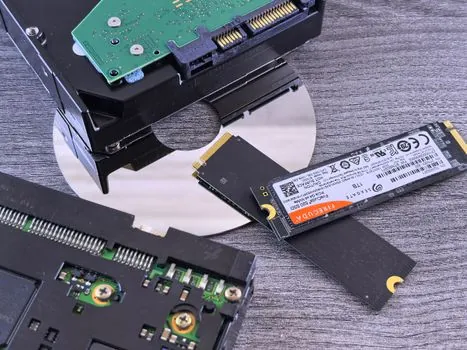
When the same industrial Ethernet switch BOM is checked across the three categories that drive its lead time, the picture is consistent: memory is structurally short, MCUs and power management are mature-node constrained, and Ethernet PHYs are pulled in multiple directions at once. [S2]
On lead time, the May 2026 European OEM data put power management ICs at 40-52+ weeks, MCUs at 26-40 weeks, and DRAM/NAND modules at 20-30 weeks, with the Commodity IQ Demand Index up 70% quarter-on-quarter and pricing up 57% in the same window [S1][S2]. On substitutability, MCUs and industrial PHYs offer limited second-source coverage because firmware drivers, reference designs, and qualification cycles are not portable across vendors, while DRAM modules have more second-source options but are now blocked by allocation rather than design-in [S1][S2]. On price exposure, the HBM, DDR5, DDR4, and NAND stack has driven rack-level memory cost in NVIDIA GB200 NVL72 systems beyond $600 per rack for the NOR parts, and the broader memory curve is up 57% on Commodity IQ, while mature-node analog and MCU pricing is climbing on allocation rather than spot scarcity [S1][S2]. The practical read is that the Ethernet PHY itself is rarely the longest line item in the BOM, but the magnetics, the DC power supply rails, and the boot flash on the same board all carry longer exposure than the silicon that gets the headline.
Foundry Allocation, Geopolitics, and the China Plus One Response
Global semiconductor revenue is projected to exceed $820 billion in 2026, with foundry capacity tilted toward advanced-node AI workloads and a smaller fraction absorbed by the mature-node parts that industrial designs actually use [S2]. Taiwan still accounts for roughly 60% of advanced chip production, U.S.-China trade restrictions continue to limit access to specific chip families, rare-earth material shortages are adding upstream pressure on magnetics and packaging, and Chinese foundries are taking on nearly 70% of new mature-node capacity expansion in 2026, a concentration that relieves some supply but concentrates geopolitical risk in a smaller number of jurisdictions [S2].
The corresponding sourcing response across the industrial Ethernet stack has shifted away from a single-hub Asia-to-North America corridor toward "China Plus One" hubs in Vietnam and India, paired with bonded warehouse agreements, pre-cleared customs protocols, and buffer-stock holds near the end consumer [S4]. For switch and gateway OEMs, the implication is that a single port closure or a single geopolitical shift in a primary corridor no longer has to freeze the entire bill of materials, provided the dual-sourcing qualification has actually been completed rather than only contracted [S4][S5]. Automotive demand is competing for the same mature-node parts, with Toyota suspending new orders for selected hybrid SUV models in early 2026 after component supply could not keep pace, a signal that even large Tier-1 buyers are losing allocation fights on power management ICs and battery control silicon [S2].
Where the 2026 Sourcing Playbook Is Landing
The consensus procurement playbook in Q2 2026 treats memory as a tier-1 risk with executive-level visibility, audits every BOM for any memory type including historically benign NOR, escalates dual-sourcing on power management ICs and MCUs, and treats distributor spot inventory as unreliable enough to be excluded from safety-stock math [S1][S2]. Phihong's 2026 OEM guide recommends building forecast accuracy and lead-time visibility into the industrial UPS and cabinet-power design cycle rather than treating them as procurement-owned variables, on the basis that 2026 lead times remain unpredictable enough to invalidate any plan that assumes a static 8-12 week window [S7].
For the industrial Ethernet layer specifically, the read is that resilience is no longer a question of finding the cheapest route, it is a question of having the most adaptable one, which in practice means a dual-supplier strategy with a delay-catching dashboard, a documented reroute path for every BOM line, a fire-drilled backup plan rather than a paper backup plan, and predictive inventory modeling that holds strategic buffer stock closer to the end customer [S4][S5]. VSE's 2026 electronics outlook reframes the problem as a shift from global shortages to component-level risk, where the resilience work is BOM-by-BOM rather than program-by-program [S8]. For teams that want the upstream-downstream spec and media map for the same stack, the industrial Ethernet sourcing map lays out the PHY, magnetics, fiber, and transceiver gates in the same language procurement and design are now using. Adjacent cabinet-power and SCADA stacks are running into the same allocation pressure, and the SCADA upstream and downstream map is a useful parallel for teams that also touch controller and I/O silicon on the same projects.
Trackable signals over the next two quarters: the next Commodity IQ memory heat-map revision for the Q3 2026 column, the next published lead-time band from European OEM distributors on power management ICs and MCUs, and any HBM, DDR5, or NOR allocation note from the GB200 NVL72 supply chain, since these are the leading indicators that the industrial Ethernet stack is either decoupling from the AI-driven memory squeeze or remaining structurally tied to it [S1][S2].