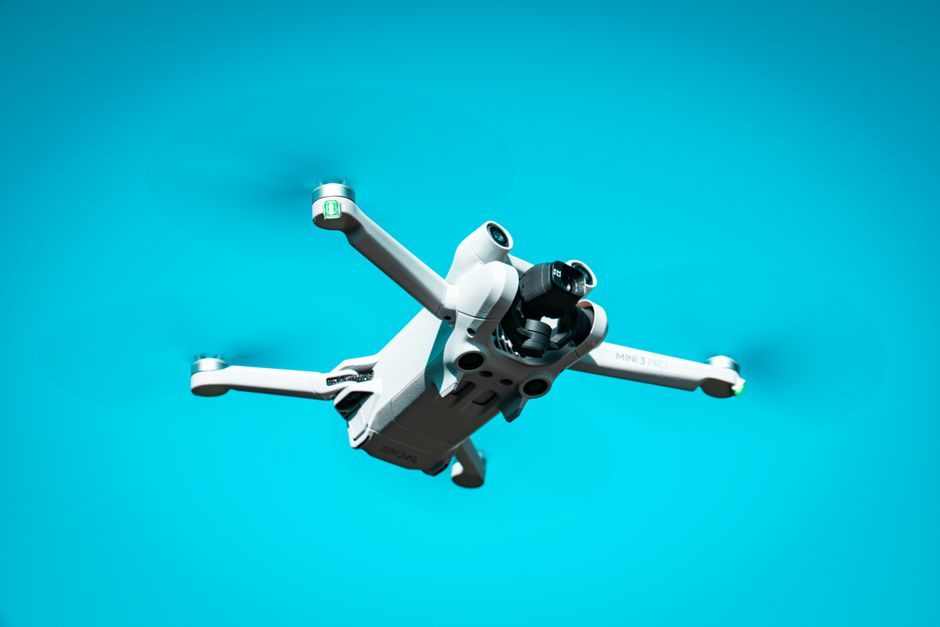
Three commercial-drone forecasts published in 2026 put the global UAV market between USD 30.18 BN (2025 base) and USD 40.56 BN (2030 endpoint) at a 9.2% CAGR, with the narrower delivery-drone slice sized at USD 1,013.7 Mn in 2026 and tracking a 42.9% CAGR to USD 12,335.3 Mn by 2033 [S1][S6].
Military drones, the third leg of the market, run on a separate scale and forecast cadence; the public The Business Research Company index dated 2026-06-19 segments them by MALE, HALE, TUAV, UCAV and SUAV platforms and by remotely operated, semi-autonomous and autonomous technology classes [S3].
2025-2030 Civil + Defense UAV Aggregate: USD 30.18 BN → 40.56 BN at 9.2% CAGR
MarketsandMarkets puts the headline UAV figure at USD 40.56 BN in 2030, working back from a 2025 base of USD 30.18 BN and a 9.2% CAGR across the 2025-2030 window in its 482-page, 509-table report dated 2025-02-25 [S6].
The same forecast slices the platform mix into Civil & Commercial plus Defense & Government, with separate cuts by Sales Channel, Systems, Function, Industry, Application, Mode of Operation, MTOW and Range — the structural reason the same airframe (a quadcopter) shows up under inspection, surveying, last-mile delivery and public-safety buckets at different ASPs [S6].
For procurement teams the practical read is that the 9.2% figure is the slowest of the three 2026-published CAGRs in this brief, so unit growth for off-the-shelf commercial frames is being driven by application count, not by any one vertical inflating. Component buyers, including the servo and motion-stack side covered in the motion controller buying guide 2026, should plan around 8-10% annual volume expansion rather than double-digit.
Delivery Drones 2026-2033: USD 1,013.7 Mn → 12,335.3 Mn at 42.9% CAGR
Coherent Market Insights sizes the delivery-drone segment at USD 1,013.7 Mn in 2026 reaching USD 12,335.3 Mn by 2033, a 42.9% CAGR that runs 4-5x faster than the broader UAV aggregate [S1].
Multi-rotor wings hold 48.7% share of the 2026 delivery segment on the strength of urban agility and lower unit cost than fixed-wing or hybrid platforms [S1]. The multi-rotor wings segment holds 48.7% share of the 2026 delivery drone market, and the remainder of that market represents the practical envelope for fixed-wing and hybrid delivery drones — a ratio fleet operators should stress-test against route length and payload.
Delivery payload control loops, hover stability and ground-station feedback are exactly the subsystem decisions a process engineer will recognise; the same spec gates that drive a flow meter or a pressure transmitter choice (range, accuracy class, protocol, environment rating) drive the onboard pitot, mass-flow and baro sensors on a delivery UAV.
Military Drones 2026: MALE, HALE, TUAV, UCAV, SUAV Platform Split
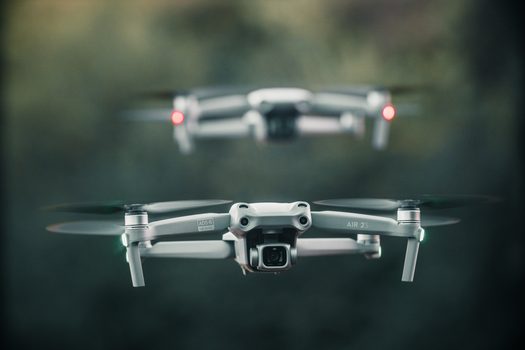
The Business Research Company's military-drone report dated 2026-06-19 (150 pages, January 2026 data cut) breaks the segment by drone type — MALE, HALE, TUAV, UCAV and SUAV — and by technology class into remotely operated, semi-autonomous and autonomous [S3].
Type is further cut as Fixed-Wing, Rotary Wing and Hybrid, with applications spanning Search And Rescue, National Defense and Military Exercises [S3]. The MALE/HALE separation is a wings-and-endurance cut (medium-altitude long-endurance vs high-altitude long-endurance), and UCAV sits at the unmanned-combat end of the platform list — the spec gates between SUAV and UCAV differ by two orders of magnitude on payload mass and datalink range.
Autonomy is the technology axis that matters most for 2026 procurement: a remotely operated SUAV and an autonomous TUAV can share an airframe but not a flight computer, and the PLC-grade mission computer inside the latter is closer to an industrial safety-PLC than to a hobby flight controller.
Type vs Platform vs Application: How the Three Forecasts Slice Differently
The three reports do not slice the same way. MarketsandMarkets uses Type (Fixed Wing, Rotary Wing, Hybrid) crossed with Platform (Civil & Commercial vs Defense & Government), Sales Channel, Systems, Function, Industry, Application, Mode of Operation, MTOW and Range [S6].
Coherent slices delivery drones by Drone Type (multi-rotor vs the rest), Component, Range, Payload, End User and Region [S1]. The Business Research Company slices military drones by Drone Type, Technology, Type and Application, with no civil/commercial cut [S3]. The practical impact: a "rotary-wing" line item in a civil UAV table is not the same SKU as a "Rotary Wing" line in a military table, and quoting one CAGR against the other needs an explicit platform tag.
Direct comparison, four decision criteria:
• Scope — Civil + Defense + Commercial: MarketsandMarkets 9.2% CAGR, USD 40.56 BN by 2030 [S6].
• Scope — Delivery-only (civil): Coherent 42.9% CAGR, USD 12,335.3 Mn by 2033 [S1].
• Scope — Military only: TBRC report 2026 cut, platform split MALE/HALE/TUAV/UCAV/SUAV [S3].
• Data depth — MarketsandMarkets 482 pages / 509 tables [S6] vs TBRC 150 pages [S3] vs Coherent public sample [S1]. For a buyer writing a sourcing spec, MarketsandMarkets is the densest single source for civil/defense unit economics, TBRC for military platform granularity, Coherent for delivery-segment concentration ratios.
Component Implications: Servos, Sensors and Avionics Pull-Through

For the delivery segment at 42.9% CAGR, the pull-through is asymmetric: rotors, ESCs, battery packs and cargo-release actuators scale nearly linearly with airframe count, while the onboard compute and 4G/5G+ satcom datalink scale per aircraft but with a much higher ASP step. A fleet buyer doubling from 100 to 200 units pays roughly twice for the first group and 1.7-1.9x for the second, depending on datalink choice.
Procurement teams who also spec industrial valves and instruments will see the same vendor-overlap pattern: the industrial valve and pressure transmitter supply base for chemical and water plants overlaps with the solenoid, regulator and relief-valve supply base for UAV ground support equipment, so dual-source qualification is feasible on the same audit.
What Each Forecast Does Not Tell You
None of the three 2026-published reports discloses installed-base unit count, average selling price per airframe class, or regional revenue split down to country level in the public sample [S1][S3][S6]. Coherent's delivery-drone sample gives a 48.7% multi-rotor share for 2026 but no unit count behind it [S1].
MarketsandMarkets' 9.2% CAGR is a blended figure across Civil & Commercial plus Defense & Government and across all MTOW and Range bands, so a high-altitude fixed-wing survey drone and a sub-250 g quadcopter are averaged together [S6]. The Business Research Company's military report similarly blends MALE, HALE, TUAV, UCAV and SUAV into one segment value, and a 2026-06-19 datestamp does not equal a Q2 2026 refresh on the underlying numbers [S3].
Trackable signals for the next forecast cycle: Coherent's 2026 USD 1,013.7 Mn delivery-drone base is the smallest absolute number in the three reports and therefore the one most sensitive to a single regulatory event (FAA Part 135 BVLOS rule, EASA U-space airspace harmonisation); a +/- 15% revision to the 2026 base moves the 2033 endpoint by roughly USD 1,850 Mn at the published 42.9% CAGR. MarketsandMarkets' 2025 base of USD 30.18 BN is anchored deep enough that a single regulatory move will not move the 2030 figure materially, while TBRC's military segment will be the one to watch for 2026 H2 supplemental updates given the January 2026 data cut embedded in the June 2026 publication date [S1][S3][S6].