
A down-the-hole (DTH) drill transmits hammer impact directly behind the bit, so the rig must be specified jointly with its air package, drill-rod string and ground-pressure rating rather than as a standalone machine [S3].
For 2026 procurements, the operating envelope covers portable rigs under 3,000 USD for shallow boreholes and 194 kW integrated crawlers like the Kerex KY1000 for deeper water-well and mineral-exploration campaigns [S4][S5].
How a DTH Rig Works and Why the Air Supply Sets the Envelope
The down-the-hole hammer combines a cylindrical tube, internal piston and drill bit; high-pressure air drives the piston in reciprocating motion and exhausts through the bit to lift cuttings out of the borehole at the same time the hole is being advanced [S3]. Typical rotation is 35–60 rpm, which is far slower than rotary-only rigs because the bit is being struck rather than ground [S3].
That dual role — impact energy plus cuttings evacuation — is why every OEM bundles the rig with a matching screw or piston compressor, and why a 15 bar / 17 m³·min⁻¹ class machine is the practical floor for 4–6 inch blasthole work in hard rock [S1]. Buyers who undersize the compressor typically see penetration rates collapse below 8 m·h⁻¹ even when the rig itself has surplus pull-down force.
The Six Selection Gates: Depth, Rock, Mobility, Air, Hammer Size, Carrier
Depth is the first hard gate. Impact rigs without flushing are usually capped at 250 m, with occasional stretches to 500–600 m in soft ground, while top-hammer cable-tool rigs stop at 40–50 m (max 100–150 m) and a properly matched hydraulic DTH crawler handles 150–400 m commercial water wells [S3].
Rock hardness and hole diameter map to hammer size: 3–4 inch hammers suit 90–115 mm blastholes in medium-hard rock, 5–6 inch hammers cover 130–165 mm in granite and iron-formation, and 8 inch+ hammers are reserved for production blastholes above 200 mm. The composite rig described by JK Drilling pairs the DTH hammer with rotary slewing so that a cobble or weathered horizon can be drilled by impact while competent sections are advanced by rotation [S3].
Mobility is the third gate. Portable rigs such as the Gaodetec GD160 list at USD 2,800 per set on a 1-set MOQ and target 30–80 m rural boreholes [S5]. Crawler-mounted hydraulic units, by contrast, integrate a steel chassis, dual oil-cylinder lift and a 194 kW Cummins engine in the Kerex KY1000 class, and are built for multi-shift quarry or mineral-exploration duty [S4]. Trailer and truck-mounted rigs fill the middle band where road access exists but a full crawler footprint does not [S1].
Air supply, hammer size and carrier must be co-specified. A typical integrated DTH rig ships with a 15–24 bar integrated screw compressor sized in cubic feet per minute (cfm) of free air delivery, and a mismatched package — for example a 6 inch hammer on a 12 bar / 10 m³·min⁻¹ compressor — is the most common cause of stuck bits and lost shifts in the field.
Crawler DTH vs Portable DTH vs Top-Hammer Crawler: A Direct Comparison

Three rig families compete for the same specification slots, and the table below lines them up on the four criteria that drive the purchase decision. [S1]
Crawler hydraulic DTH rigs deliver 150–400 m depth, 4–8 inch hole range, 15–24 bar onboard air and 60,000–250,000 USD unit price, with the trade-off being track maintenance and transport permits [S1][S4].
Portable DTH rigs (the GD160 class) cover 30–80 m depth, 2–3 inch holes, rely on a separate rented compressor, and sit under 5,000 USD, with the trade-off being limited rod-handling and no on-board dust collection [S5].
Top-hammer crawler rigs use a hammer mounted on the feed beam above the hole rather than down inside it; they are faster in shallow hard-rock passes above 80 m but cannot maintain straightness in deep holes the way a true DTH hammer can, and they are commonly sold as crawler jumbos in the same Sanrock catalog as the DTH line [S1].
For buyers who also handle forklifts on site, the selection logic mirrors rig selection — match the engine tier, lifting capacity and duty cycle to the job, as laid out in the diesel forklift price and cost guide for 2026.
Matching Air Compressor, Drill Rod and Dust Suppression
The compressor must deliver pressure 2–3 bar above the hammer's working pressure and free air delivery in cfm scaled to hammer size; a 4 inch hammer typically needs 250–350 cfm at 17–21 bar, while a 6 inch hammer needs 450–600 cfm at the same pressure band [S1].
Drill rod OD must match the hammer's chuck: 76 mm rods for 3 inch hammers, 89–102 mm for 4 inch, 114–127 mm for 5 inch, and 140–165 mm for 6 inch. A 1 mm wall-thickness downgrade on the rod reduces fatigue life faster than it saves weight, and field failures usually show up as shoulder cracks within 800–1,200 m of drilled meterage.
Dust suppression is increasingly a procurement gate, not an option. Dry cuttings evacuation is the inherent DTH weakness in residential water-well work, and most 2026 OEM brochures pair the rig with a water-injection collar or a dry-filter cyclone sized at 0.8–1.2 times the compressor cfm. Buyers in dust-regulated jurisdictions should spec the cyclone from day one rather than retrofit.
Common Failure Modes and Operating Constraints

Stuck drill strings are the single most common field failure, almost always caused by under-rated air delivery, oversized hammer for the rock, or poor collar alignment on startup [S3].
Air-line lubrication failures shorten hammer piston life from a nominal 1,500–2,000 operating hours to under 400 hours; field crews that switch to dry-air operation in winter without an inline lubricator see rapid seal and piston scoring.
Carriers also constrain the spec. A crawler under 8 tonnes total weight cannot absorb the reactive forces of a 6 inch hammer on hard granite without frame flex, which is why mid-size integrated rigs such as the Kerex KB16 are specified with reinforced steel chassis and dual oil-cylinder lift for mast stability [S4].
For procurement teams that also select process equipment like valves and flow meters, the four-gate spec logic carries over: match the duty rating, the standard, the material and the supplier track record before price, as shown in the investment casting equipment selection map.
Where DTH Drills Win and Where They Don't
DTH wins in hard-rock blasthole work above 80 m, in straight-hole water-well drilling where deviation must stay under 1 percent per 100 m, and in mineral-exploration core pre-collars where hole straightness drives wireline success [S3].
DTH loses in soft overburden above the water table, where rotary mud drilling is faster; in residential areas where noise and dust are restricted; and in shallow 2–3 inch holes below 30 m where the cost-per-metre is dominated by mobilisation rather than drilling time. A 30 m farm borehole is cheaper on a 3,000 USD portable unit than on a 100,000 USD crawler once mobilisation, site access and crew time are totalled [S5].
Buyers evaluating packaging line equipment under similar depth-versus-throughput logic can apply the same gates, as detailed in the shrink wrapping machine selection guide.
2026 OEM Lineup and Pricing Signals
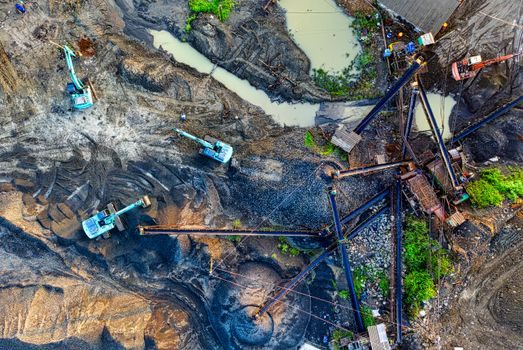
The 2026 Chinese OEM lineup spans Sanrock's full hydraulic crawler, underground jumbo, separated crawler, integrated crawler, jack-hammer and photovoltaic pile-driver range [S1]; Kerex's KB16 integrated and KY1000 194 kW crawler units [S4]; and entry-level portable rigs such as the Gaodetec GD160 at USD 2,800 per set FOB [S5]. Hybrid-power crawler units such as the historical STL130 reference design have been superseded in 2026 catalogs by diesel-electric and Tier-4 Final engine packages.
Trackable procurement signals for the next buying window include Tier-4 Final / Stage V engine adoption on mid-size crawlers, factory-bundled compressor-and-rig packages to remove the air-matching risk, and increased dry-dust cyclone fitment as urban water-well projects come under tighter particulate rules. Buyers should lock compressor pressure, cfm and hammer size in writing before signing, because the OEM's standard package rarely matches the actual rock condition on the first site visit.
For component-level specifications, see rotary drilling rig, linear guide, and crossed roller guide.