
MSW landfill haul fleets in 2026 are typically built around articulated dump trucks (ADTs) and rigid off-road end-dump units in the 25-40 ton payload class, with on-road tandem-axle end-dumps (20-30 tons) reserved for the public-road segment between transfer station and landfill entrance [S1][S3].
Landfill operation is not generic construction haul: a working face imposes soft subgrade, steep 8-12% grade ramps, shredded waste with embedded abrasive fines, and a daily cover cycle that runs the same truck through cover-borrow pit, haul road, and active cell in one shift. The spec envelope is therefore narrower than the construction market, and a few criteria carry the decision [S2][S5].
Payload and Axle Configuration Matched to the Working Face
Dump truck payload scales with axle count: 2-axle on-road units hold 10-20 tons, 3-axle units 20-30 tons, 4-axle units 25-35 tons, and 6-axle highway tractors with end-dump trailers reach 30-40 tons gross cargo weight [S1]. Landfill haul typically sizes to 3- or 4-axle rigid trucks (25-35 ton payload) to balance cover-borrow pit cycle time against the 30-40 metric ton hydraulic excavator shovel that loads the box, keeping match-factor between 1.0 and 1.2 across the active tipping face [S1][S5].
For larger cells with longer internal hauls (over 1.5 km one-way), 6x6 articulated dump trucks in the 30-40 ton class become the right pick, because the oscillating hitch keeps all wheels loaded on uneven landfill cover, and the higher approach angle clears the 200-300 mm windrows operators push at the perimeter of each lift [S3][S4].
Body Material, Floor Hardness, and Cover Material Abrasiveness
Landfill bodies see more wear per ton hauled than any construction application, because daily cover often contains demolition grit, foundry sand, or composted biosolids with high silica content; high-strength steel floors in the 8-12 mm range with replaceable 16-20 mm Hardox 450 or equivalent abrasion-resistant liners are the typical specification on new ADT builds for MSW service [S3].
Side walls on landfill-spec bodies are usually 6-8 mm high-tensile steel with top rails reinforced to take the impact of excavator buckets swinging 4-6 m above the box; tailgates are specified as either high-lift ejector (for clean tipping on a sloped working face) or sloped-side hinged (for sticky cover material that does not release cleanly from a flat tailgate) [S2][S3]. A high-lift ejector adds 1.5-2.0 tons to the empty weight, which the spec writer has to net out of the legal payload before final selection.
Ground Pressure, Tire Selection, and Subgrade Protection

A fully loaded 30-ton ADT exerts roughly 350-500 kPa contact pressure on 23.5R25 or 26.5R25 tires, which is too high for direct operation on a clay-lined or geosynthetic-clad cell; standard landfill operating procedure routes loaded trucks onto a 300-600 mm working blanket of select fill or shredded green waste before they reach the liner interface [S5].
This single change in tire management is the most cost-effective subgrade protection lever short of building more all-weather road.
Turning Radius, Body Style, and Active Face Geometry
Side-dump trucks unload left or right without backing, which makes them a strong fit for long, narrow working faces where the excavator sits on a bench above the truck and the truck cannot turn around, but they cap payload at 20-25 tons in most road-legal configurations and have higher empty weight per ton of cargo than an end-dump of the same axle count [S3][S4].
End-dump rigid trucks require 12-18 m of clear forward space to tip safely, and a 9-11 m wall-to-wall turning corridor; on tight urban transfer stations, 2-axle end-dumps with 10-20 ton payload are still the most maneuverable pick [S1][S4]. ADTs cut the turning corridor to 7-9 m wall-to-wall because of the articulated hitch, which is why they have become the default for greenfield landfill cells larger than 20 hectares.
Diesel Engine, Aftertreatment, and On-Site Emissions
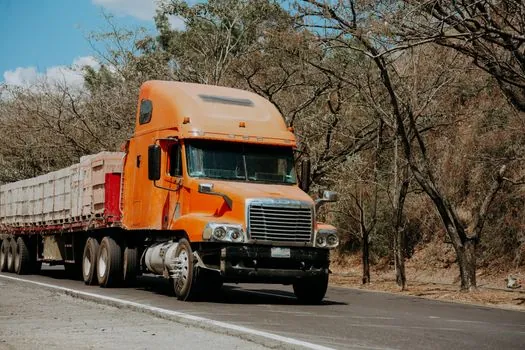
Modern landfill-spec dump trucks for the North American market are powered by 9-15 L diesel engines in the 280-450 kW band, paired with selective catalytic reduction (SCR) and diesel particulate filter (DPF) aftertreatment to meet EPA Tier 4 Final off-road emissions for units above 130 kW, and EPA 2010 on-road emissions for highway segments [S3].
European landfill operators moving material on-road between sites must also meet Euro VI step E heavy-duty emissions for tractor units, which adds roughly USD 8,000-12,000 to the chassis price over a Tier 3 equivalent, but the cost is offset by 5-8% lower fuel consumption at constant 80 km/h cruise on the highway segment [S1][S4]. For stationary loading and idling at the working face, automatic engine idle shutdown at 5 minutes is the most common spec line.
Comparison: Three Body Styles for Landfill Haul
The three configurations most landfill buyers compare line up as follows: (a) rigid on-road end-dump, 20-30 ton payload, 12-18 m tipping clearance, 9-11 m turning radius, lowest unit cost, best for transfer-station-to-landfill shuttle under 30 km; (b) ADT off-road end-dump, 30-40 ton payload, 7-9 m turning radius, oscillating hitch, best for internal haul over 1.5 km on soft cover; (c) side-dump, 20-25 ton payload, no backing required, 4-5 m wall-side clearance, best for narrow trench cells and steep bench faces [S1][S3][S4].
Operating Limits and Failure Modes in Landfill Service
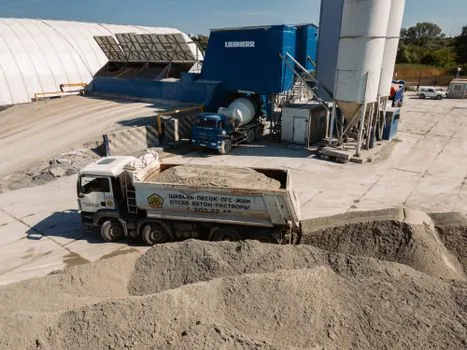
The three failure modes that take a landfill dump truck out of service first are: (1) body floor wear-through over the rear hinge, normally at 8,000-12,000 operating hours in abrasive cover service and addressable with the Hardox liner spec; (2) hoist cylinder seal failure from dust ingestion, addressable with dual-stage wiper seals on the 150-200 mm bore cylinder; (3) transmission overheating on long up-ramp hauls at 8-12% grade, addressable with a larger cooler or a continuously variable transmission on newer ADT models [S2][S3].
A documented haul-cycle study and a dump truck payload audit, taken together, will tell the buyer whether to add an axle or add a truck.
Related reading: for the working face and cover-compaction side of the operation, the concrete pump truck selection for landfill operations and tank cleaning machines for landfill operations pages cover adjacent equipment picks. The dump truck encyclopedia entry is the broader spec reference, and buyers looking at heavier off-road tonnage should cross-check against the mining dump truck page for the 40-100 ton rigid frame class.
Trackable signals for the next 6 months: (a) Tier 5 off-road emissions rule status in the United States, which would re-rank the diesel versus hybrid-electric ADT options for 130-560 kW machines; (b) OEM availability of factory-fit Hardox 450 liners, currently a 6-10 week lead-time item; (c) telematics-driven payload weighing on each lift, which is moving from a 2-3% overload error band to under 1% on 2026 model-year chassis [S3][S4].
Detailed specification references: reach truck.