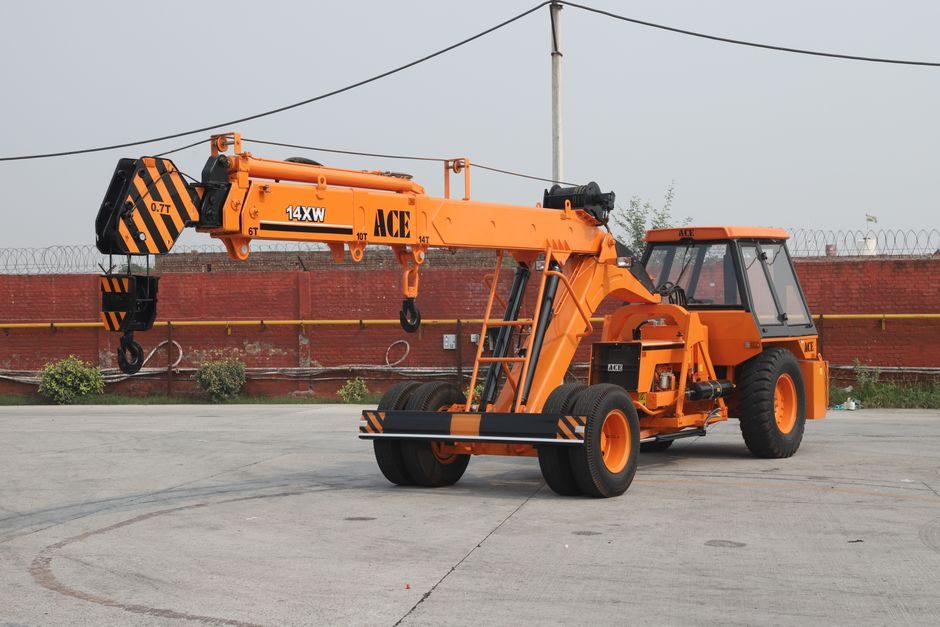
List price for a crawler-mounted dynamic compactor sits at US$1,000,000–1,500,000 FOB per unit on Made-in-China listings (MOQ 1) [S2]. Above that band, OEM direct quotes typically scale with base machine mass, hammer kinetic energy and tier-1 brand premium (BOMAG, Ammann, XCMG, JCB, Sany), with most mid-range buyer spend concentrating between roughly US$120,000 and US$350,000 for a hydraulic-impact 4–8 t roller unit.
Walk-behind plate and trench-plate tampers — the smallest end of the family — open at roughly US$2,000–5,000 for a domestic Chinese label, climb to US$8,000–25,000 for a 400–700 kg reversible plate from a recognised European or Japanese brand, and reach US$30,000–80,000 once you add a dedicated high-impact tamper attachment or a remote-controlled demolition-spec base. A spec-led dynamic compactor buying guide goes deeper on selection, but the pricing logic tracks the same three levers: mass × drop height × blow rate.
Price Bands by Machine Class
Dynamic compaction equipment splits into four working classes, and the band of each is tight enough to budget against. Plate compactors under 200 kg — useful for paver bedding, trench backfill and small asphalt patches — sit at US$2,000–8,000 for a domestic build and US$6,000–20,000 for an EU/JP-branded reversible unit with 25–35 kN centrifugal force [S2]. Reversible plate and walk-behind rollers in the 400–800 kg band (35–55 kN) list at US$15,000–50,000; this is the most common rental-fleet segment and the one with the tightest discount spreads.
Self-propelled single-drum soil rollers (8–14 t, 100–200 kN) sit at US$80,000–220,000 for Chinese OEM and US$140,000–350,000 for tier-1 imports. Crawler-mounted heavy dynamic compactors — the class that drops 5–40 t weights from 10–30 m for ground improvement, mine backfill and waste densification — anchor at US$1,000,000–1,500,000 per unit FOB for a Jida-class crawler [S2], with custom-built rigs carrying larger drop weights or hydraulic winch assist clearing US$2 million before options such as GPS impact logging or Tier 4 final engines are added.
What Drives the Cost: Force, Mass, Hydraulics
Three engineering quantities dominate the bill of materials and, by extension, the price: tamper mass, drop height and blows per minute. For walk-behind units, the same lever is the eccentric weight and the amplitude — a 500 kg reversible plate running at 80 Hz is structurally a different casting and a different bearing package from a 200 kg unit at 100 Hz, and the BOM difference shows up as a 2–3× list-price gap [S2].
Hydraulic system pressure and pump flow are the second cost driver. Open-centre gear pumps at 16–21 MPa keep a US$3,000–6,000 plate compactor affordable; load-sensing axial piston systems at 28–35 MPa, used on reversible plates and rollers for variable-frequency control, add roughly US$4,000–12,000 to the build. Tier 4 final / Stage V diesel aftertreatment on rollers above 19 kW is a hard line item: DPF + SCR + ECU adds US$8,000–15,000 versus an equivalent Stage IIIA / Tier 3 package, and that delta is one of the most visible gaps between Chinese OEM export rolls and EU-spec stock.
Brand Tier and Its Effect on List Price

Tier-1 European brands (BOMAG, Ammann, Wacker Neuson) and Japanese majors (Sakai) carry a 30–80% premium over equivalent-mass Chinese OEM machines, reflecting dealer network, residual value and the cost of EPA Tier 4 / EU Stage V compliance documentation. Within China, the premium brand split is XCMG, Liugong, Sany and Shantui at the top, Jida and a long tail of provincial manufacturers in the volume mid-band, and small forging-shop assemblers at the low end where plate compactor FOB prices can dip below US$1,500 but warranty support, spare-parts depth and CE documentation are correspondingly thin [S2].
For comparison with adjacent foundation gear, the diaphragm-wall-grab segment follows a similar brand-tier curve, and the diaphragm wall grab price & cost guide breaks the per-metre and per-unit economics for that family. Buyers who already run mixed Chinese-OEM fleets tend to gravitate to the same suppliers for trench rollers and tampers, because the cost-of-ownership picture (parts, dealer reach, telematics) is more predictable than chasing the lowest sticker.
MOQ, Shipping and Incoterm Effects
Made-in-China listings on the heavy crawler class show a hard MOQ of 1 unit with a US$1,000,000–1,500,000 price band [S2], which is effectively a single-machine quotation rather than a bulk-buy threshold. Walk-behind and reversible plate categories are usually quoted at MOQ 1–5 units with 5–15% tiered discounts kicking in at 10, 50 and 200 units — the volume break points where container packing density and OEM stamping-tool amortisation start to matter. FOB Shanghai / FOB Qingdao is the default; CIF to a US Gulf or EU North Sea port adds US$8,000–25,000 for a 40 ft HC container of small plate compactors and US$40,000–90,000 for a crawler unit rolled onto a flat-rack.
Lead time on a stock-configuration reversible plate is typically 7–15 days ex-works; on a configured roller (engine emission spec, drum width, telematics), 30–60 days; on a custom heavy crawler with non-standard drop weight, 90–150 days including factory acceptance test. These windows are part of the real cost: a 60-day delay on a US$2 million crawler rig at 8% working-capital cost is roughly US$26,000 of carry, which is the same order as a full option package.
Spec Gates That Decide the Build
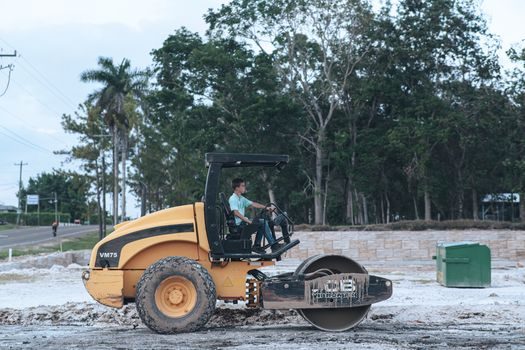
For dynamic compaction in ground-improvement applications, the spec gate that matters most is the depth-of-influence envelope, which scales with the square root of the product (mass × drop height). A 10 t weight dropped 15 m and a 20 t weight dropped 10 m deliver comparable energy per blow (~1.5 MJ), but the heavier tamper mobilises a deeper influence zone (~12 m vs ~9 m on granular fill) at the cost of a heavier mast and a larger crawler. For trench and paver work the gate is frequency and amplitude: 80 Hz / 1.2 mm is the asphalt-spec sweet spot, while 55 Hz / 2.0 mm suits cohesive fill. [S1]
Material of construction is the next gate. Ductile iron base plates, forged steel eccentric shafts and Hardox 400/450 wear liners on the tamper foot are the durability upgrades that cost an extra US$1,500–4,000 on a plate compactor and double the bearing life in rocky fill. For a comparison frame, the check valve 2026 price & cost guide walks the same body-material-and-class logic for a different equipment family, and the pattern — class rating, material, MOQ tier — maps cleanly across to compaction kit.
Total Cost of Ownership Levers
Sticker is roughly 60–75% of five-year cost on a reversible plate and 50–65% on a heavy crawler. The rest is fuel, filters, eccentric-bearing replacement, wire-rope on crawler winches, and the engine-emissions service interval. A 19 kW Stage V reversible plate running 1,200 hours a year burns about 2,200 L of diesel and needs an eccentric-bearing service at 1,500–2,000 hours — the bearing job alone is US$1,200–2,400 in parts. Crawler-rig rope replacement on the drop winch is scheduled at 800–1,200 drops and runs US$6,000–15,000 per change on a heavy unit. [S2]
Telematics and impact-logging (GPS-mapped blow count, drop height verification, operator ID) cost US$3,000–8,000 upfront plus US$400–900/year per machine, and they pay back fast on ground-improvement contracts where proof of compaction is contractually binding. For fleet buyers cross-shopping other site kit, the fluid coupling price & cost guide and the diaphragm wall grab vs pile driver spec cut cover the adjacent powertrain and foundation categories with the same band-and-lever breakdown.
Limitations, Failure Modes, Sourcing Watch-Outs
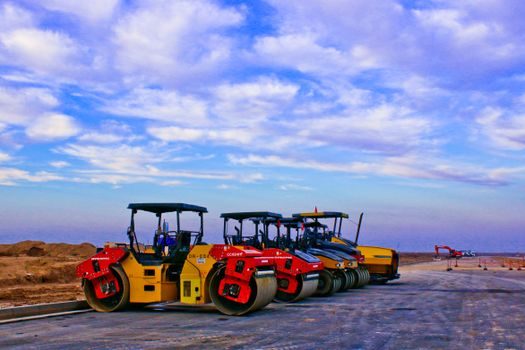
Dynamic compaction is not a universal fix: it does not work in saturated clays where pore-pressure dissipation is slow, in soils with buried utilities or voids, or within roughly 1.5× the tamper-foot width of sensitive structures. Specifying a heavier drop weight than the host structure can tolerate is a real failure mode — vibration monitors at adjacent buildings become a contractual line item, and the cost of those monitors (US$2,000–6,000 per project) should be priced in alongside the rig. Sourcing watch-outs at the low end of the Chinese market include non-genuine hydraulic pumps disguised as Rexroth/Linde units, missing CE/EPA documentation, and no-load factory test reports — all of which turn into customs holds or warranty voids downstream. [S3]
For procurement teams, the cleanest verification chain is: OEM audit report (SGS / BV / TUV) on the supplier profile, witnessed FAT at the factory including a drop-test log on heavy crawlers, and a 12–24 month warranty backed by an in-region service partner. The Made-in-China listing class for a 1-piece MOQ US$1,000,000–1,500,000 crawler [S2] is a realistic starting point for budgetary quotation, but final landed cost usually lands 12–25% above FOB once spares, commissioning, sea-freight and Tier 4 documentation are added.
Trackable signals worth watching through Q3 2026: whether Chinese provincial OEMs publish a unified Stage V / Tier 4 final price list for the EU and US export channels, and whether BOMAG / Ammann release a telematics subscription model that bundles impact-logging into the base roller price. Either move would re-base the mid-band 8–14 t roller list prices by a measurable margin.
For component-level specifications, see dynamic compactor, linear guide, and crossed roller guide.