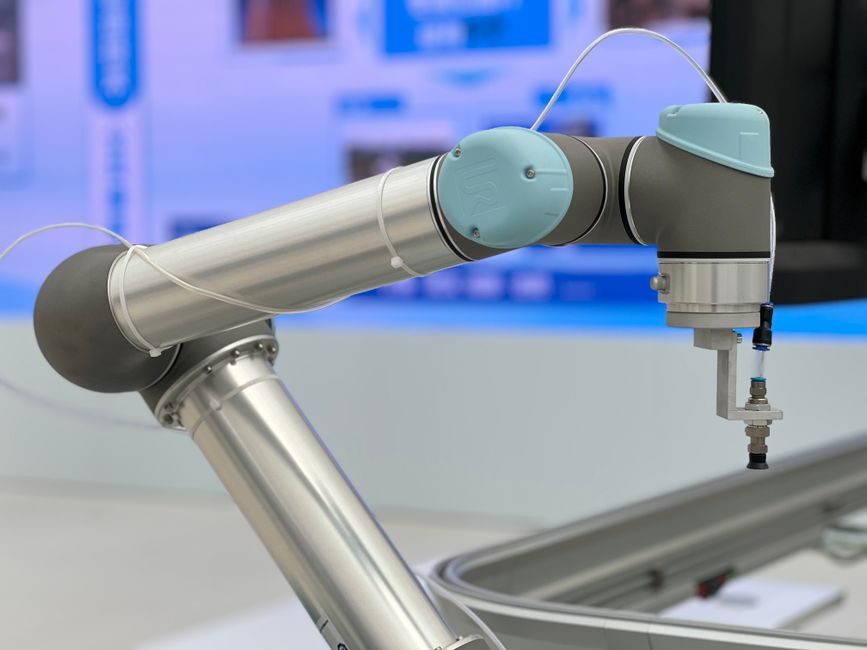
EASYLINK Industrial will break ground on a roughly 40,000 m² fastener plant adjacent to the North Kaohsiung Industrial Park in Gangshan District, Kaohsiung, with mass production targeted for 2027 [S2].
The expansion is sized against a published 42.87-hectare park master plan that allocates about 25.82 hectares to industrial users, placing the new line inside Taiwan's established metalworking and fastener cluster [S2].
Plant Footprint and Site Context
The Gangshan-District site sits inside a Kaohsiung City investment-promotion zone whose stated industry mix is metal products, machinery, and optoelectronics, and that mix is a key reason green- and flood-control infrastructure is being added before tenant build-out [S2]. The 40,000 m² building footprint is not a single-process shop floor — EASYLINK's public plant schematic splits capacity across cold forging single-station cells, multi-station forming, thread rolling, tapping, automatic assembly, and secondary turning/milling lines, each with its own upstream-to-downstream material handoff [S2]. For a process engineer auditing the spec sheet, that layout is a deliberate change from the historical "one press per bay" fastener shop, because it pre-allocates the floor for in-line thread-rolling and in-process gauging rather than batch hand-off between rooms. The same source notes that transport, leasing, and park-level schedules are still subject to Kaohsiung City policy updates, so plant completion remains a 2027 target rather than a fixed handover date [S2].
Smart Factory Stack: ASRS, Optical Sorting, Cloud AI
EASYLINK's published automation inventory is unusually concrete: an AS/RS warehouse with 6,000 pallet locations, a separate AS/RS die-storage system with 10,000 locations, 176 Smart Bin pick-face slots, and 52 high-end optical sorting machines running 360-degree inspection [S2]. For a spec writer benchmarking cold-formed fasteners, the 360-degree optical sort is the headline — it implies top, side, and bottom vision per part, which is the practical threshold for catching thread-rolling tears, head-fill under-fill, and shank scratch defects that a single-camera sort would let through. Cloud and AI data-analysis modules are stated to drive real-time weight analysis and process monitoring, which gives a plant-level SPC signal at every forming press rather than a downstream sampling station [S2]. The same AI layer is what allows the plant to claim 100% production transparency in its public marketing, and it is the architectural reason an OEM auditor can ask for a per-shift, per-press Cp/Cpk feed instead of an end-of-day quality report. Context on adjacent digital infrastructure — such as the PROFINET communications stack that links presses, sorters, and warehouse PLCs — is covered in the smart manufacturing automation primer, since machine-vision cells like the 52 sorters here are the typical point where a PROFINET ring meets a GigE Vision camera bus.
Cold Forging, Thread Rolling, and Assembly Workflow
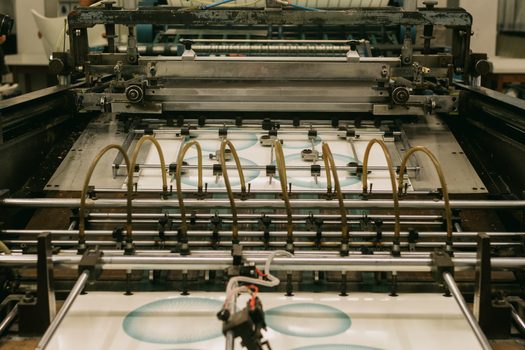
Cold forging is split between single-station presses for medium-to-large fasteners and multi-station formers for complex geometry, with the multi-station area sized for continuous, multi-step forming [S2]. Thread rolling is the externally-rolled variety — chosen over cut threading for grain-flow continuity and fatigue life — and it feeds directly into tapping cells for internal threads, with in-process dimensional checks at the rolling and tapping handoff [S2]. The automatic assembly area then performs secondary integration with lot-level traceability, which is the spec-level reason an automotive Tier 1 sourcing from this plant can demand per-bolt PPAP traceability without forcing a separate marking line. Secondary operations (turning, milling, finishing) close the loop on final dimensional accuracy before parts move to the optical sorters [S2]. A comparative read across the fastener production-area matrix shows that this layout mirrors the cold-former-plus-thread-roller-plus-vision-sort template used by European DIN 933/931 bolt lines, with the difference that the AI weight-analysis layer replaces the legacy mechanical checkweigher.
Quality Screening, NDT, and ESG Context
The 52-machine optical sort is the bulk of EASYLINK's published quality-screening investment, and it runs alongside the company's stated ISO 14001 environmental management certification, ISO 14064-1 greenhouse-gas accounting, IATF 16949 automotive QMS certification, and CE marking [S2]. For heavy-truck, construction-equipment, and oil-and-gas fastener applications — the same end-use markets JNZC lists on its own catalog site, where hot forging, cold forming, heat treatment, NDT, surface treatment, and final inspection are stated as in-house process steps [S5] — the IATF 16949 certification is the gating credential that lets a Tier 1 release the part into a vehicle PPAP without a second-party audit. NDT capability, where stated, typically covers magnetic-particle inspection for ferromagnetic bolts and studs after heat treatment, which is the standard acceptance method for surface-breaking defects on headed fasteners. For a side-by-side view of how these ESG and QMS credentials line up against other Taiwanese and Chinese fastener exporters, the industrial fastener sourcing map is a useful cross-reference, even though it sits in an adjacent joining-and-bonding category.
What This Means for Process Engineers Sourcing Smart-Manufactured Fasteners
The practical spec a buyer should pin to a 2027-vintage EASYLINK line is straightforward: per-shift Cp/Cpk from the cloud AI layer, per-bolt 360° vision-sort image retention, AS/RS lot traceability from die storage to pallet, and IATF 16949 PPAP support as the release gate [S2]. Against that, the audit risks are equally concrete — Kaohsiung City park schedules and transport projects remain subject to policy update, so the 2027 start-up is a target not a contractual date [S2]. A sourcing decision should therefore be made on the process stack, not the calendar: the optical sort density (52 machines for a 40,000 m² plant), the 6,000-position AS/RS, and the IATF 16949 scope are the verifiable engineering deliverables, and any slip in the 2027 start-up should be evaluated against whether the same stack is being delivered at a different site rather than whether the spec has weakened. The two trackable signals to watch are EASYLINK's published progress on the North Kaohsiung build (plant completion, equipment move-in) and the first public IATF 16949 audit cycle for the new site, both of which will appear in the company's news feed when published [S2].
Background reading: E-Axle Industry 2026: Oil-Cooled Motors, 800 V Integration and a 37.7% CAGR Reshape EV.