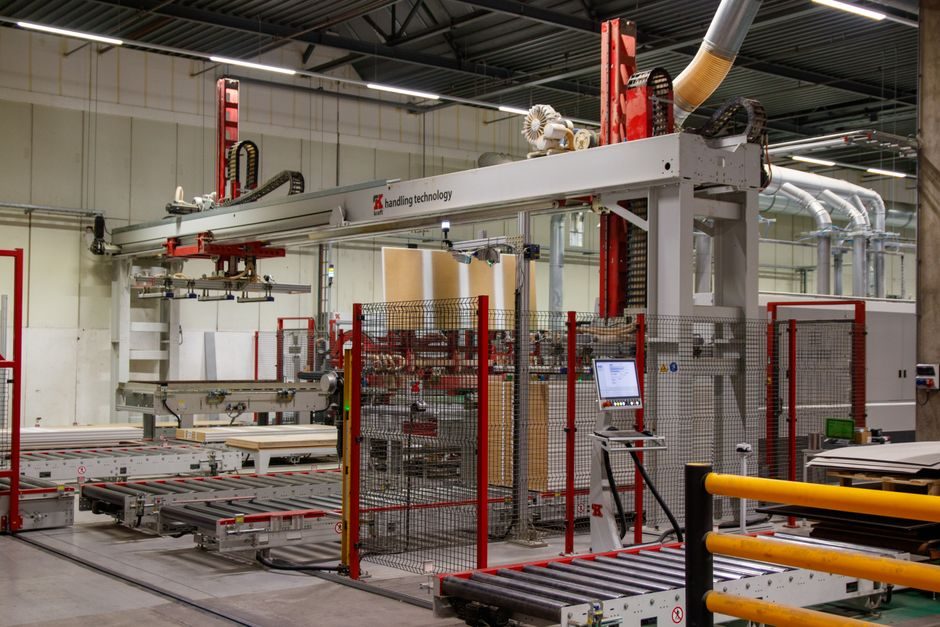
Smart-manufacturing penetration in the global ferrochrome (FeCr) sector reached 28% among integrated alloy producers during 2025, with automated furnace systems delivering a documented 16% gain in smelting efficiency and digital condition-monitoring cutting unplanned maintenance downtime by 6% across advanced facilities [S3].
High-carbon FeCr still commands 94% of the market by utilisation, and stainless steel absorbs roughly 75% of global FeCr output, so any process-control retrofits have to be designed around the submerged-arc furnace (SAF) and the converter/cooling yard rather than around discrete-parts assembly [S3]. Asia Pacific took 62% of 2025 demand, with China alone representing 63% of stainless-steel manufacturing activity and India contributing 14% of regional ferro-alloy exports [S3].
Scope: What "Smart FeCr Manufacturing" Actually Covers
Smart FeCr manufacturing is the application of industrial robotics, machine-learning process models, IoT condition monitoring, MES/ERP orchestration and digital-twin simulation to the pyrometallurgical chain from chrome-ore handling through SAF smelting, ladle refining, casting, crushing and screening [S2]. The high-temperature, high-current nature of SAF operation — electrode regulation, slag chemistry, and burden distribution — is where the bulk of automation value is concentrated, not in downstream packaging [S2][S3].
The distinction from "fixed automation" matters: classic PLC sequencing repeats predetermined setpoints, whereas a smart FeCr stack ingests real-time data from electrode current, burden feeders, off-gas analysis and cooling-water circuits, then re-optimises setpoints inside a single tap-to-tap cycle [S2]. For an integrated producer running 50–200 MVA SAFs at >1,000 °C electrode tip temperatures, that closed loop is what separates a 16% efficiency gain from a flat baseline [S3].
Selection Criteria: Where Automation Pays Back First
Three layers of automation dominate FeCr capex decisions in 2026: (1) electrode and power-control loops on the SAF, typically the largest single kWh-saver, (2) burden-handling and weighing systems that drive Crt/Fe ratio stability, and (3) digital condition monitoring that converts vibration, temperature and current-sensor data into predictive-maintenance work orders [S2][S3].
Procurement gates to specify up front: data-acquisition rate per minute (modern fab-class references run tens of thousands of recipe events per minute under SEMI E30-style host models [S4]); cybersecurity segmentation between Level 0/1 instrumentation and the MES layer; and the ability to overlay the new control stack on existing DC or AC electrode drives without a full furnace rebuild. Plants that skip these gates typically strand the data they collect.
Comparison: Manual, Fixed-Automation and Smart-Automation FeCr Lines
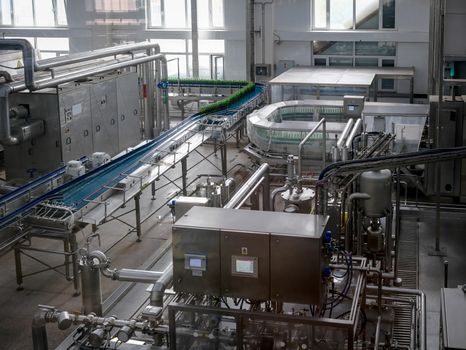
Manual FeCr lines depend on operator judgement for electrode raise/lower, slag tapping and ladle temperature; fixed-automation lines add PLC-driven setpoint repeatability but cannot re-optimise mid-tap. Smart-automation FeCr lines close the loop on electrode kW, burden feed rate, off-gas CO/CO₂ ratio and ladle temperature, and run a digital twin for what-if testing before a recipe change [S2][S3].
On the four criteria a FeCr plant manager actually scores — smelting efficiency, unplanned downtime, energy per tonne FeCr, and operator headcount on the furnace floor — smart lines have logged +16% efficiency, −6% unplanned downtime and roughly −11% industrial power consumption at advanced facilities during 2025, with corresponding reductions in operator exposure near the tap hole [S3]. Fixed-automation lines typically post single-digit efficiency gains and a 2–3% downtime improvement; manual lines trend with operator skill and shift-to-shift variance.
Who Smart FeCr Automation Is For — and Who It Is Not
Smart FeCr retrofits fit best at integrated mining-and-smelting operations (already 58% of global capacity [S3]) running multi-MW SAFs with existing instrumentation, captive power, and an in-house electrical and process team. The same applies to greenfield or brownfield capacity-expansion projects, which expanded 19% in 2025 with a 24% jump in green-metallurgy investment alongside them [S3].
They do not fit small merchant smelters below roughly 20 MVA nameplate, plants with single-phase or badly unbalanced load profiles, or sites without reliable MV power, because the control loop depends on a stable, metered power feed. For those operations, fixed PLC automation plus better weigh-feeders is usually a better ROI than a full smart-factory stack.
Real Use Cases: Furnace Electrode Control, Burden Optimisation and Casting-Yard Robotics
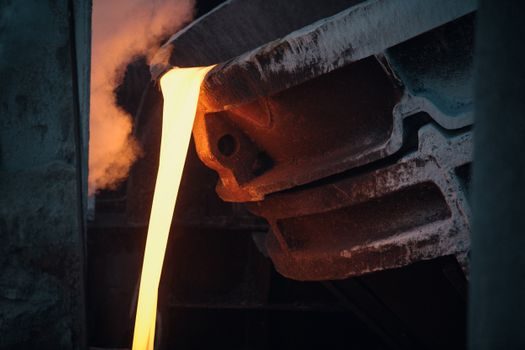
Electrode-control loops with adaptive impedance setpoints have become the most documented FeCr automation use case, with smart control reducing electrode consumption per tonne and stabilising Cr yield from chromite ore [S3]. Burden-handling robots and AI-driven recipe selection handle the chrome-ore, coke, quartzite and flux mix; in sheet-metal comparators these systems also compensate for material variability, springback and tool wear in real time [S2].
Casting, crushing and screening lines are adopting robotic handling and machine-vision quality checks patterned after the robotic press-brake and laser-cutting cells already proven in fabrication [S2]. For FeCr specifically, the analogous wins are automatic ladle-slag skimming, vision-based lump-size grading and automated bagging of sized FeCr for the 75% of output that feeds stainless-steel melts [S3].
Limitations, Failure Modes and Standards Anchors
Smart-automation gains in FeCr do not cancel out the underlying cost pressure: smelting electricity costs still rose 18%, logistics costs 12%, and export-related friction hit nearly 15% of global chrome supply chains in 2025, so the efficiency uplift is being absorbed as much by margin defence as by capacity expansion [S3].
Failure modes specific to a connected FeCr plant include sensor drift in the high-EMF environment around the SAF, network-segmentation breaches between the MES layer and electrode-drive PLCs, and brittle ML models trained on a narrow Cr/Fe grade band. SEMI-style host models handle tens of thousands of events per minute and let the host subscribe to specific data points, but the FeCr side is not a cleanroom fab — sensor selection, grounding and shielding around the SAF busbars are the unglamorous work that decides whether the data is usable [S4]. For a deeper look at the pyrometallurgical upstream, the ferrosilicon SAF spec walkthrough covers the electrode and burden-control frames that a FeCr retrofit can borrow directly. Related structural-steel selection and certification work is mapped in the carbon-steel plate grade and certification guide, since most FeCr plant structural and ladle-tilting steel still ships to ASTM/EN plate specs.
Sourcing and Standards Signals to Watch
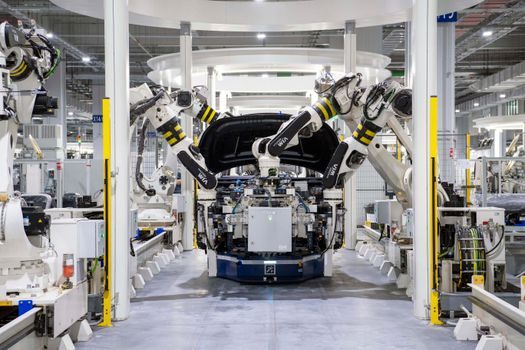
Standards to anchor in a 2026 FeCr automation spec: IEC 61511 for furnace safety-instrumented systems, ISO 55000 for asset-management integration with the MES layer, and IEC 62443 for the network segmentation between electrode-drive PLCs and the manufacturing host. SEMI E30-style host subscription is the cleanest pattern when a FeCr plant wants to scale recipe and event collection per minute without flooding historians [S4].
Trackable signals for the next 6–12 months: disclosure of additional low-emission FeCr projects on top of the 2025 baseline of 21% of newly announced industrial developments, capacity-expansion project completions beyond the 19% 2025 increase, and any OEM announcement of an electrode-control or off-gas-analytics retrofit that is targeted specifically at 50–200 MVA FeCr SAFs rather than at the broader metals-industry generic stack [S3].
For the relevant spec sheets and selection criteria, see additive manufacturing material, smart camera, and smart meter.