
The Edge Crush Test measures edgewise compressive strength, while the Mullen Burst Test measures the force needed to rupture a corrugated-board face [S2][S3].
For stacked cartons, compare ECT with the actual pallet load, stack height, storage duration, humidity, and finished-box compression performance rather than selecting a burst rating as a substitute [S3][S7].
What Each Strength Test Measures
ECT compresses a small corrugated-board specimen on its edge between rigid plates until a peak load is reached. The result is reported in pounds per lineal inch of load-bearing edge, commonly as 32 ECT or 44 ECT [S2].
The Mullen Burst Test expands a diaphragm against the board face until the board ruptures or punctures. Its result is reported as burst strength in pounds, with 200# being a common notation, and it is used to relate board strength to containment against internal pressure, impacts, and puncture hazards [S2][S4].
This makes the tests complementary rather than interchangeable: “ECT measures resistance to crushing forces for stacking, whereas the Mullen Burst Test measures resistance to puncture” [S3]. A higher burst value does not establish the edge strength required to carry a vertical stack, and a higher ECT value does not prove that a sharp product will not penetrate the board.
Decision Criteria for Stacking Cartons
ECT measures corrugated-board strength and correlates with a finished box's ability to resist compression when stacked on a pallet in a warehouse or during transit [S3]. ECT values typically range from 23 ECT for lightweight single-wall board to 71 ECT or higher for heavy-duty double-wall and triple-wall constructions [S3].
These are screening values, not universal design capacities. A larger box can deflect more under load even when its board grade is unchanged, and humidity can reduce corrugated strength over time [S3].
Use ECT for material selection when failure mode is edge collapse under vertical compression. Use burst strength as a secondary check when contents push against the walls, when handling includes sharp or irregular products, or when puncture resistance is a specific risk [S4][S7]. For automated handling and mixed freight, combining the two properties gives a broader damage profile than either property alone.
ECT and Burst Ratings Compared
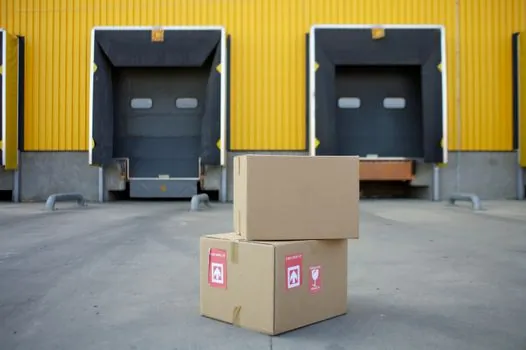
ECT measures the board’s edgewise compressive resistance in lb/in and directly addresses pallet-stack performance [S2]. Burst strength measures face rupture in pounds and addresses puncture or rupture resistance, not the edge-collapse threshold [S2][S4].
The cost trade-off can favor ECT because an ECT-rated board can provide equivalent stacking strength with less material than a burst-rated board [S5]. However, this equivalence does not transfer to puncture-sensitive loads: specifying by ECT alone can leave a distribution system exposed to face rupture.
Single-Wall and Double-Wall Selection
ECT values can reach 71 ECT or higher for heavy-duty double-wall and triple-wall constructions [S3].
Do not infer that a double-wall box can carry the listed load merely from its board grade. Box dimensions affect finished-box compression performance because long panels bow under load, while joints, creases, print, slots, moisture, and storage conditions can create local weak points. The Edge Crush Test evaluates the strength of corrugated board and measures the force required to crush a small sample standing on its edge [S3].
Finished-Box Limits and Failure Modes
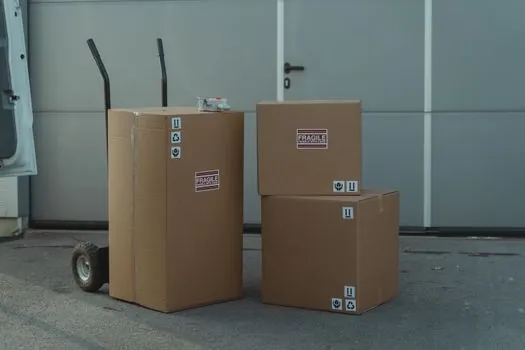
ECT is a board-level indicator, not a direct pounds-on-top rating for every carton.
Environmental conditions also change the selection. Humidity can significantly reduce corrugated-board strength over time [S3]. The carton box specification should therefore state both board properties and the intended storage conditions.
How to Specify and Verify the Rating
Specify ECT for palletized storage, identify the required board grade, and retain burst strength as a separate acceptance criterion for puncture-sensitive applications. Record the single-wall or double-wall construction, flute profile, inside and outside dimensions, gross shipment weight, stack count, and pallet pattern [S2][S4].
Require the ECT value on the Box Manufacturer’s Certificate, commonly stamped on a bottom flap, so the delivered board can be checked against the purchase specification [S3]. Verify the finished carton with Box Compression Test when the box size, joint design, load, or storage duration makes a simple ECT-to-load table unreliable [S3].
For a general B2B carton under a 65 lb suggested load, 32 ECT with 200# burst is a documented starting point; heavier loads move to 44 ECT or 55 ECT, while 120 lb double-wall guidance reaches 51 ECT and 350# [S4]. Confirm that the selected edge crush test result and the actual stacking profile support the required load before releasing the packaging specification.