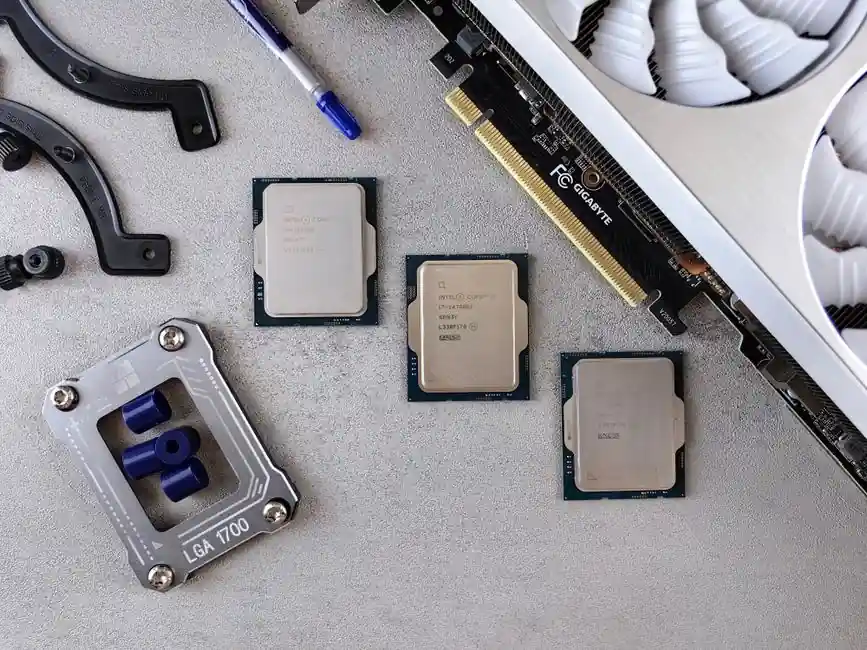
Edge AI hardware revenue is set to climb from USD 26.14 billion in 2025 to USD 58.90 billion by 2030, a 17.6% CAGR driven by IoT, industrial automation, and on-device inference workloads [S1]. Independent trackers converge on similar directionality: Mordor Intelligence sizes the chips segment alone at USD 4.44 billion in 2026 rising to USD 11.54 billion by 2031 (21.05% CAGR), while IDTechEx projects the broader edge-AI semiconductor market to surpass USD 80 billion by 2036, led by automotive and AI smartphones [S2][S3].
For industrial buyers, the headline shift in 2026 is not headline revenue but silicon mix: ASICs already led the 2025 chip market with 37.45% revenue share, while neuromorphic architectures are forecast to grow at a 48.3% CAGR through 2031 [S2]. Enterprise and industrial device categories trail consumer electronics in 2025 share (consumer held 44.20%) but expand at a 24.1% CAGR, outpacing the overall market [S2].
Market sizing: three trackers, one direction, wide bands
The published market-size spread is wide enough that a spec engineer should read the definitions before quoting a number. MarketsandMarkets scopes "edge AI hardware" (chips plus modules plus edge servers) at USD 26.14 billion in 2025, growing to USD 58.90 billion in 2030 [S1]. GM Insights uses a broader "edge AI" envelope of USD 25.20 billion in 2025, USD 30.90 billion in 2026, and USD 225.48 billion by 2035 at 24.7% CAGR, with North America as the largest region and Asia Pacific as the fastest-growing [S4].
When the scope is narrowed to chips only, Mordor Intelligence reports USD 3.67 billion in 2025 expanding to USD 4.44 billion in 2026 and USD 11.54 billion by 2031, with Asia Pacific holding 43.60% of 2025 revenue and the Middle East and Africa growing fastest at 22.4% CAGR [S2]. Precedence Research's "artificial intelligence chips" view is larger still at USD 9.77 billion in 2026, and Grand View Research sizes the edge AI chips market at USD 36.20 billion in 2026 against USD 27.30 billion in 2025 [S6][S7]. Meticulous Research projects USD 106.0 billion by 2036 at a 17.8% CAGR on the chips-only definition [S8]. The practical takeaway: hardware envelope numbers in 2025 sit around USD 25–27 billion, chips-only 2025 figures sit at USD 3.7–9.8 billion depending on whether AI PCs and AI servers are included, and the 2030+ consensus band lands between USD 58 billion and USD 225 billion.
Process nodes and accelerator types driving the 2026 picks
The fastest-growing process tier through 2031 is the sub-5 nm band, forecast at a 55.4% CAGR, while the mature 14 nm-and-above tier still held 39.20% of 2025 revenue [S2]. On accelerator architecture, ASICs already lead at 37.45% of 2025 chip revenue, and neuromorphic designs are projected at a 48.3% CAGR to 2031, both beating the 21.05% market CAGR [S2]. MarketsandMarkets breaks the power envelope into five bands (under 1 W, 1–3 W, 3–5 W, 5–10 W, and over 10 W) covering TinyML sensor nodes through edge servers [S1].
For industrial control rooms and field-deployed cabinets, the under-1 W and 1–3 W bands matter most: they are the envelope where NPU-equipped microcontrollers and SoCs run visual inspection, predictive maintenance, and local anomaly detection without active cooling. The 5–10 W and above-10 W bands are the territory of edge servers and autonomous-mobile-robot controllers, where thermal design and enclosure rating dominate the bill of materials. A 2026 spec sheet typically lists the SoC's TOPS/W figure, supported quantisation (INT8, INT4, mixed precision), and software stack; MarketsandMarkets notes the inference/training split as a top-level segmentation, reflecting how runtime is more important than retraining in fielded equipment [S1].
Selection criteria: when edge AI silicon beats a cloud round trip
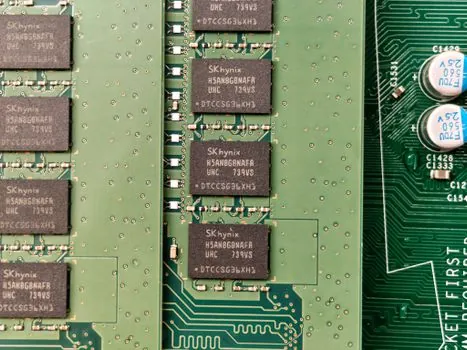
An edge AI silicon is the right pick when a closed-loop decision must complete inside a deterministic latency window, when raw sensor data is too costly to uplink, or when data-residency rules forbid shipping it off site. Three thresholds are worth tracking in 2026. First, latency: control loops on packaging lines, weld sequencers, and torque controllers run at 1–10 ms; a cloud round trip of 50–200 ms makes the architecture non-viable, so the inference has to land on the device. Second, bandwidth: a single 5-megapixel machine-vision camera at 30 fps generates roughly 1.5 Gbps raw, well above typical industrial uplinks; on-device triage down to events or metadata cuts uplink cost by orders of magnitude. Third, model governance: an industrial-grade edge platform is judged as much on its update channel and signed firmware as on its peak TOPS, because a fleet of 10,000 controllers that cannot be patched is a liability. [S4]
Buyers who should NOT default to edge AI silicon in 2026 include those whose workload is batch analytics on historical data, where a central GPU cluster is more cost-effective, and those whose decision latency is human-scale (seconds or longer), where the marginal benefit of local inference rarely justifies the silicon and validation cost. A practical filter: if the use case can tolerate 500 ms end-to-end and the data is not regulated, a cloud or hybrid architecture is usually cheaper; if it cannot, edge silicon earns its place.
Options compared: CPU, GPU, ASIC, and neuromorphic for industrial workloads
Four accelerator classes compete for the 2026 industrial socket, and the choice is governed by workload, power budget, and software maturity rather than raw TOPS. GPU-based inference offers the highest peak throughput for parallel vision and robotics workloads, but the 5–10 W and above-10 W power bands need active cooling and tighter enclosure design [S1].
ASIC NPUs are now the volume pick for industrial vision, smart sensors, and AI PCs; they led 2025 revenue share at 37.45% and pair the best TOPS/W with a shrinking software footprint as toolchains (TensorRT, ONNX Runtime, vendor SDKs) stabilise [S2]. Neuromorphic silicon (event-driven, spiking) is the newcomer: forecast at a 48.3% CAGR through 2031, it targets always-on vibration, acoustic, and gesture workloads where duty-cycled sub-1 W operation is the goal [S2]. The table below summarises the four against the criteria that actually drive an industrial spec.
Comparison: accelerator class vs industrial-fit criteria. CPU: lowest cost and easiest certification, but lowest TOPS/W; best fit for control software retrofit where the AI workload is small. GPU: highest peak throughput and best software stack for vision, but highest power and thermal load; best fit for line-side inference servers and AMR controllers. ASIC NPU: best TOPS/W at moderate cost, with a maturing toolchain; best fit for high-volume smart cameras, AI sensors, and AI PCs shipping in the millions. Neuromorphic: lowest energy per inference for event-driven sensing, but smallest software ecosystem; best fit for battery-powered vibration and acoustic monitoring nodes where sub-1 W duty cycling matters.
Real use cases: where industrial buyers are deploying in 2026
IDTechEx segments the edge AI chip opportunity by application: automotive, humanoid robots, AI smartphones, AI laptops, and edge sensors for predictive maintenance, with the largest absolute revenue in automotive and AI smartphones by 2036 [S3]. For industrial buyers, predictive-maintenance sensors and machine-vision lines are the two most active 2026 deployment lanes, alongside a growing footprint in autonomous mobile robots and human-machine interface panels.
A representative 2026 deployment stack pairs a sub-5 W SoC with an INT8 NPU running a quantised CNN for surface-defect detection, with model updates delivered over a signed-OTA channel; this is the architecture under which MarketsandMarkets groups the industrial vertical, alongside automotive, healthcare, and government [S1]. In a typical brownfield plant, the edge node aggregates from vibration, current, and acoustic sensors and only forwards labelled events to a historian, keeping uplink traffic within IT budget while giving maintenance crews a sub-second view of anomaly onset. The same pattern, scaled up, shows up in modular remote I/O architectures where edge inference at the I/O block reduces the determinism load on the central PLC.
Limitations, failure modes, and what 2026 specs should call out
Three failure modes recur in fielded edge AI hardware and should be on every 2026 spec checklist. First, thermal throttling: a 5–10 W SoC in a sealed cabinet will derate within minutes unless the enclosure is rated for the steady-state dissipation, and the published TOPS figure is rarely the sustained figure. Second, model drift: an inference engine that cannot be re-validated against a held-out test set after a firmware update will quietly degrade, especially under seasonal process variation. Third, supply chain concentration: MarketsandMarkets flags Qualcomm, Huawei, Samsung, Apple, and MediaTek as the top vendors by 2025 share, and GM Insights notes the top five (Qualcomm, NVIDIA, Intel, MediaTek, AMD) collectively held 48.5% in 2025, so a single allocation decision can ripple across an entire product line [S1][S4].
Standards-wise, the industrial buyer is more likely to be governed by functional-safety (IEC 61508, ISO 13849) and EMC (IEC 61000-6-2 / 61000-6-4) than by a chip-specific standard, and any 2026 RFQ should require a published safety manual, a secure-boot chain, and a declared operating-temperature range on the SoC datasheet. Buyers in hazardous-area deployments will additionally need the SoC's host enclosure to be ATEX or IECEx certified, and the inference workload is typically partitioned so that safety-rated I/O remains on a separate, non-AI MCU.
Vendor landscape and the 2026 watch list
The competitive field splits into three tiers in 2026. Tier 1 incumbents: Qualcomm, NVIDIA, Intel, MediaTek, and AMD, with Qualcomm reported as market leader at 15.6% in 2025 and the top five jointly at 48.5% [S4]. Tier 1 smartphone-driven vendors: Apple, Samsung, Huawei, with significant captive demand and process-node leverage [S1]. Specialist silicon vendors: a long tail of NPU and neuromorphic startups targeting industrial and IoT, whose software ecosystem is the gating factor in embedded industrial designs and similar vision-heavy applications.
The watch items for the rest of 2026 are concrete. Track the ≤5 nm tier CAGR (55.4% per Mordor) to see whether sub-5 nm capacity actually reaches industrial price points before 2028 [S2]. Track the enterprise/industrial device CAGR (24.1%) against the consumer CAGR to confirm the projected mix shift [S2]. Track neuromorphic revenue against the 48.3% forecast CAGR to see whether the software ecosystem catches up [S2]. And track IDTechEx's regional splits (China, Europe, US, Rest of World) to see whether the geographic concentration of the top five vendors loosens as sovereign-fab capacity comes online [S3].
For an industrial OEM planning a 2027 product launch, the actionable next node is to lock in a 5–10 W ASIC-NPU reference design in Q4 2026 with a published long-term supply agreement, and to commission the safety and EMC certification work in parallel so the production ramp does not slip behind the silicon allocation window. industrial ceramic substrates and industrial coating choices for the enclosure will need to follow once the steady-state dissipation is fixed.