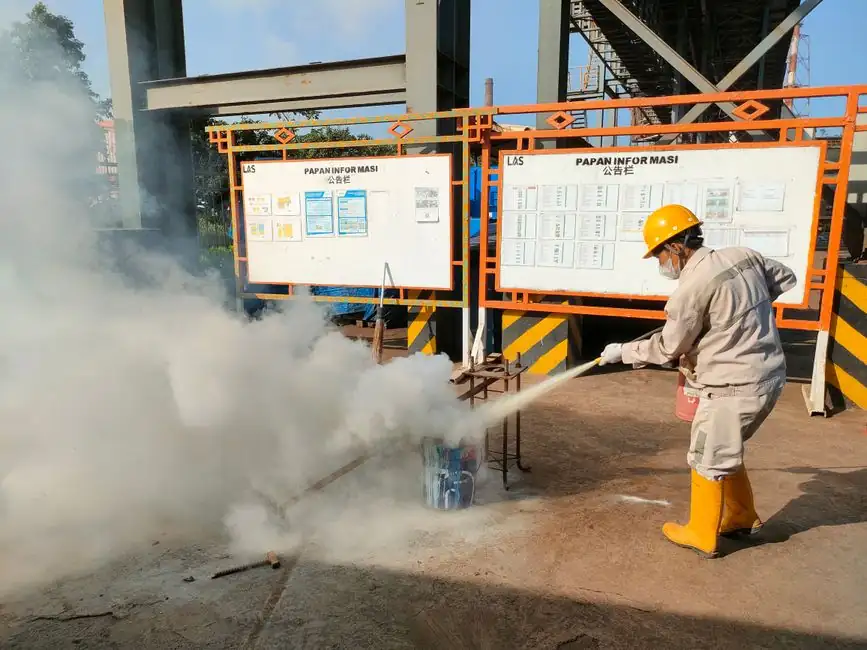
NFPA 660, Standard for Combustible Dusts (2025 edition), took effect January 1, 2026, and replaced NFPA 61, 484, 652, 654, 655, and 664 under a single document [S1]. The consolidation eliminates decades of cross-referencing between overlapping industry-specific standards and gives Authorities Having Jurisdiction, insurers, and OSHA inspectors one benchmark to grade a plant's combustible dust program against [S2].
OSHA has no standalone general-industry combustible dust rule, but it cites Section 5(a)(1) of the OSH Act (the General Duty Clause) under its Combustible Dust National Emphasis Program, directive CPL 03-00-008, alongside 29 CFR 1910.22 (housekeeping) and 29 CFR 1910.307 (hazardous locations), and treats NFPA 660 as the recognized hazard benchmark [S1]. For a dust collector buyer, that distinction is not academic: any retrofit or new build now has to be defensible against a single, current document, not a patchwork of superseded editions.
What NFPA 660 actually requires of a dust collection system
Chapter 7 of NFPA 660 mandates a Dust Hazard Analysis (DHA) reviewed at least every five years and whenever the process changes; the annex is explicit that a credential alone does not qualify a signer, and that real combustible-dust assessment experience does [S1]. The DHA drives every downstream design choice: published KSt and Pmax values screen hazard, but engineering decisions require lab results on the actual material because particle size and moisture shift those numbers materially [S1].
Collector and duct protection have to be specified in matched pairs. Deflagration venting follows NFPA 68, explosion isolation or suppression follows NFPA 69, grounding and bonding follows NFPA 77, and hazardous-location electrical follows NFPA 70 where the DHA calls for it; for reactive metals the standard prefers wet collection [S1]. Housekeeping is not universal: NFPA 660 sets no single depth, the DHA sets the threshold for the dust in question, with about 1/8 inch as the reference for wood [S1].
Five compliance trends auditors are weighting in 2026
Trend one: DHAs are no longer treated as static documents. Reviewers in 2026 look for current operating conditions, explicit links between identified hazards and installed safeguards, and tracked action items with ownership, per Glacier Technology's compliance outlook [S2]. A generic or stale DHA is the single most common red flag flagged during walk-throughs [S2].
Trend two: written programs have to match the floor reality, not the binder on the shelf. Housekeeping, maintenance, hot work, training, and change-management programs are expected to reflect what actually happens in the plant, and reviewers ask whether controls, administrative rules, and training are visibly connected rather than filed separately [S2]. Trend three: dust collectors and isolation strategies are receiving increased audit attention, with engineering, documentation, and vendor support treated as a single chain of evidence [S2].
How NFPA 660 is pulling the 2026 equipment market forward

The industrial dust collector market is forecast to grow from USD 7,814.45 Billion in 2025 to USD 13,122.5 Billion by 2035 at a 5.32% CAGR, with regulatory compliance and technological advancement listed as the two named drivers [S4]. North America remains the largest regional market on the strength of stringent environmental rules, while Asia-Pacific is the fastest-growing region on industrialization, and pharmaceutical is the fastest-growing application segment on tighter health standards [S4].
Major suppliers named in the same market study include Donaldson, Camfil, Parker Hannifin, Nederman, Aercology, Griffin Filters, Sly Filters, Dustcontrol, and Farr Air Pollution Control [S4]. Two structural shifts are layered on top of that growth: smart-technology integration (automated cleaning cycles, differential pressure trending, remote monitoring) and customization, with manufacturers offering tailored systems for pharmaceutical, food, metalworking, and woodworking lines rather than catalog-only units [S4]. The compliance pull is most visible on the controls side, where a dust particle meter tied to the collector controller and a dust mask program sized to actual exposure data have become the new specification default rather than a value-add.
Decision criteria: wet vs dry, cartridge vs baghouse, isolated vs vented
Material class is the first gate. Reactive metals and many pyrophoric powders route to wet collection under NFPA 660 guidance because water handles the ignition energy the way dry systems cannot [S1]. Most organic dusts (wood, grain, plastic, paper, sugar, many pharmaceuticals) default to dry filtration with a deflagration protection package, and the package must be matched to the DHA's KSt and Pmax figures, not generic worst-case numbers [S1].
Filter technology is the second gate. Cartridge collectors dominate fine-dust, low-grain-loading applications and footprint-constrained cells; baghouses remain the workhorse for high-volume, abrasive, or high-temperature service. Both are equally acceptable to NFPA 660, but the protection package, explosion isolation gates or chemical suppression on the dirty side, NFPA 68 venting sized to the vessel volume, and NFPA 70 electrical classification at every access point, is what separates a compliant install from a non-compliant one [S3]. Selection comparison across the common options:
Cartridge vs baghouse: cartridges win on footprint, change-out time, and sub-micron efficiency at typical grain loadings; baghouses win on abrasive dust tolerance, higher continuous temperatures, and lower media cost per square meter of filter area [S4]. Wet scrubber vs dry: wet is the only path for many reactive-metal dusts under NFPA 660; dry is preferred everywhere else because plume opacity, sludge handling, and freeze risk in unheated plants are recurring wet-system liabilities [S1][S4]. Isolated (NFPA 69) vs vented (NFPA 68): fast-flame materials with high KSt route to suppression to keep the collector in service after an event; slower materials with predictable Pmax route to venting because it is cheaper and simpler, provided the vent discharge is sited to a safe location [S1].
Who the new regime is for, and who it is not

NFPA 660 applies to any facility whose dust can burn or explode, and that list is longer than most procurement teams assume: wood, grain, flour, sugar, milk powder, paper, many plastics, aluminum, magnesium, titanium, zirconium, sulfur, and pharmaceutical APIs all qualify [S1]. Reactive-metal facilities (NFPA 484 territory under the old structure) sit inside the same consolidated document, with wet collection as the stated preference [S1]. Facilities with non-combustible dust only, or dust that cannot be ignited under any plausible process condition, are largely outside the standard's scope, though OSHA's General Duty Clause and state-level rules can still apply [S1].
Small manufacturers and job shops that have been operating under a single legacy standard (NFPA 654, for example) are the population most likely to find newly visible gaps in 2026, because the consolidated DHA, written-program, and housekeeping expectations are being benchmarked as a single package now rather than spread across documents [S2]. Insurers and AHJs are using NFPA 660 as the reference even where the local jurisdiction has not formally adopted it, and a 2025-vintage compliance program is no longer assumed current [S2].
Limitations, failure modes, and what still catches plants off-guard
The most common failure mode is not the collector itself; it is a DHA that was written once, never updated after a process change, and references superseded KSt/Pmax tables. Reviewers in 2026 are explicitly checking for that pattern [S2]. The second is housekeeping documentation that does not match what the floor actually looks like, particularly around the 1/8-inch reference depth for wood dust and equivalent thresholds for other materials set by the DHA [S1][S2].
The third is mismatched protection packages: a collector with NFPA 68 venting on the vessel but no explosion isolation on the inlet duct, or hazardous-location electrical on the blower but standard enclosures on the hopper, both of which fail the integrated-control logic NFPA 660 is now scored against [S1][S3]. The fourth is reactive-metal dust routed to a dry system for convenience; the standard states a clear preference for wet in that case and the audit trail has to support the choice if a dry system is selected [S1]. None of these are exotic engineering problems, but each one becomes a citation under the consolidated standard where it might have slipped through a less rigorous review under the legacy structure [S2].
Sourcing, testing, and the next decision node
For a buyer evaluating equipment in late 2026, the practical starting point is a current DHA, with KSt and Pmax values from a lab test on the actual material rather than published tables, because particle size and moisture shift the numbers enough to change the protection package [S1]. The second node is confirming that the proposed collector's NFPA 68 venting (or NFPA 69 suppression), NFPA 70 electrical classification, and NFPA 77 grounding are all specified as a matched set, with explosion isolation on the duct, not as separate line items [S1][S3].
The third is documentation: written programs for housekeeping, hot work, maintenance, and training that an auditor can match to the DHA's action items on the day of the walk-through [S2]. The fourth is a measurement chain: a flow meter or pressure transmitter on the collector that reports differential pressure to the plant historian, because reviewers increasingly want trend data, not just an instantaneous reading, and the inspection record is the file that survives the next citation. The trackable signals over the next two reporting cycles are AHJ adoption of NFPA 660 by jurisdiction and any update to OSHA directive CPL 03-00-008 referencing the consolidated standard.
See also our earlier report, Standard vs Long Reach Excavator Boom: Reach, Lift, and Use-Case Tradeoffs.