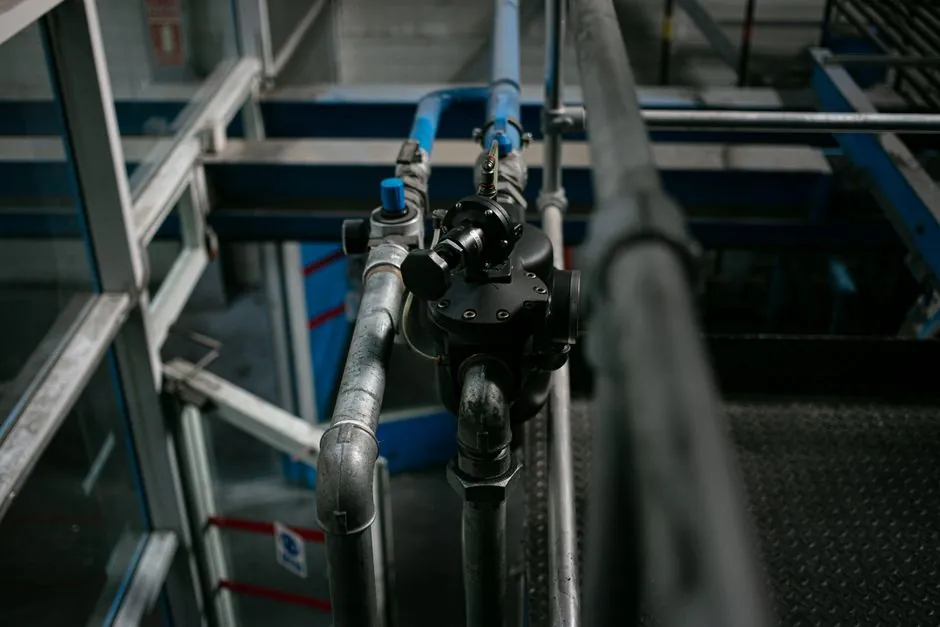
An electric ball valve combines a quarter-turn ball element with a motorised actuator, typically powered by 220 V AC or 24 V DC and controlled via a 4-20 mA or on/off signal, with sizes spanning DN15 to DN300 and pressure ratings of 1.6-6.4 MPa across carbon-steel, stainless-steel, brass, and PVC bodies [S4].
They are specified in oil and gas, petrochemical, metallurgy, paper, power, water management, irrigation, HVAC, and building-automation service, where the requirement is shut-off or two-position control rather than continuous modulation [S1][S4][S5]. A broader electric ball valve types reference maps the connection, sealing, body, and actuation choices that sit behind those applications.
Where Electric Ball Valves Win: Switching Speed, Sealing, and Automation Fit
Quarter-turn operation lets an electric ball valve open or close in well under one second on small sizes, which is a decisive advantage in emergency-shutdown (ESD) and leak-isolation duty where slow globe or diaphragm actuators would fail the safety-time target [S3][S6]. Compared with solenoid or pneumatic ball valves, the electric variant removes the need for compressed-air supply and instrument-air quality, which simplifies layouts in remote or hazardous plots.
Sealing performance is the second pillar. PTFE, RPTFE, or PEEK seats against a chrome-plated or mirror-polished ball give soft-seat Class VI shutoff on most industrial fluids, and stem-only rotation (no lift) means the seat is not scoured on every cycle, so leakage rates stay low across hundreds of thousands of cycles [S1][S4]. For buyers comparing valve families, the underlying ball valve geometry explains why this sealing is intrinsic to the design, not an add-on. The third pillar is automation: a built-in servo amplifier accepts a direct 4-20 mA command without an external positioner, which removes a part, a wiring point, and a calibration step [S4].
Where They Lose: Throttling, Temperature, and Hazardous-Area Limits
Ball valves are not control valves. Using a standard V-port or full-port ball for continuous throttling exposes the soft seat to high-velocity impingement and wire-draw, and typical published guidance restricts electric ball valves to on/off or limited modulating duty (commonly below ~10-20% of the rotation range) unless a characterised V-ball or stepper actuator is fitted [S3][S6]. If the duty is flow control with turndown above 3:1, an electric globe or electric actuator on a globe valve is the better pick.
Temperature is the second hard limit. Standard PTFE seats are rated to roughly 200°C continuous, with high-temperature PEEK or metal seats pushing the upper bound toward 350°C, while PVC-bodied units are capped at 60°C and minimum -15°C because of the polymer body and solvent-cement joints [S4][S5]. Above 350°C, or in superheated steam, ball valves give way to metal-seated gate or globe designs. Hazardous-area service is the third constraint: the motor housing, terminal box, and feedback switches must be certified to IEC 60079-1 or ATEX 2014/34/EU for the zone, and a non-certified general-purpose actuator in Zone 1 is a typical audit finding. Power-failure position is the fourth: a spring-return actuator is required when fail-closed or fail-open behaviour is needed, because a standard on/off electric unit stays in last position on loss of supply [S6][S10].
Comparison Against Other Electric Valves on Four Buyer Criteria
On four standard selection criteria, electric ball valves sit between electric butterfly and electric globe valves, with the trade-off shown in the table below [S1][S3][S6].
<b>Criterion 1, switching speed:</b> ball ≤1 s, butterfly 1-3 s, globe 5-15 s. The ball is the fastest and is the default for ESD isolation [S3].
<b>Criterion 2, flow resistance (Cv for same DN):</b> full-port ball is highest (lowest resistance), reduced-port ball and butterfly are mid-range, globe is the lowest Cv. This matters for pump-head budget: a full-port ball on water service typically drops less than 0.1 bar at 3 m/s, where a globe can drop 10× that [S1][S4].
<b>Criterion 3, throttling accuracy:</b> globe 1-3% inherent, characterised V-ball 5-10%, butterfly 5-15%, standard full-port ball is unsuitable for modulating [S6].
<b>Criterion 4, cost per DN:</b> butterfly is lowest, ball is mid-range, globe is highest, with electric actuator adding 40-60% on top of the bare-valve price regardless of family [S2][S3]. A buyer that needs on/off isolation at minimum pressure drop and mid price will pick ball; a buyer that needs modulating accuracy will pick globe; a buyer that needs low cost on large DN will pick butterfly.
Body and Seat Material Selection for the Service Fluid
Body material is set by fluid chemistry and temperature, not by actuator choice. Stainless steel (304/316) is the default for general process, water, and mildly corrosive chemicals and is mandatory for hygienic service in food and pharmaceutical lines [S4][S8]. Carbon steel is the low-cost pick for oil, gas, and steam where corrosion is not the controlling factor, and brass covers small-bore potable-water and HVAC duty [S3][S4]. PVC (and sometimes PP) bodies cover corrosive media such as seawater, dilute acid, and alkali, with the published operating envelope of -15 to 60°C and pressure classes of PN10-PN16 [S5].
Seat and seal material is the second axis. PTFE handles most chemicals up to ~200°C but is not suited to molten alkali, fluorine, or strong oxidisers. EPDM suits hot water, steam condensate, and dilute acids. Viton (FKM) covers hydrocarbons and higher temperatures. Metal-to-metal seats (Stellite on 17-4PH, or Inconel) extend service to 350°C and to slurry or fibre-laden media that would shred a soft seat in hours [S4][S8]. A spec-first ball valve types map walks through which connection (flanged, wafer, threaded, welded) pairs with which seat for each fluid family.
Signal, Power, and Control Wiring Specs Engineers Get Wrong
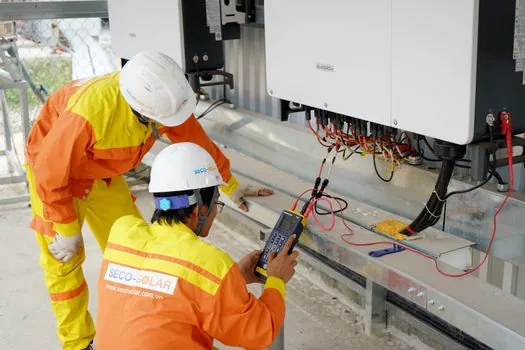
Three wiring mistakes show up on most FAT punch lists. First, the 4-20 mA loop is shared with HART only on analogue loops, not on Foundation Fieldbus or PROFIBUS PA segments, so a HART-positioner accessory must be specified separately if digital communication is needed [S4][S10]. Second, the actuator's duty rating (S2/S4 short-time, or S4/S5 intermittent) must be checked against the actual cycles per hour; a 30 starts-per-hour limit on small S2 actuators is a common cause of thermal trip on HVAC isolation [S6]. Third, lost-power position must be defined up front: standard on/off electric actuators have no spring, so loss of 220 V AC leaves the valve in last position, and adding a battery or super-capacitor back-up module is cheaper than a redesign after installation [S6].
Standards, Sourcing, and Trackable Signals for 2026 Procurement
Body and testing standards that govern an electric ball valve purchase include ASME B16.34 (valve design and test) and API 608 / API 6D for ball-valve-specific construction, with flange drilling to ASME B16.5 and face-to-face dimensions per ASME B16.10 or EN 558 series 1/27 [S4]. Materials are released to EN 10204 3.1/3.2, and seat-leakage is verified to FCI 70-2 Class IV-VI or API 598 hydrostatic test [S2][S3]. Hazardous-area builds additionally carry IEC 60079-0/1 and ATEX 2014/34/EU markings, while potable-water builds need WRAS, ACS, or NSF/ANSI 61 depending on the destination market [S6][S10].
Trackable signals to watch: published price movement on 24 V DC brushless actuators in the second half of 2026, the IEC 60079-0 maintenance cycle impact on Ex d housings, and Chinese OEM capacity additions that historically compressed lead time on DN50-DN200 stainless units from 8-10 weeks to 4-6 weeks. Specs that buy 5-year spares should freeze the actuator model, the firmware revision of any intelligent positioner, and the seat-kits part number at PO, because end-of-life notices on legacy 4-20 mA boards are a common retrofit trigger.