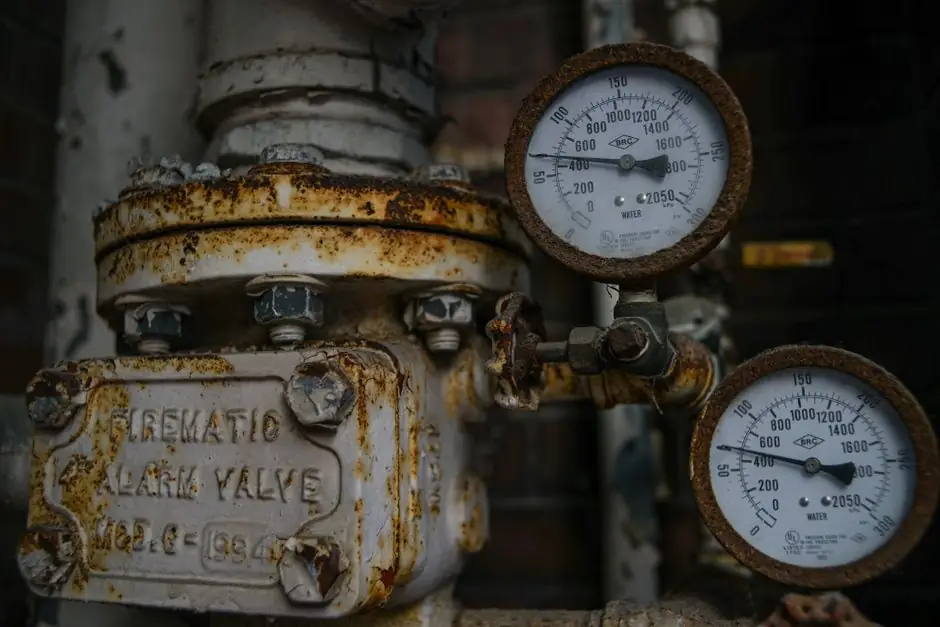
Plug valve total cost of ownership spans purchase price, installation, energy, maintenance, downtime, and end-of-life disposal, and over a 10-20 year service life the lifecycle cost typically runs 3-5x the initial invoice [S3][S4].
Specifiers who treat the valve body as the only line item routinely underestimate the dominance of actuation, sealing, and end-connection choices; a 9.03% CAGR forecast for the plug valve segment through 2031 reflects buyers paying for that lesson [S1].
Where the Money Actually Goes: TCO Cost Stack
A 2026 process-automation study cited by actuator manufacturers found that improper valve-actuator pairing is a root cause in over 40% of unscheduled downtime events in fluid-control systems, a cost line that dwarfs the saved premium on a cheaper body [S4].
The visible cost stack breaks into six buckets: purchase (body, trim, ends), installation (handling, alignment, torquing, painting), instrumentation (positioner, solenoid, limit switches), energy (actuator air or kW draw), planned maintenance (sealant top-up, packing, seat refurbishment), and unplanned events (leak repair, line isolation, product loss). On a 10-year horizon, maintenance and downtime routinely consume 40-60% of total spend; on a 20-year horizon, energy can absorb 10-30% of a plant's electricity when compressed-air generation feeds pneumatic actuators [S1][S4].
Specifying the wrong end-connection compounds every other line: welded ends cut fugitive-emissions risk and eliminate flange bolting labour, but raise field-replacement cost; flanged ends shorten mean-time-to-repair at the price of a higher leak path count. End-connection choice alone can swing installed cost 15-25% on a 1-2 inch line [S2].
Material and Sealing: The Hidden Multiplier
Body and trim material drive both corrosion allowance and seat life; A216 WCB carbon steel and A351 CF8M stainless are the two workhorses, with PTFE-sleeved or lubricated configurations layered on top [S5].
Lubricated metal-to-metal plug valves inject a sealant compound between the plug and the body bore, which fills micro-surface imperfections, reduces operating torque, and provides sealing in sour (H2S), abrasive slurry, and gas-distribution service [S5]. Non-lubricated PTFE-sleeved designs are self-lubricating and maintenance-free, and are preferred for chemical service where sealant contamination is unacceptable, but the sleeve becomes the wear part and is incompatible with sustained high-temperature hydrocarbon service above roughly 200 degrees C without a fire-safe secondary metal seat [S5].
Material traceability under EN 10204 3.1 (heat-traceable Material Test Certificates) and API 598 hydrostatic shell-and-seat test reports are standard documentation asks; omitting them shifts failure liability from supplier to buyer, which the TCO model rarely captures [S5]. The ball valve and butterfly valve alternatives each carry a different wear-part profile, and the comparison passage below sets them against the plug design on the criteria that move lifecycle cost.
Actuation: Electric vs Pneumatic, and the Quarter-Turn Math
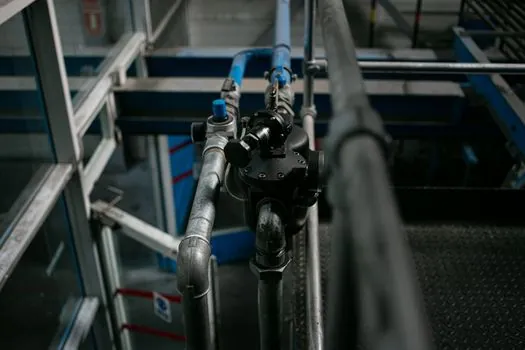
Plug valves are quarter-turn devices, completing 90-degree rotation, which pairs them with compact electric or pneumatic actuators rather than multi-turn gearboxes [S4].
Quarter-turn actuators dominate on/off and simple flow control in water treatment and HVAC, accounting for over 60% of the rotary actuator market, and modern electric actuators with integrated diagnostics can reduce maintenance costs by 20-30% over their lifecycle [S4]. Pneumatic actuation still commanded 47.73% share of the broader control valve market in 2025, but electric actuators are projected to post the fastest 10.02% CAGR through 2031 as plants retire compressed-air skids to reclaim the 10-30% of plant electricity that air generation can absorb [S1].
The breakaway-to-running torque ratio on a plug is sharper than on a ball or butterfly, which is why sizing the actuator on running torque alone is a common underspec; pneumatic models with hand-override and position retention are still the default for hazardous-area ESD (emergency shutdown) duty where fail-safe spring-return is mandatory [S4].
Plug vs Ball vs Butterfly vs Gate: A Criteria Comparison
The four workhorses trade off differently across the criteria that move 20-year TCO: pressure-temperature envelope, slurry/solids tolerance, bidirectionality, fugitive emissions, and seat-replacement labour. [S3]
A spec-side comparison for typical 2-6 inch, ASME Class 150-300 hydrocarbon service: plug valves (lubricated, metal-to-metal) score high on bi-directional shut-off and solids handling, moderate on fugitive emissions unless packed to API 641, and seat life is dominated by sealant-injection frequency, typically weekly to monthly in gas service. Ball valves (floating or trunnion, soft-seated) score highest on tight shut-off and lowest on torque-per-inch, but tolerate solids poorly and require full pipeline depressurisation for seat replacement on most soft-seat designs. Butterfly valve designs win on weight, footprint, and capex, but lose on pressure-temperature ceiling and on bi-directional sealing above Class 300. Check valve and gate options are functionally different (one-way and full-bore isolation respectively), and only enter the TCO model as adjacent line items, not direct substitutes.
For a 1-inch auxiliary line on a drilling rig manifold, a lubricated API 599 / API 6D plug with forged carbon steel body and stainless trim will typically beat a soft-seated ball on solids tolerance and match it on bidirectionality, at a purchase premium of roughly 10-20% recovered through lower seat-replacement frequency over a 10-year horizon [S3][S5].
Standards, Documentation, and the Audit Trail

The standards that govern plug valve TCO calculations cluster around four families: API 599 (general-purpose steel plug valves), API 6D (pipeline valves, including buried service), API 607 (fire-safe qualification for soft-seated designs), and ASME B16.34 (pressure-temperature ratings for valve bodies) [S5][S6].
For buried long-distance gas transmission, API 6D fully welded trunnion ball valves are the reference benchmark, and the procurement calculus is explicit: "many procurement teams focus only on upfront purchase price, without full evaluation of operational performance, lifecycle, and total cost of ownership," which is the failure pattern the 2026 spec guidance is pushing back against [S6]. The same logic applies to plug valves specified to API 599 in gathering and manifold service, where weld-end integration removes flange leak paths at the cost of field-serviceability.
Documentation that closes the audit trail: EN 10204 3.1 mill certificates, API 598 hydrostatic test reports, dimensional inspection reports, and a full Manufacturing Data Record (MDR); third-party inspection by SGS, Bureau Veritas, TUV, or DNV is routine for project lots and adds 1-3% to invoice but removes 20-30% of the latent-defect risk premium in the TCO discount rate [S5]. Specifiers should also reference balancing valve selection for the HVAC branch circuits that often share the same actuator and positioner inventory.
Who a Plug Valve TCO Analysis Is (and Is Not) For
Plug valve TCO is the right frame for: gathering system operators, oil and gas drilling manifold designers, chemical plant isolation and diverting service, and any specifier comparing lubricated versus non-lubricated designs on a 10+ year horizon [S3][S5].
It is the wrong frame for: hygienic or sanitary lines (use sanitary ball or butterfly), high-cycle modulating control above 100,000 cycles per year (use a control valve with characterised trim), and very low-pressure HVAC balancing where a balancing valve or characterised butterfly delivers tighter control at lower cost. A 2026 TCO study across knife-gate duty showed the same dynamic: lower purchase price loses to higher maintenance frequency once cycle counts cross roughly 50 per day, and the knife-gate TCO breakdown in Knife Gate Valve TCO: Cost Drivers and Lifecycle Math is a useful adjacent reference for any quarter-turn isolation specifier.
Limitations, Failure Modes, and Trackable Signals
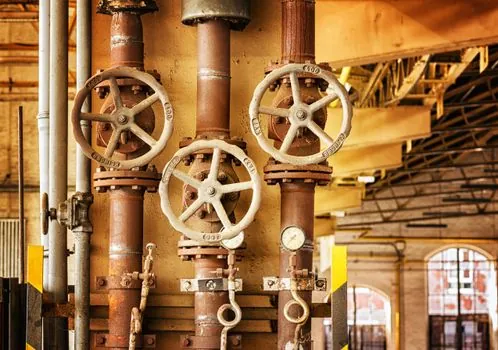
The failure modes that dominate plug-valve TCO are sealant-system failure on lubricated designs (loss of injection pressure, channeling in the sealant grooves), sleeve extrusion on PTFE-lined designs above their pressure-temperature rating, packing hardening on infrequently cycled valves, and galvanic corrosion at the body-end interface when carbon steel bodies are mated to stainless trim with the wrong gasket selection [S5].
Bidirectional shut-off on a plug depends on both upstream and downstream port faces of the tapered or cylindrical plug contacting the body bore, so any seat scoring on one face halves the design margin; pressure-balanced lubricated designs equalise line pressure across the plug to maintain contact and should be specified explicitly for bi-directional gas service [S5]. Fire-safe API 607 variants exist for soft-seated designs because PTFE-sleeved valves lose their sleeve seal in fire conditions; without the secondary metal seat and graphite packing backup, a plant insurance carrier may refuse cover in classified hydrocarbon service areas [S5].
Two trackable signals for 2026 specifiers to watch: the share of electric-actuated plug valves in new project POs (rising from a 2025 baseline as the 10.02% electric-actuator CAGR plays through [S1]), and the take-up of integrated diagnostic actuators that report seat-cycle counts and torque trends, the lever that delivers the 20-30% maintenance-cost reduction cited above [S4]. Plug Valve Types and Classifications: A Spec-First Map is the natural next read for engineers who need the type-by-type decision tree before locking the TCO model.