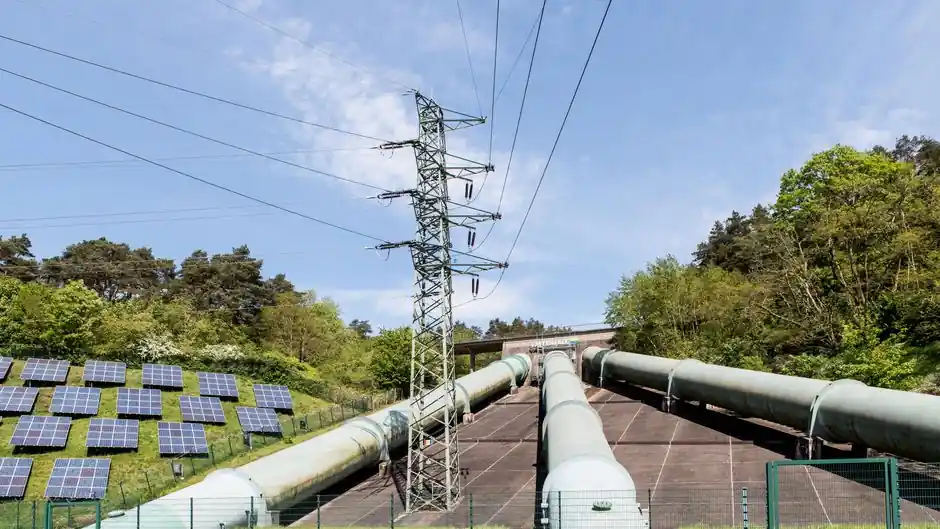
Electric ball-valve actuators should be sized for the actual operating torque, because undersized actuators are a common problem.
Soft-seated valves work well at lower temperatures and pressures, whereas metal-seated ball valves are suited to the extreme temperatures and pressures encountered in steam-generating power stations.
Define the Service Before Choosing the Valve
Power plants use valves to isolate and route steam, feedwater, condensate, cooling water, and gases, while dedicated control equipment regulates flow, pressure, and temperature [S2]. An electric ball valve is appropriate where the required function is dependable quarter-turn isolation, not continuous throttling or precision process control.
Electrically actuated ball valves rotate a bored ball through 90°, aligning the bore with the flow path when open and perpendicular to it when closed [S3]. The package normally includes a motor, reduction gear train, limit switches, and a terminal strip; the valve side includes the body, ball, stem, and seats [S3].
The service record must identify the fluid, design and operating pressure, maximum and minimum temperature, normal and maximum differential pressure, required seat leakage, flow direction, cycle frequency, electrical supply, control signal, and fail position. Power-generation equipment operates through thermal cycling, pressure fluctuations, cavitation or flashing, severe service conditions, and continuous operation, so one generic valve specification cannot cover every system [S2].
Match the Ball and Seat Design to Temperature
Soft-seated valves are appropriate where elastomeric or fluoropolymer seats remain within their pressure-temperature envelope, while metal-seated designs are the stronger choice for severe steam-service duties. Soft-seated construction works well at lower temperatures and pressures but is not suited to the extremes encountered in steam-generating stations [S1].
Power-plant ball valves use matched metal-to-metal sealing surfaces, with the ball and seat machined to closely matching spherical or conical geometry [S1].
Those figures are examples of severe-service capability, not blanket ratings for every electric ball valve. The valve must be selected within the OEM pressure-temperature rating, applicable ASME and ANSI requirements, seat material limits, actuator temperature limits, and the specific system curve [S1].
Size the Bore, Pressure Rating, and Shutoff Torque
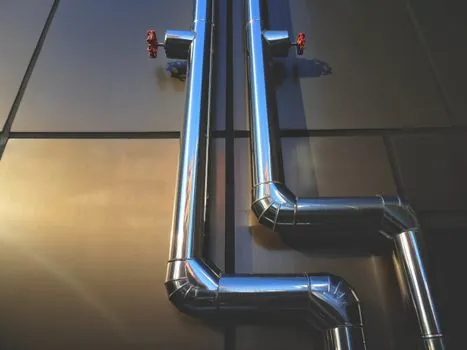
A full-port valve may reduce loss, but it can also increase flow area and closing torque; the final decision requires actual process flow, fluid properties, line pressure, and allowable ΔP.
The actuator should be selected above the maximum calculated break-to-open and close-to-open torque, with the manufacturer’s service factor, rather than rated against nominal torque at no pressure.
That construction logic is not a permission to operate a valve beyond its pressure-temperature rating; the OEM nameplate and governing standards still control [S1].
Compare the Main Electric Valve Architectures
A metal-seated floating ball is more appropriate for high-temperature steam, vent, drain, and process isolation. Published power-industry guidance identifies metal-seated valves for temperatures above 1,000°F and notes their use in severe service, where soft seats are more susceptible to degradation [S4]. Bidirectional shutoff may be available, but it must be specified rather than assumed [S1].
A trunnion-mounted ball is the defensible choice for high-pressure isolation, large sizes, high differential pressure, and demanding shutoff duty because the ball is mechanically supported rather than relying only on seat loading. Its disadvantages are greater cost, size, and more complex construction, but it reduces dependence on seat preload for structural support.
A V-port ball valve should be selected only when proportional flow control is required, not for ordinary isolation. Its internal flow restriction introduces a variable flow area, while the standard full-bore ball remains a shutoff device with limited throttling authority [S3]. For modulating steam, feedwater, pressure, or temperature loops, a properly characterized control valve is normally more suitable.
Actuator Sizing, Controls, and Electrical Duty

Electric quarter-turn actuators commonly complete the 90° stroke in roughly 3–15 seconds, and limit switches stop the motor at full open and full close [S3]. This controlled stroke can reduce water hammer compared with an abrupt closure, but it does not eliminate the need for a valid dynamic shutdown study.
ISO 5211 provides the standard actuator mounting pad and stem-drive interface used by many quarter-turn electric actuators [S3]. The actuator must still match the valve stem, mounting geometry, torque, stem orientation, and operating environment; matching the flange designation alone does not establish compatibility.
Selection checks should include maximum torque at rated ΔP and temperature, valve cycle frequency, actuator duty cycle, motor voltage, control signal, position feedback, manual override, and enclosure protection [S3][S7]. Common position feedback uses contacts operated from the actuator mechanism, allowing the control system to confirm the final position rather than infer it solely from the command [S3].
For analog control, a 4–20 mA input provides a defined proportional command range, but it does not by itself establish valve position. Confirm whether the actuator supports 4–20 mA control, open-close on/off operation, or protocol communication, and verify the required operating voltage [S3][S6]. A wired position signal remains necessary where the plant needs an independent status indication.
Match Materials to Water, Steam, Gas, and Ash Services
Stainless steel is commonly considered for corrosive or high-purity applications, while PVC is appropriate only within its comparatively low-pressure and temperature envelope [S10]. Material selection must follow the actual fluid chemistry, temperature, pressure, weld procedure, and coating system rather than a generic “stainless” entry.
Power-station duty divides sharply by service. Cooling water and condensate generally favor soft seating when temperature and pressure permit, with corrosion-resistant body materials selected for the water chemistry. Steam, drain, vent, and hot-process isolation justify metal seating or another severe-service trim. Fly ash and slurry services present abrasion and erosion risks that can damage seats and internals [S5].
Cavitation and flashing require attention in feedwater control. Large pressure drops can create vapor bubbles that collapse against trim, causing pitting, vibration, noise, and premature failure; flashing can create high velocity and downstream erosion [S2]. Proper sizing, anti-cavitation trim, staged pressure reduction, and application-specific materials are the relevant controls [S2]. An electric ball valve should not be selected as a cavitation-control device without an engineered sizing calculation.
Apply Failure, Maintenance, and Compliance Checks
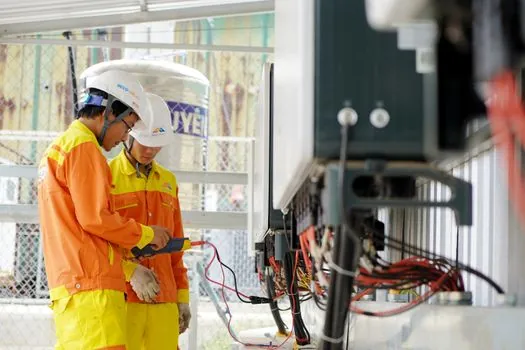
Common power-plant valve failures include leakage, seat erosion, valve seizure, and failure to shut off [S5]. Thermal cycling can also produce packing leakage, stem wear, seat damage, actuator drift, and reduced sealing performance, so live-loaded packing and an actuator intended for frequent cycling deserve review [S2].
Manual override should be available for commissioning and for operation during a power loss [S3]. The maintenance plan must also cover limit-switch inspection, stem and seat condition, actuator lubrication where applicable, electrical protection, and restoration of the fail position after testing.
The package should be checked against the ASME and ANSI requirements identified for the valve, together with project-specific fire-safe, anti-static, fugitive-emissions, electrical-area, and environmental requirements [S1][S4]. Those requirements must be written against the selected service and governing codes rather than copied from another line. A bidirectional sealing option, fire-safe feature, or anti-static feature should be explicitly identified in the purchase specification [S1][S4].
For further application context, safety relief valve selection for power generation addresses a different protection function and should be reviewed separately from electric ball-valve isolation.
Shortlist by Service Severity
Choose a soft-seated floating electric ball valve for cooling-water, treated-water, or condensate isolation where the pressure-temperature envelope fits the chosen PTFE or PEEK seat. Choose a metal-seated floating design for hot steam, vent, drain, and continuous process isolation, and verify bidirectional sealing if required [S1][S3][S4].
The final shortlist should contain the specified pressure-temperature rating, bore, seat material and leakage class, calculated maximum torque, actuator stroke and voltage, feedback method, fail action, manual override, enclosure requirement, and applicable compliance documents [S1][S2][S3][S6].