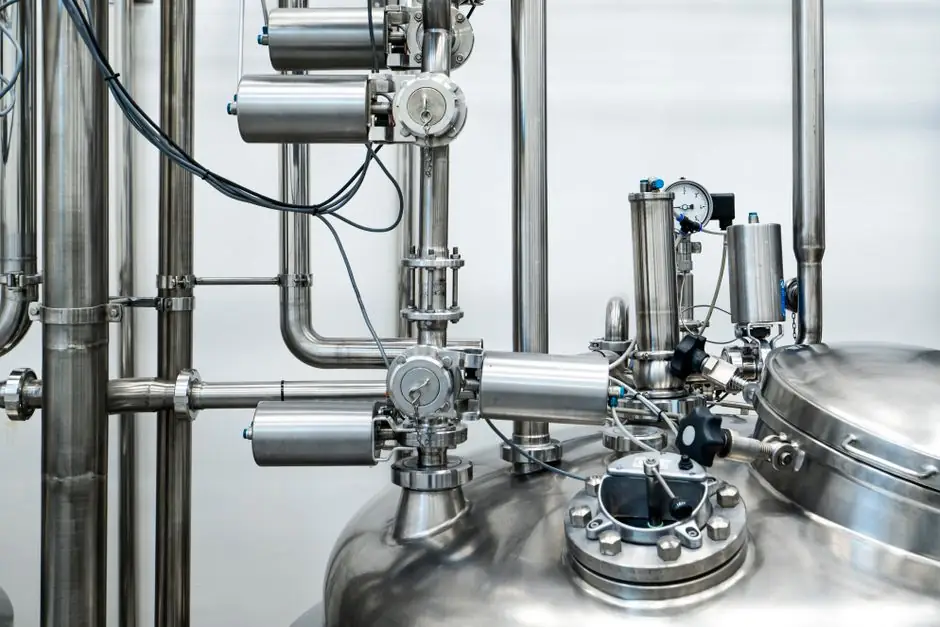
Electric ball valves suit water-treatment isolation, dosing, filtration, flushing, and reverse-osmosis duties when the valve construction matches the fluid and the actuator matches the switching duty [S2].
Selection depends on DN50 pipe limits, chemical concentration, temperature, pressure, connection type, suspended solids, and the required open, close, or three-way switching sequence [S2][S4].
Define the Service Before Choosing the Valve
Electric ball valves are quarter-turn isolation devices: the actuator rotates a bored ball through 90 degrees so the bore aligns with the pipeline for full opening and blocks the flow path when closed [S3]. Motorized ball valves are used for remote isolation, equipment switching, chemical dosing, and automated process control in water and wastewater plants [S2].
Clean-water distribution generally requires dependable shutoff, low flow resistance, and remote operation, while larger fixed process lines often use flanged construction [S2]. Wastewater introduces suspended solids, organic matter, sludge, fibers, and abrasive particles; a conventional ball valve becomes unsuitable where solids can lodge between the ball and seats [S2].
Chemical dosing requires separate compatibility checks for sodium hypochlorite, acids, alkalis, and coagulants because concentration, temperature, and exposure duration affect material selection [S2]. Reverse-osmosis installations also require attention to leakage, pressure rating, connection compatibility, and the switching logic used for feed isolation, flushing, bypass, or branch diversion [S2].
Compare Valves by Duty, Pressure, and Installation
Two-way full-bore valves offer the lowest restriction when fully open, while reduced-bore three-way valves provide diversion functions where pressure loss is less critical [S3]. Compact wafer ball valves suit space-constrained installations; split-body flanged ball valves cover larger diameters and higher pressures [S5].
For pipelines below DN50 and chemical-feed lines, ball valves are the preferred choice for rapid quarter-turn isolation [S4]. This makes them a sensible default for compact treatment packages, but size alone does not establish chemical compatibility or pressure capability.
Match the Wetted Assembly to the Fluid
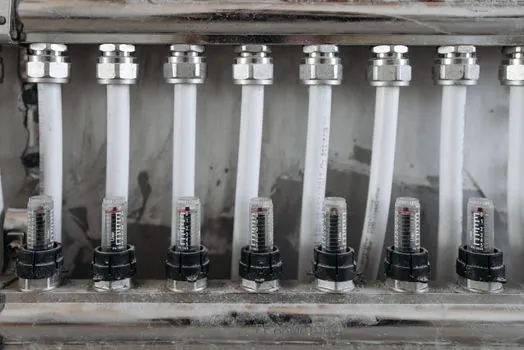
SS304 is a general option for industrial water and compatible utility fluids, but chloride concentration and corrosion exposure require evaluation [S2]. SS316 and SS316L provide a higher-specification option for water systems where corrosion resistance is critical, although the complete wetted assembly must still be checked rather than relying on the body grade alone [S2].
PTFE-lined constructions and UPVC are candidates for selected chemical services, but neither material can be accepted from the chemical name alone [S2]. Verify the body, ball, seats, stem seals, gaskets, and any exposed stem against the chemical identity, concentration, temperature, and exposure conditions [S2].
For drinking-water service, material approval is a procurement requirement rather than a visual inspection. WRAS certification is used to establish that materials contacting drinking water meet the relevant British requirements [S5]. The certification should apply to the selected valve configuration, not merely to a generic valve family.
Size for Flow and Pressure-Drop Limits
A practical sizing target for electronic ball-valve selection is approximately 1 psi pressure drop at the anticipated flow condition [S8]. For a two-way valve, size to the line and verify that the fully open bore passes the required flow at the available differential pressure; a nominal DN size does not prove adequate hydraulic capacity.
A full-port ball has a bore equal to the adjoining pipe internal diameter and therefore minimizes restriction in the open position [S3]. A reduced-bore valve trades flow capacity and pressure loss for a more compact or diversion-oriented arrangement [S3][S5]. For three-way duty, evaluate each permitted flow path independently because one branch may not carry the same flow coefficient as another [S3].
Do not accept a pressure rating without reconciling it with maximum design pressure, service temperature, pipe test pressure, actuator thrust, and water-hammer conditions. A useful shortlist uses DN50 as an initial application boundary for chemical-feed lines, then confirms bore, Cv, pressure class, and end connection rather than stopping at the size [S4].
Specify Actuator Duty and Control Functions
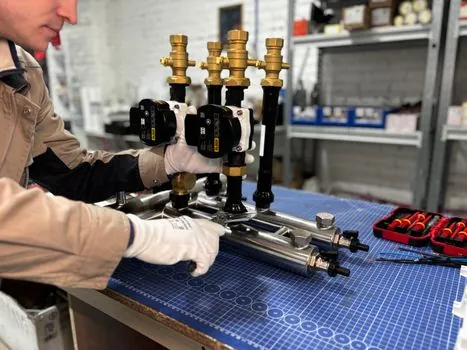
An electric actuator must deliver enough break torque to turn the ball through its rated seat and differential-pressure condition, not merely rotate an unloaded valve. Specify normal and minimum opening or closing torque, operating time, duty cycle, power supply, control signal, travel limits, fail position, manual override, and enclosure protection. [S2]
Motorized ball valves are suitable where remote operation, automated sequencing, or impractical manual access justifies the added electrical and mechanical complexity [S3][S6]. A two-way on/off valve is sufficient for simple isolation, while a three-way actuator requires confirmed port logic and coordinated switching where one branch must remain active during transfer [S3].
An IP68 electric actuator is available for automated water-service applications without compressed air [S5]. For hazardous-area duties, request the exact certified actuator and valve assembly rather than assuming a generic electric motor qualifies; product families may offer Ex certification, and the applicable marking must be checked for the installation [S5].
Separate Isolation, Dosing, and Solids-Handling Roles
Electric ball valves are a strong fit for clean-water isolation, chemical-feed isolation, filter switching, flushing, and RO feed or bypass control [S2]. A three-way valve can reduce valve count where the process must route flow between two branches, subject to confirmed port geometry and pressure loss [S2][S3].
Do not select a mainstream full-bore ball valve for wastewater with significant solids, abrasive particles, or fibrous material [S2]. Those services may require a solids-handling valve such as an electric knife gate valve. For chemical dosing, choose on compatibility rather than simply selecting the electrically actuated version of a familiar valve [S2].
Where continuous or modulating flow control is required, an on/off electric ball valve is not automatically the correct actuator. The ball geometry provides quarter-turn isolation, and actuator options depend on the installed valve design [S3]. A more detailed desalination comparison is available in Electric Ball Valve Selection for Desalination.
Verify Certifications, Fail States, and Commissioning
Water-treatment procurement data should record the product configuration, pressure class, temperature, connection, actuator voltage, control protocol, fail action, certifications, and wetted materials. Depending on the installation, certification options include WRAS for drinking-water contact, pressure-equipment CE or UKCA marking, Ex marking, SIL certification up to SIL3, Fire Safe qualification, and DNV certification for the cited pneumatic actuator range [S5].
Do not transfer a certification claim from one actuator or valve family to another. Confirm the exact model and intended service. An electric actuator removes the need for compressed air and supports automated on/off control, while a pneumatic actuator with an integrated handwheel can support commissioning without compressed air [S5].
Before energizing, stroke the actuator locally and verify open and closed indications, torque limits, electrical protection, grounding, manual override, and the control signal. The selected construction must also retain access for seat inspection, stem-seal replacement, actuator servicing, and cleaning, especially in wastewater and chemical service [S2].
Build the Shortlist from Service Constraints
Use a two-way full-bore electric ball valve for clean-water isolation when low pressure loss and reliable quarter-turn shutoff are primary requirements [S3]. Use a three-way valve for filter switching or branch diversion, after confirming T- or L-port logic and reduced-bore pressure loss [S3]. Use compact wafer construction where installation envelope governs, and split-body flanged construction where larger diameter or higher pressure governs [S5].
Reject any candidate that lacks confirmed wetted-material compatibility, a pressure and temperature basis, actuator torque at the actual service condition, or a defined fail state. Track four purchase-record signals for each shortlisted valve: DN size and bore, certified pressure-temperature limits, actuator voltage and fail action, and the exact certification required by the installation [S2][S5].