
An electric ball valve can provide automated isolation in desalination lines where seawater, brine, chemicals, and repeated operation make manual actuation unsuitable.
Selection must match the duty to the process stage, pressure rating, bore, material set, seat design, actuator environment, and control requirements.
Define the desalination duty and service boundary
Desalination plants divide into seawater intake, pretreatment, high-pressure pumping, reverse osmosis, energy recovery, and post-treatment, with different fluid conditions at each location [S5]. The electric ball valve is most defensible for compact, automated isolation, pumping, membrane, permeate, and chemical-injection duties where a quarter-turn closure member fits the piping arrangement.
Pressure is a defining constraint. Ball valves are identified as suitable for high-pressure shut-off in reverse-osmosis systems [S6], but the valve must be pressure-qualified for its own location rather than for the plant maximum.
The valve also has to accept the service medium. Raw seawater contains high chloride levels and presents corrosion, scaling, fouling, and biological-growth risks [S2]. Post-treatment may involve brine, mineral injection, carbon dioxide dosing, and pH adjustment [S3]. An electric actuator cannot compensate for unsuitable wetted materials or seats.
Compare floating, trunnion, and segmented ball designs
Floating ball, trunnion-mounted, and segmented designs meet different operating priorities, so pressure, bore, seat leakage, and maintenance requirements should be compared before considering the actuator package. [S3]
For high-pressure duty, the trunnion architecture is the stronger starting point because the ball is mechanically supported and stem torque is more predictable than in a conventional floating-ball design. Floating-ball valves can remain appropriate for lower-pressure duties, while segmented valves can solve installation-length constraints [S2][S3].
These ranges demonstrate available configurations, not automatic suitability for seawater.
Select materials and seats for seawater exposure

Corrosion resistance requires a defined material set for the body, ball, stem, seats, stem packing, fasteners, and exposed actuator components, because mixing carbon steel fasteners with corrosion-resistant valve parts creates a dissimilar-metal risk. [S2]
The duplex designation is material information, while the application suitability still depends on chloride concentration, temperature, velocity, and exposure. WCB carbon steel should not be treated as a seawater solution merely because it appears in a general material list.
Metal seats are recommended for high-pressure applications in seawater desalination, whereas resilient seats suit lower-pressure or chemical service where elastomer compatibility is established [S8]. Metal-seated ball valves reduce soft-seat compression concerns, but they demand controlled machining, adequate torque, and careful exclusion of abrasive solids that may damage the sealing surface.
For pretreatment, Bray manufactures resilient-seated butterfly valves with peroxide-cured EPDM or nylon-coated duplex discs, as well as resilient-seated ball valves designed to resist corrosion, chemical attack, and biofouling [S3]. For chemical injection, elastomer selection must be checked against the actual chemical concentration and temperature rather than inferred from a seawater service label.
Match bore, pressure rating, and shutoff performance
A full-bore ball valve is recommended for high-flow applications [S8]. A reduced-bore valve may be acceptable where capital cost dominates, provided the resulting pressure drop, cleaning access, and minimum flow behavior are included in the hydraulic calculation.
The valve size should not be selected by line diameter alone. The project calculation must use actual fluid density, viscosity, flow, fittings, and allowable loss rather than copying that example unchanged.
Pressure class must cover design pressure, test pressure, backpressure, and waterhammer effects. Design pressure also requires checking the complete assembly, including actuator thrust, stem, mounting, and any gearbox.
Seat performance is a separate specification item. Specify allowable leakage, preferably against a recognized face-to-face or valve standard appropriate to the project, and identify whether bidirectional shutoff is required. A pressure rating alone does not establish leakage performance.
Choose the electric actuator from duty and environment
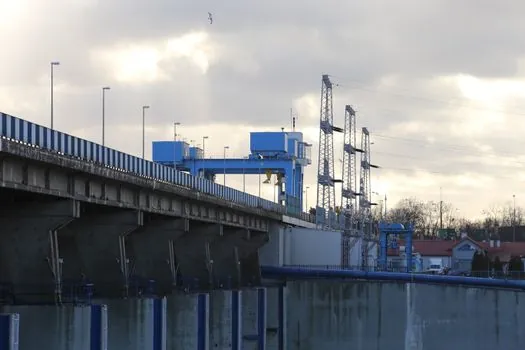
The electric actuator should be selected from valve torque plus a defensible safety margin, operating frequency, service voltage, control signal, ambient temperature, enclosure requirement, and available space. [S7]
For high-cycle isolation, continuous electric operation may impose more demand on the gearbox, motor, limit switches, and local controls than the valve's pressure rating suggests. An actuator specified only by nominal torque is incomplete. The datasheet should identify maximum torque, running torque, minimum break-to-open torque, motor duty, number of permitted starts per hour, and whether a mechanical or electronic position indicator is fitted.
Seawater plant electrical equipment also needs an appropriate enclosure and corrosion strategy. IP68 waterproofing is offered for marine-grade valve and actuator packages in desalination service [S1], but IP68 addresses water ingress, not chloride attack on terminal housings, cable glands, exposed fasteners, or the actuator's internal gearing. Electrical classification must be selected from the installed area, and any hazardous-area requirement needs the applicable local code and certified equipment.
Motorized quarter-turn valves are available in explosion-proof electric and multi-turn configurations within the industrial valve product range [S4]. The actuator should normally provide travel-limit switches and a local handwheel or manual override. For remote control, specify open, closed, and fault feedback plus the required fail position.
Apply electric valves where they fit, and avoid them where they do not
Electric ball valves fit automated shut-off, pump discharge isolation, membrane skid isolation, permeate control, and post-treatment chemical service when the valve construction and actuator suit the measured duty [S3][S7]. They are less suitable for large-diameter intake isolation where a butterfly valve offers a more practical pressure drop and installed size, or for throttling duties where a control valve is required for stable modulation.
Do not select the mainstream electric ball valve for a large raw-seawater intake line simply because automation is convenient. Concentric and double-eccentric butterfly valves are listed for pretreatment and large-diameter service [S2], while full-bore ball valves remain attractive where compact quarter-turn isolation is more valuable than minimizing valve face-to-face length.
Do not use a resilient-seated, carbon-steel, general-purpose electric ball valve in hot chlorine service, concentrated brine, or a high-pressure seawater line without confirming every material. A segmented ball valve may solve a bore or envelope constraint, and a trunnion ball valve may be justified above the practical pressure range of a floating design.
Actuation frequency must be treated as a selection criterion rather than an afterthought. Manual, pneumatic, and electric options have different maintenance, control, and failure characteristics, and valve selection must include the operating method and pressure rating [S7].
Specify the procurement data and qualification evidence
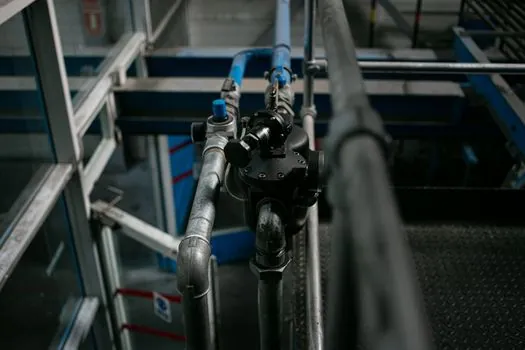
A purchase specification should state the line size, bore, end connection, design and test pressure, fluid, temperature, flow direction, allowable leakage, seat material, body and trim materials, actuator torque, supply voltage, control signal, duty cycle, enclosure, ambient conditions, corrosion protection, accessories, and required documentation. [S2]
For electric actuation, request product-specific drawings, torque data, material certificates, pressure-test records, seat-leakage data, electrical certificates, and actuator cycle-life information. The selection remains incomplete without a valve-specific torque versus differential-pressure curve and confirmation that the selected actuator can close the valve at minimum fluid density and maximum service condition.
Relevant product families provide useful reference envelopes: OMAL's three-piece stainless-steel ball valve is listed up to PN 63 with an ISO 5211 actuator mounting flange [S5]. Bray's Series 19/19L segmented ball valves are presented for desalination applications including mineral injection, carbon dioxide dosing, and pH adjustment [S3]. These examples support shortlisting, but the final selection must follow the installed conditions and certified product data.
Shortlist a full-bore, corrosion-resistant, pressure-qualified ball valve with an actuator sized from the manufacturer's torque curve, then verify seat materials, fail position, feedback, ingress protection, and service documentation before releasing the purchase order.