
Electric drum-drive mixer trucks can operate the mixing drum without chassis-engine idling, with demonstrated architectures using a 32 kWh battery pack, a 650 V DC supply and a 22 kW onboard charger [S2].
Senptec offers a pure-electric drum-drive system for mixer trucks [S1].
Electric drum drive architecture and operating scope
A battery-electric mixer separates drum rotation from the traction engine, allowing the drum to run at a worksite while the chassis is stationary. Senptec identifies fuel reduction and lower operating cost as the operating objectives of its pure-electric drum-drive system, and also lists a hybrid mixer configuration alongside the full-electric version [S1].
The drum is the work machine in a concrete mixer truck, so the specification must cover both stationary mixing duty and vehicle movement. In the ETM installation, traction remains with the diesel engine in the partial-series hybrid configuration, while the electric drive supplies drum rotation. This arrangement reduces engine runtime without requiring the entire vehicle to become battery-electric [S2].
Battery voltage, capacity and charging options
Aobo New Energy publishes a different pack designed specifically for continuous drum rotation: 9.92 kWh, 320 V rated voltage, 31 Ah nominal capacity and 100-series cell configuration. Its stated operating range is 270–365 V, with 120 A maximum charge or discharge current [S4].
These two figures describe different architectures rather than interchangeable specifications. A 32 kWh pack at 650 V carries materially more stored energy than a 9.92 kWh pack at 320 V, while the Aobo product publishes a 31 Ah nominal capacity that must be treated as a pack specification rather than inferred from voltage alone [S2][S4]. Fleet selection should therefore compare usable drum-work energy, charging path and required drive envelope, not energy capacity in isolation.
Battery thermal limits and control interfaces
The Aobo 320 V pack specifies a 0–55°C charging range and a -20–55°C discharge range, with air cooling plus heating film for thermal management [S4]. Aobo New Energy recommends a state-of-charge range of 10%–90% for its concrete-mixer-truck battery pack because this avoids overcharge and overdischarge and prolongs cycle life [S4].
Aobo New Energy’s 320 V electric drum-drive battery pack for concrete mixer trucks has a 9.92 kWh energy capacity and uses air cooling and heating film for thermal management [S4]. That weight matters because reducing engine idling does not remove the mass penalty of batteries, drivetrain components or structural reinforcement. Payload calculation must therefore include the complete battery, motor, inverter, transmission and mounting arrangement [S2][S4].
Communication is not an afterthought in the Aobo design: the battery management interface uses CAN, while optional IoT connectivity supports remote data tracking [S4]. A battery-electric excavator may use a different control architecture, but the mixer requirement is more specific because drum speed, rotation direction, traction interlocks and charging state must remain coordinated.
Comparison of full-electric, hybrid and generator-assisted drives
Full-electric drum drives use stored battery energy for drum operation and are suited to routes where charging energy and operating time are adequate [S1]. Liebherr’s plug-in hybrid cement truck uses a motor, inverter and control system supplied by ZF [S2]. The e-HYDRIVE approach also charges during driving, powers the drum electrically and preserves conventional operation when required [S3].
The decision criteria are electrical capacity, infrastructure dependency and fleet disruption. A full-electric architecture offers the cleanest separation between drum work and engine idling, but it creates a stronger dependency on usable battery capacity and charging time [S1].
Motor sizing must also match the selected drum. A dump truck uses a different body and duty cycle, so its power and battery figures should not be transferred to drum rotation.
Worksite loading, waiting and pouring duty
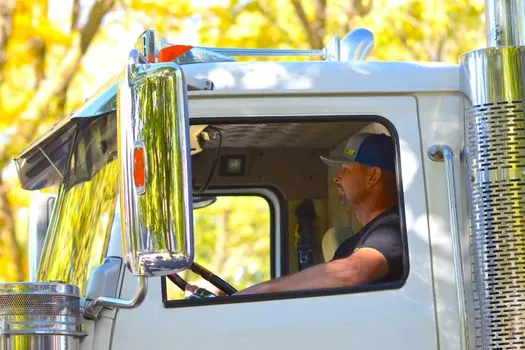
Concrete delivery creates three stationary phases with substantial drum-running demand: loading, waiting and pouring [S3]. In a diesel arrangement, the chassis engine commonly powers the drum through the power take-off during these phases. In the ETM arrangement, the electric motor and transmission remove that continuous idling requirement, while the engine remains available for traction [S2].
The e-HYDRIVE field program was operated with Amrize in active production environments, where the development team evaluated durability, usability and real-world performance [S3]. The supplier stated that early testing showed measurable reductions in idle time and fuel consumption across daily production cycles, but no numerical percentage was published in the material, so the result should not be converted into a guaranteed savings figure [S3].
Duty-cycle analysis should separate travel energy from stationary drum energy. Travel creates an opportunity to charge in the e-HYDRIVE and Liebherr hybrid arrangements [S2][S3]. Loading and pouring may occur at sites where no compatible charging connection is available, making usable battery capacity, minimum state of charge and a fallback strategy critical engineering inputs.
Mechanical-drive context and maintenance consequences
Replacing a hydraulic mixer drive with an electric motor and transmission removes hydraulic components from the drum-drive train and reduces the number of moving parts identified as failure points by Liebherr [S2]. Routine oil consumption is limited to the quantities required for lubrication of the electric powertrain [S2]. This architecture should be evaluated against the alternatives described in Hydraulic vs Chain Drives for Concrete Mixer Drums, because drive efficiency alone does not settle payload, maintenance or control requirements.
Mechanical simplification does not remove electrical failure modes. The evaluation must include battery thermal management, high-voltage protection, motor cooling, inverter controls and the interlock that prevents unsafe drum movement during vehicle operation. The Aobo pack’s IP67 protection, vibration testing and shock testing are published claims for the battery package, not evidence that the complete mixer system has the same enclosure rating [S4].
For procurement, the correct system boundary includes the battery pack, BMS, charger, generator where fitted, electric motor, inverter, transmission, mechanical mounts and vehicle interlocks. Specifying only motor power or battery energy can leave the interface incomplete, particularly where the mixer is being installed on an existing truck or trailer chassis [S1][S2].
Specification checklist for a battery drum-drive build
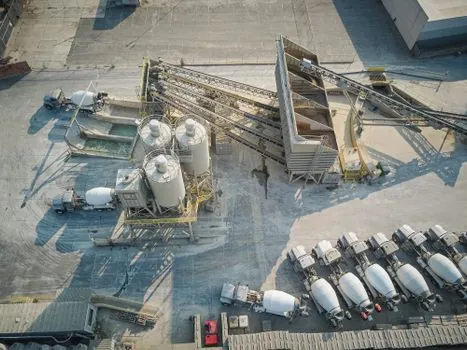
The first specification checkpoint is drum capacity and duty: the Liebherr range spans 7–12 m³, with 125 kW peak, 60 kW continuous and 14 rpm operation [S2]. The second is electrical architecture: 320 V and 9.92 kWh in the Aobo pack, versus 650 V and 32 kWh in the ETM hybrid installation [S2][S4].
The third checkpoint is energy availability. Record charge temperature of 0–55°C, discharge temperature of -20–55°C, maximum current of 120 A and recommended state-of-charge range of 10–90% for the Aobo unit [S4]. If the selected supplier does not publish equivalent limits, the missing value must be closed during supplier qualification rather than inferred from generic battery specifications.
The fourth checkpoint is route and charging compatibility. A hybrid can charge while driving and retain a conventional operating mode, while a pure-electric system depends more heavily on the battery and charging strategy [S1][S3]. The fifth checkpoint is packaging: the Aobo pack is 180 ±5 kg and 710 × 575 × 445 mm, but the installed assembly also needs mounting space, cooling provisions and chassis-load verification [S4].
Procurement teams should track three engineering signals before release: validated drum-work time per route, thermal performance at the minimum planned ambient temperature, and the demonstrated duty-cycle reduction in fuel use and engine idle time. e-HYDRIVE has already moved into active-production validation, while ETM field data covers multiple drum sizes and Senptec offers both pure-electric and hybrid system categories [S1][S2][S3].