
Electric linear actuators for agricultural machinery in 2026 are specified at 12/24 V DC (with some 36/48 V DC and 110/220 V AC variants) with thrust ratings spanning 2000 N to 12000 N, ingress protection classes IP54 through IP69K, strokes from 50 mm to 800 mm, and a typical duty cycle of 10% [S1][S2][S5][S6].
The dominant duty class is 10% (often labelled S2-10 min or 2 min on / 18 min off), with stroke-to-speed trade-offs that flip load capacity: 50 mm strokes run at 15 mm/s no-load and 13 mm/s loaded for 2500 N, while 400 mm strokes drop to 3 mm/s no-load and 2 mm/s loaded for 6000 N, in a 100 W 24 V DC model [S2]. For deep technical background on how stroke, load, and speed interact, the linear actuator reference page lays out the basic force-speed-thermal triangle.
Force Classes: 2000 N, 4000–6000 N, 10000–12000 N
Agricultural actuators cluster into three practical force bands that map directly to machine function [S1][S2][S5]. The 2000 N IP67 class (12/24 V DC, 4.7–65 mm/s, stroke 50–800 mm, aluminium housing, 52 dB noise) is sized for sprayer valves, feeder gates, and small implement adjustment [S1]. The mid-band 4000–6000 N family covers 24 V DC units at IP54–IP66 with 100 W motors, where a 200 mm stroke delivers 5000 N thrust and 5500 N self-locking force, paired with 5 mm/s loaded speed [S2][S4]. The heavy 10000–12000 N tier (12/24/36/48 V DC, 6.5–60 mm/s, IP66, stroke 100–600 mm) handles tractor hitches, three-point linkage positioning, and large bin doors [S5].
Installation dimensions scale with stroke: in the 12000 N HB-DJ805 family, a 50 mm stroke unit is 300 mm retracted and 350 mm extended, while a 350 mm stroke unit grows to 600 mm retracted and 950 mm extended (stroke = extended minus retracted) [S5]. The same family shows 12000 N load with 6.5 mm/s minimum speed and 60 mm/s maximum no-load speed, with internal limit switches standard and potentiometer or Hall sensor available as options [S5].
IP Rating, Material, and Cleaning Compatibility
Ingress protection is the single most important gate for farm-environment actuators because the units see fertilizer splash, manure slurry, grain dust, and high-pressure wash-downs [S1][S3][S6][S7]. IP65 is the entry-level wet/dust seal and is used on indoor livestock-ventilation and barn-automation units; IP66 adds resistance to powerful water jets and is the most common 24 V DC agricultural rating in this 2026 sourcing set [S1][S2][S4][S5]. IP67 supports temporary immersion, which suits sprayer booms, mixer chute positioners, and outdoor feeding systems exposed to heavy rain [S1]. IP69K, found in the CAN in Automation vendor profile, is required for high-pressure, high-temperature cleaning of dairy and food-grade farm machinery, with the added engineering note that these actuators are leak-free, maintenance-free, and rated up to 16000 N [S6].
Material choices split between aluminium-alloy housings for the 2000 N IP67 family (rust resistance in fertilizer mist) and full-metal, sealed-gear-train construction for grain-handling and explosive-dust zones [S1][S7]. Grain dust is both pervasive and potentially explosive, so actuators in auger gates, grain dryers, and silo-bin doors are specified with sealed gear trains and minimal electrical arcing to stay below ignition thresholds [S7]. The linear module reference covers the broader belt-driven and ball-screw module types that often package these same IP ratings for cleaner indoor mounting.
Stroke-Length Mapping to Application
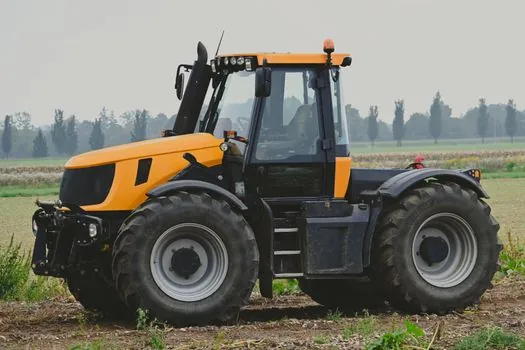
Stroke length is selected by the geometry of the function, not by force alone [S2][S5][S7]. For small auger gates the spec is 100 mm, and for large bin doors 600 mm is normal; for hitch and three-point linkage implement adjustment strokes run 200–400 mm; for in-cab implement positioning systems the trend is toward electric actuators replacing manual turnbuckles to deliver repeatable depth settings [S7]. The 24 V DC 100 W heavy-duty table shows a clean stroke ladder from 50 mm to 400 mm in 50 mm increments, with each step adding 50 mm to the retracted length, 100 mm to the extended length, and 0.3 kg to the weight, starting at 4 kg for the 50 mm unit and ending at 6.1 kg for the 400 mm unit [S2].
Custom strokes are common in this market: the TOMUU U7 family standardises 50–800 mm while the HB-DJ805 standardises 100–600 mm and accepts other sizes on custom order, with installation size = stroke + 200 mm [S1][S5]. For the planning engineer this means the gearbox envelope grows with stroke, so chassis cut-out, harness bend radius, and mount bracket geometry must be confirmed against the actual retracted length, not the nominal stroke number [S5].
Feedback, Control Buses, and Synchronisation
Beyond the basic on/off extend-retract use, 2026 agricultural actuators increasingly ship with feedback so two units can be synchronised for parallel lifts [S1][S5][S6]. The HB-DJ805 lists potentiometer and Hall sensor as optional add-ons, both feeding back position for closed-loop control, with the gear-motor drive rated for IE 1 efficiency and 1500 r/min on a 12/24 V DC brushed permanent-magnet motor [S1][S5]. CAN in Automation (CiA) describes 16000 N IP69K actuators that are compatible with several fieldbus protocols for synchronising two devices from one master controller, which is the architecture most new sprayer booms and adjustable mower decks now use [S6].
For applications that must be field-serviceable with no calibration laptop, the simplest control path is two-wire 12/24 V DC polarity-reverse with built-in limit switches, which the U7, HB-DJ805, and 6000 N IP54 units all support out of the box [S1][S4][S5]. When the application is livestock ventilation, the 110/220 V AC 5000 N IP66 U12B family uses potentiometer feedback for fine inlet position control on AC mains, where DC bus power is not available [S4]. The linear encoder page covers how external magnetic or optical encoders extend this feedback story when the integrated potentiometer resolution is not enough for precision seed-metering or fertiliser-rate actuators.
Comparison: 2000 N IP67 vs 6000 N IP54 vs 12000 N IP66
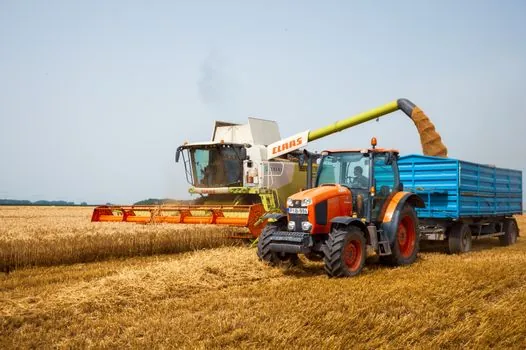
The three dominant SKU profiles in this 2026 sourcing set are 2000 N IP67, 6000 N IP54, and 12000 N IP66, and the decision matrix is short [S1][S2][S4][S5].
2000 N IP67 (12/24 V DC, 4.7–65 mm/s, 50–800 mm stroke, aluminium housing, ≤60 dB, IP65/66/67 selectable): best for sprayer valves, small gates, and feeder adjustment where fine speed and corrosion resistance matter more than peak force [S1]. 6000 N IP54 (24 V DC, 100 W, 50–400 mm stroke, 3–15 mm/s, 2500–6000 N load, IP54): best for indoor lifting systems and weather-protected implement positioning where peak force is needed but wash-down pressure is low [S2][S4]. 12000 N IP66 (12/24/36/48 V DC, 6.5–60 mm/s, 100–600 mm stroke, IP66, internal limit switch, optional potentiometer/Hall): best for tractor hitches, three-point linkage, and grain-bin doors where peak force, IP66 jet resistance, and feedback are all required [S5].
Cross-cutting trade-offs to weigh: (a) duty cycle is fixed at 10% across all three, so thermal sizing of the gearbox must respect S2-10 min operation or service life drops sharply; (b) stroke length and force are coupled, so a 400 mm stroke at 12000 N requires a slower gearbox than a 100 mm stroke at 12000 N; (c) feedback adds cost and connector count, so a unit with built-in limit switches but no potentiometer is the lowest-cost entry for simple open-loop farm use [S1][S2][S5].
Limitations, Failure Modes, and Sourcing Standards
The single biggest failure mode in farm electric linear actuators is overloading, which causes the gearbox to stall and the motor windings to overheat, and vendors are explicit that actuators will not move or will be damaged if run above their rated load [S5]. Dust ingress through degraded seals is the second, particularly around shaft wipers, which is why IP66 minimum with stainless or aluminium housings is the practical floor for outdoor service [S1][S6][S7]. For grain-handling zones, full-metal construction with sealed gear trains and minimal arcing is the cited design pattern to keep actuator surface temperature below combustible-dust ignition thresholds [S7].
Certifications visible on the 12000 N SKU are CE, ISO 9001, and SGS; the 2000 N SKU carries a 3-month to 1-year warranty depending on duty profile [S1][S5]. For higher-tier IP and feedback requirements, look for the IP69K CAN-compatible actuator family that adds 16000 N peak force, leak-free sealing, and maintenance-free operation, which is a meaningful step up from IP66 for wash-down dairy and food-grade applications [S6]. The construction machinery and equipment reference page covers the parallel design pattern in earth-moving equipment, where similar 10% duty cycle, 12/24 V DC, and IP67/69K gates apply, and it is useful cross-reading when agricultural OEMs also build light construction platforms.
Track these two signals through Q4 2026: the spread of IP69K-rated 12000 N+ units into the dairy and feed-lot segment, and the migration of three-point hitch actuators from manual turnbuckles to electric actuators with potentiometer or Hall feedback on the CAN bus [S6][S7]. For application-engineering reference on how these specs translate to neighbouring industries, see the linear actuator selection for material handling map, which covers the same force/IP/duty gates for conveyor, lift, and warehouse use.