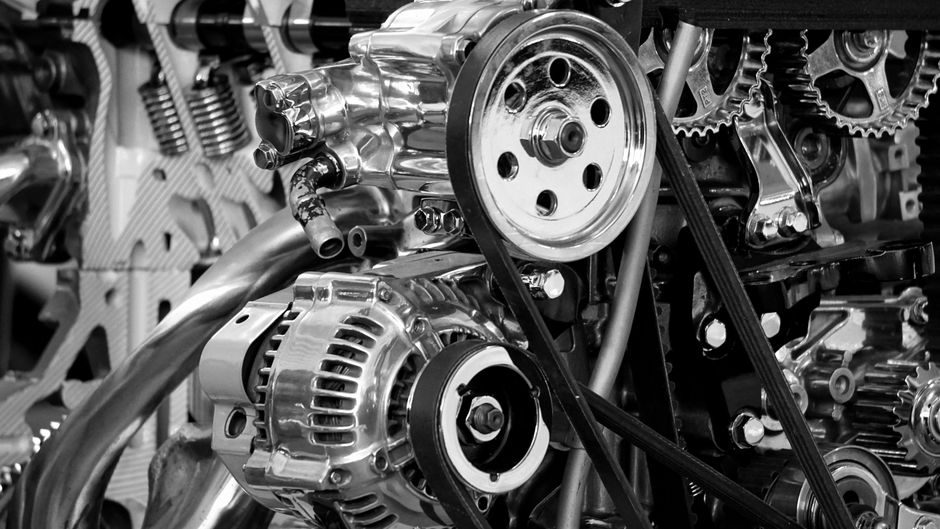
Electric motor manufacturing in mid-2026 is dominated by Chinese OEM line builders that publish the cleanest process breakdowns, with Nide Tech (Ningbo) explicitly listing six key process stages for new-energy-vehicle motors: stator/rotor stamping and laminating, winding (including hairpin and needle winding for BLDC), winding insertion, insulation and vacuum-pressure impregnation (VPI), rotor assembly with shaft press, and final electrical/mechanical end-of-line test [S3][S4].
Adjacent suppliers on both sides of the Wuxi–Changzhou–Jingjiang cluster — Changzhou Baojie (single-phase, micro AC, stepping motors) [S1], Jingjiang Dacheng (high-speed electric spindles) [S2], and Leili (automotive air-damper actuators, small DC) [S6] — confirm that the same six-stage skeleton now governs everything from 12 V automotive actuators to 100,000 rpm machine-tool spindles, with the only meaningful variance being the winding cell and the balancing/inspection stage.
Stage 1 — Stator and Rotor Lamination: Silicon Steel, Die-Cutting vs Progressive Stamping
The silicon-steel lamination stack is the starting point of every modern AC induction, BLDC, and PMSM build, with 0.20–0.35 mm cold-rolled non-oriented (CRNGO) silicon steel as the dominant grade and 0.20 mm entering volume for high-speed EV traction motors [S3][S4]. Asian line builders split into two camps: high-speed progressive stamping (350–800 strokes/min) for stator/rotor OD below ~200 mm, and large-tonnage dies with slower indexing for EV-format stators above 250 mm, where the strip width exceeds the capacity of a single die set [S3].
Stacking methods also bifurcate: self-bonding interlocking tabs (laser- or chem-etched), adhesive bonding, or laser welding along the outer diameter, with laser welding now widely specified on hairpin stators because the slots are too narrow for through-skiving after winding is inserted [S3][S4]. For high-speed spindles above 30,000 rpm, rotor sleeve retention (often Inconel or carbon-fibre overwrap) replaces traditional cast-aluminium cage construction [S2].
Stage 2 — Winding: Needle, Slot, Hairpin and Concentrated-Pitch Cells
Winding technology is the single largest differentiator across 2026 motor lines. Nide Tech publishes a four-cell family covering wheel-hub motors, BLDC stators, hairpin flat-wire traction stators, and needle-wound small industrial motors [S4]; the cell choice is dictated by slot fill factor, copper cross-section, and the minimum batch size the line builder will accept.
Needle winding remains the workhorse for BLDC stators below ~120 mm OD used in appliances, e-bikes, and small pumps, with the BLDC Motor Winding Machine cell delivering 8–14 second cycle times per stator on a multi-station indexing table [S4]. For a deeper line-layout comparison inside broader plant electrification, see the line-frequency induction furnace selection gates piece, which covers similar cell-vs-batch economics on a different process.
Stage 3 — Winding Insertion, Phase-Forming and Connection
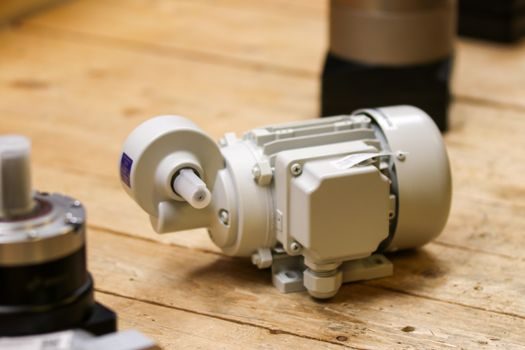
After the winding cell, the wire leads are routed, cut to length, stripped (where applicable), and crimped or welded to phase terminals, with insertion-indexing accuracy typically held to ±0.2 mm to keep three-phase symmetry within the resistance and inductance balance required for low cogging torque [S3][S4]. For round-wire stators this is a separate paper-tube, wedge, and end-lacing station; for hairpin stators it collapses into the in-line laser welding of the end-hairpin bridges.
Quality gates at this station include surge testing (typically 2× rated voltage + 1 kV) of every turn-to-turn joint, hi-pot (1.5–2× rated + 1 kV) of the full winding to frame, and a low-voltage inductance check on each phase; failure rates on a mature line sit between 0.3 % and 1.5 % at this stage, with hairpin lines trending lower because the laser-welded joints are more repeatable than hand-tied lap joints [S3].
Stage 4 — Insulation, Varnish and Vacuum-Pressure Impregnation (VPI)
The assembled winding is dried, pre-heated, and impregnated with Class H (180 °C) or Class F (155 °C) unsaturated polyester-imide or epoxy varnish in a vacuum-pressure-impregnation (VPI) tank; a typical cycle is 30 min vacuum at –95 kPa gauge, 30 min pressure at 3–5 bar, drain, and a 4–6 h cure at 150–180 °C [S3]. This stage is what differentiates a motor that will survive a 20-year duty cycle in a chemical plant from one that fails in 18 months.
For hazardous-area and offshore applications, the VPI step is often paired with a secondary epoxy trickle process on the end-windings; for inverter-fed motors running on high-dV/dt IGBT drives, the addition of a corona-resistant varnish (typically polyamide-imide) on the last 5–10 mm of slot exit is now considered baseline [S3]. Reference standards commonly cited by line builders for this stage include IEC 60034-1 (rating and performance), IEC 60034-14 (vibration), and for explosive atmospheres the IEC 60079 series plus ATEX 2014/34/EU on the equipment side, though the specific clauses invoked vary by OEM and are not always re-stated in marketing material [S3].
Stage 5 — Rotor Assembly, Shaft Press and Bearing Fit
Rotor assembly combines the laminated rotor (or magnet-loaded rotor for PMSM/BLDC), the shaft, bearings, and — for squirrel-cage induction motors — a cast or die-cast aluminium (or copper) cage. Shaft-to-rotor fit is typically achieved by hydraulic press (10–80 t) for high-volume lines and by induction heating of the rotor bore to 200–300 °C for premium servo and traction rotors where concentricity must hold to ≤0.02 mm TIR [S3][S4].
Magnet insertion for BLDC/PMSM rotors is now dominated by automated multi-pole magnetizing fixtures that charge and place surface-mounted or interior permanent magnets in a single cycle, with Hall-sensor alignment done on the same indexing table; for high-speed spindles the rotor-sleeve shrink fit and dynamic balancing to G2.5 at the rated speed (often 30,000–100,000 rpm) replace the slower low-speed balance of a standard industrial motor [S2].
Stage 6 — End-of-Line Test, Noise and Final Inspection
Data from each test cycle is logged to a manufacturing-execution system with the motor's serial number, and statistical process control charts drive the cell's stop-and-fix thresholds.
For automotive air-damper actuators, Leili publishes miniaturised 12 V/24 V DC motor part numbers with integrated PCB and gear train, and the EOL test cell at this scale typically runs at 3–6 seconds per unit versus 60–180 seconds per unit for an industrial induction motor on the same line [S6]. For suppliers integrating motors into electric ball valve and electric pallet truck assemblies, the motor EOL test is often merged with the actuator-level function test so the motor and gearbox are validated as a single SKU, which compresses throughput further.
Selection Map: Which Line Architecture Fits Which Application
For buyers comparing motor-line architectures before issuing an RFQ, four decision criteria dominate: production volume per SKU, slot-fill target, rotor topology, and speed class.
Two constraints disqualify a line choice before the volume question is asked: first, a hairpin line cannot economically run a part-number mix higher than ~3–5 per shift because the forming dies cannot be changed over in less than 20–40 minutes; second, any motor specified for explosive atmospheres, mining, or offshore chemical service must add a dedicated multifunction process calibrator loop check on the final test cell to validate that the certified nameplate data (Ex db, Ex eb, or Ex tb) matches the as-built unit, since the IEC 60079 / ATEX 2014/34/EU conformity assessment is only valid for the exact configuration tested [S3].
Supply Base, Standards and Trackable Signals
The 2026 sourcing map for motor manufacturing capacity sits squarely on the Yangtze River Delta, with Nide Tech (Ningbo) covering full turnkey lines and individual machines [S3][S4], Changzhou Baojie concentrated on small AC, micro AC and stepping motors with a 1-year Alibaba storefront age [S1], Jingjiang Dacheng on high-speed electric spindles in the 30,000–100,000 rpm class [S2], and Leili on automotive micro-motor and actuator integration [S6]; the English-language sourcing portal Electric Motor Solutions aggregates these and similar Asian OEM partners for North American and EU OEMs [S5]. For an adjacent reference on selection gates, the helical gear reducer selection piece covers the gearbox half of the same motor-gearbox assembly, and the outdoor yard tower crane selection piece covers another heavy-electromechanical capital-buy decision that benefits from a similar six-gate framework.
Two trackable signals for the next sourcing cycle: first, watch for additional Nide Tech or peer announcements of 800 V hairpin lines sized for 200–350 kW traction motors, since the EV 800 V transition is the dominant 2026–2027 capex driver and the line architectures in use today were originally tooled for 400 V units [S3][S4]; second, monitor EU CBAM-driven sourcing shifts, because CRNGO silicon-steel imports into the EU are now subject to carbon-border reporting and several Tier-1 motor OEMs are publicly reviewing Korean and Brazilian silicon-steel sources alongside the Chinese incumbent supply [S5]. Standards to keep on the desk for cross-checking any 2026 motor-line RFQ include IEC 60034-1, IEC 60034-14, IEC 60034-30-1 (IE efficiency classes), the IEC 60079 series plus ATEX 2014/34/EU for hazardous areas, and ISO 1940-1 for balance quality grades — these are the reference points line builders most often quote in their datasheets and type-test reports [S3].