
An electric pallet truck is specified as a 24 V or 48 V battery-driven, walk-behind or rider-platform unit rated from roughly 1,500 kg to 3,000 kg, and the wrong gate is usually the fork-chassis match against the pallet rack deck, not the drivetrain [S1][S2].
The decision is engineering-led, not procurement-led: load class, drive layout, battery architecture, fork geometry, and operator-interface standards each prune the model-code set before a buyer ever opens a quote sheet. Get those gates wrong and a 2.0 t truck becomes a 1.5 t paperweight the day a loaded plastic pallet arrives.
Gate 1 — Load Class, Chassis, and Drive Layout
Standard production electric pallet trucks cluster in three load bands: 1,500-1,800 kg for light-duty retail and last-mile dock work, 2,000-2,500 kg for general warehouse, and 2,500-3,000 kg for heavy-pallet or beverage lines [S2][S3]. The WT 3020-2.0 Series from CROWN illustrates the upper band, offering platform configurations and capacities of up to 2.5 t with electric power steering on a cast-steel reinforced chassis [S2].
Drive layout splits into two camps: walk-behind (drawbar) units dominate below 2.0 t, while rider-platform chassis are the default once pallets are moved more than ~30 m per cycle or when travel exceeds 6 km/h. Semi-electric variants keep the lift motorised and travel manual; they are common where operators cover short distances and want to avoid the electric pallet truck battery premium. Operator type on current OEM catalogues breaks down to walk-behind (6 of 7 listed semi-electric lines) plus a single with-drawbar configuration [S1].
Gate 2 — Battery Voltage, Capacity, and Charging
Voltage class is the first filter inside the load band. 24 V packs cover the 1.5-1.8 t light-duty segment, while 48 V architectures are universal in 2.0 t and above rider-platform trucks because higher current at lower voltage would force uneconomically thick cabling [S1]. Battery capacity, expressed in Ah, sets shift endurance: a 200-250 Ah Li-ion pack is the typical 8-hour target for a 2.0 t platform truck; lead-acid at the same capacity adds 150-200 kg of ballast.
Charging strategy is part of the spec: opportunity charging during breaks suits multi-shift distribution centres; full-cycle overnight charging fits single-shift light use. Lithium iron phosphate (LFP) drop-in packs have largely displaced lead-acid in premium OEM lines above 2.0 t because they accept opportunity charge without the memory-effect penalty, and they ship with the BMS wired to the truck's CAN-bus so state-of-charge is visible to the operator display.
Gate 3 — Fork Geometry, Wheelbase, and Pallet Interface
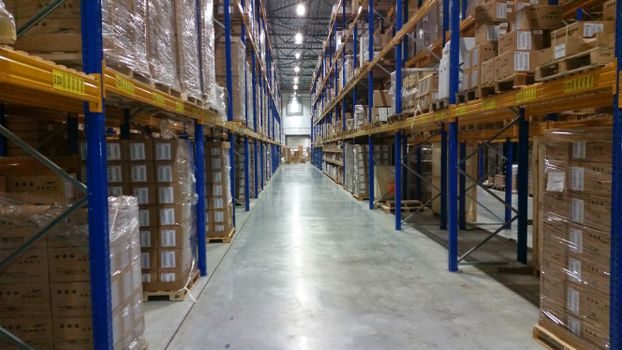
Forks come in standard 1,150 mm length and 540-685 mm outer width, but the gate most buyers miss is the lower fork height (LFH) and the chassis approach angle. A standard 2.0 t truck sits at roughly 85 mm LFH — fine for closed-deck EUR pallets but marginal on stringer pallet bases with damaged bottom boards. Mini-jacks drop to 75 mm; low-profile units reach 50 mm for closed-bottom container handling. [S1]
Wheelbase tracks fork length: a 1,150 mm fork on a 1,200 mm wheelbase gives a tight ~1.4 m turn radius, which is the difference between a 2.8 m and a 3.2 m aisle requirement. Where the pallet rack bay is fixed at 2.7 m, a standard 2.0 t chassis simply will not enter the cross-aisle; buyers who skip this gate end up returning trucks or rebuilding aisles.
Gate 4 — Operator Interface, Ergonomics, and Safety Standards
European-built electric pallet trucks fall under EN ISO 3691-1 (industrial truck safety) and EN 1726-1 for rider-platform designs, with electromagnetic compatibility per EN 12895. The interface gates are tiller-arm length (adjustable 750-1,100 mm for mixed-height operators), crawl-speed button for tight manoeuvres, and pinch-point guarding on the lift linkage. A platform truck used on gradients above 5% must have speed limiting; this is a regulatory minimum, not an option [S4].
For walk-behind units, the critical ergonomics metric is drawbar force at full load, typically 80-150 N on a 2.0 t truck with power steering; without it, the same truck can demand 250-300 N, which is the threshold for operator-fatigue claims. Anti-roll-back on ramps, belly-button reversing switch, and automatic park brake are standard on units built to the latest ISO 3691-1 amendment.
Gate 5 — Wheels, Brakes, and Floor Compatibility
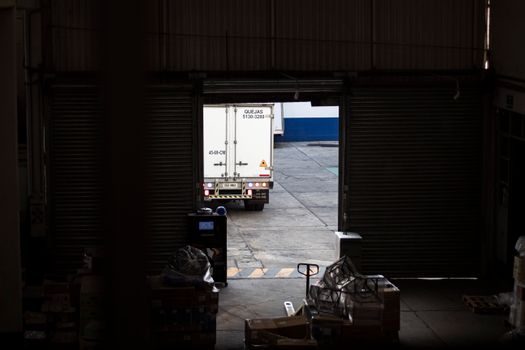
Wheel material drives both floor wear and rolling resistance. Polyurethane (PU) is universal on smooth concrete; vulcanised rubber suits mixed surfaces but raises rolling resistance by ~30%. Drive-wheel diameter matters: a 230 mm wheel copes with expansion-joint gaps up to 15 mm; a 250 mm wheel clears 25 mm joints and standard speed-bump profiles in distribution-centre yards. [S2]
Brake systems split into electromagnetic parking brakes (standard on all 48 V platform trucks) and regenerative electric braking that returns 5-10% of energy to the pack on a typical cycle. For cold stores (-25°C), hydraulic oil and grease must be rated to the temperature band; a standard truck's hydraulic fluid gels below -10°C and the lift speeds drop by half. Cold-store variants are a separate OEM option, not a field retrofit.
Gate 6 — Use-Case Fit, TCO, and Aftermarket Support
Walk-behind semi-electric suits operations under 50 pallet moves per shift on short, fixed routes. Full-electric walk-behind takes that to 150-200 moves per shift, the typical small-warehouse threshold. Rider-platform trucks become the only economic option above 200 moves per shift or when travel distances exceed 30 m per cycle. [S3]
Total cost of ownership over a 7-year life is dominated by battery replacement (1.5-2.0 cycles for lead-acid, one cycle for LFP), energy (roughly 1.5-2.0 kWh per shift at 2.0 t), and preventive service. Buyers should weight OEM service network density over sticker price: a 5% cheaper truck with one regional service agent will lose more in downtime than it gains in capex. For buyers also weighing conveyor sorting line throughput or AS/RS class selection, the electric pallet truck becomes the horizontal-transfer interface between the sorter discharge and the rack entry — its cycle time must match the upstream and downstream nodes, not just the aisle constraint.
The two trackable signals to watch after spec lock: (a) the OEM's published EN ISO 3691-1 declaration of conformity revision date on the serial-plate data, and (b) the BMS firmware version on the lithium pack, since opportunistic-charge logic changes between revisions and affects shift-end state-of-charge more than any spec-sheet number. Lock both before issuing the PO.