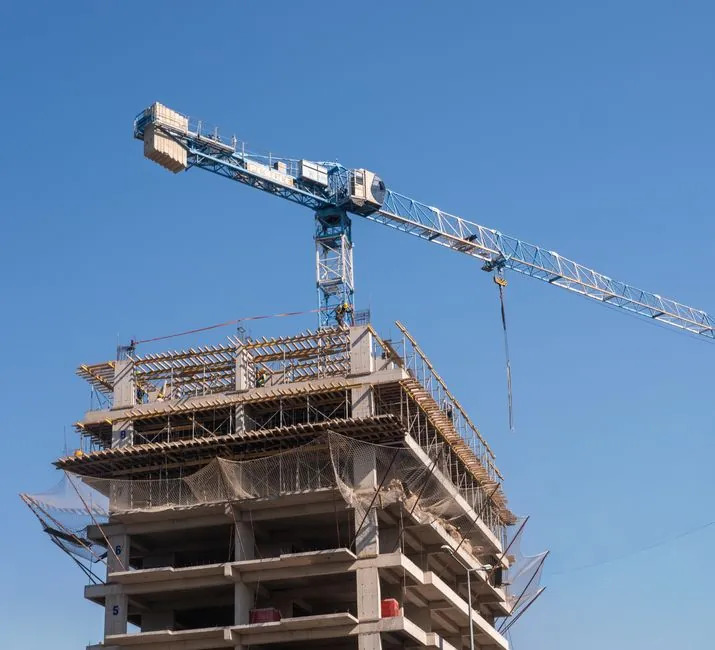
Electric and hydraulic drives both lift self-climbing formwork without a crane, but hydraulic cylinders remain the established choice for lifting large climbing frames and working platforms.
The decision depends on lift mass, required cycle time, power availability, control precision, maintenance capability, and whether the project can support a hydraulic power unit and its associated services.
Drive Choice by Load, Speed, and Operating Environment
Hydraulic climbing formwork uses hydraulic jacking to climb layer by layer as the structure rises; the hydraulic jack is the key component enabling the entire system to alternate between climbing positions [S3]. A self-climbing arrangement uses hydraulic rams to lift the scaffold, formwork, and secondary formwork into the next pouring cycle [S1].
Published capacity categories illustrate the scale range: Alsina identifies low-load self-climbing formwork at 5 tonnes and high-load self-climbing formwork at 10 tonnes [S4]. Those are system capacity classes, not drive-specific ratings. At the upper end, hydraulic climbing systems are used on very high buildings and piles from approximately 20 floors upward [S4].
Hydraulic Drive for Heavy and Continuous Climbing
Hydraulic drive is the stronger selection for a heavy self-climbing unit because a cylinder can deliver high holding force, controlled extension, and straightforward mechanical support of the load. The documented hydraulic system includes a climbing frame, embedded-parts system, guide rail, hydraulic system, and hydraulic jack [S3].
The hydraulic advantage is especially valuable where the complete climbing assembly, working platform, and formwork must rise as one coordinated load. A 2021 super-high-rise case used an aluminum formwork and hydraulic climbing formwork combination for core-tube construction, with the structure divided into a climbing system, formwork system, and working-platform system [S3].
Hydraulic systems still require disciplined control. The hydraulic assembly must manage the climbing frame, embedded components, and guide rail while retaining structural stability, guiding accuracy, and anti-overturning function [S3]. A power unit also introduces hoses, fluid, seals, filtration, leakage control, and scheduled servicing, so hydraulic selection is not simply a choice between a cylinder and a motor.
Electric Drive for Small, Simple, and Controlled Systems
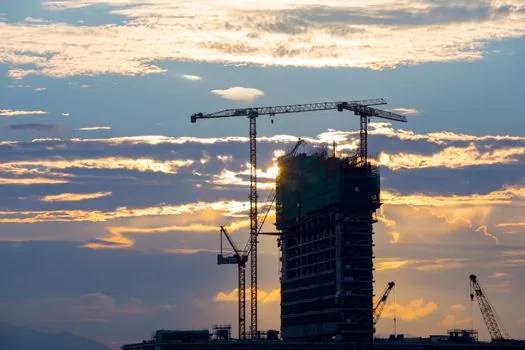
Electric drive is appropriate when the climbing load is modest, the required travel is short, and the operating team wants fewer hydraulic support systems.
Electric equipment is attractive where the site has reliable electrical supply, the drive can be mechanically matched to the load, and routine maintenance can be performed without specialist hydraulic support. The strongest technical argument is not simply lower purchase cost, because the research provides no comparable installed-cost figures for electric and hydraulic versions. It is the potential to simplify power and service arrangements at smaller capacities.
The climbing formwork system still requires structural guidance, load restraint, anchor compatibility, and safe positioning of the working platform, regardless of the motive power. Selecting a motor without resolving those structural requirements would not produce a compliant or reliable climbing system.
Direct Comparison for Drive Selection
Hydraulic drive offers the more credible route for high-load, repeated climbing because the documented hydraulic architecture combines hydraulic jacking with a climbing frame, embedded parts, and guide rail [S3].
On cycle-time control, electric drive can suit controlled movements where the drive package is correctly sized, but the available research does not establish a universal speed advantage for either technology. On operating complexity, hydraulic drive adds hoses, fluid, seals, a power unit, and contamination-control requirements; electric drive removes the fluid circuit but still needs motor protection, controls, braking or holding provisions, and electrical maintenance.
On integration, the difference is more practical than conceptual. A hydraulic package must be sized around the full climbing load, guide reaction, lifting stroke, and hold requirement. An electric package must be sized for moving mass, torque, duty cycle, control method, and safe holding or braking. For platform loading and access design, use the separate Climbing Formwork Platform Load Capacity Guide.
Applications, Users, and Exclusions
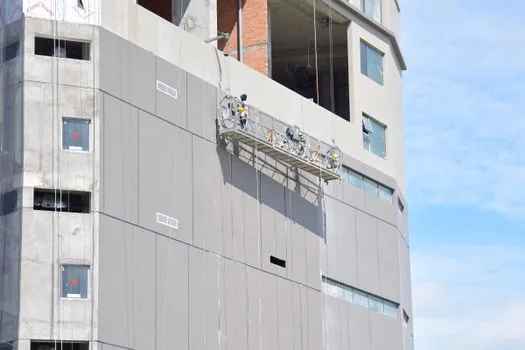
Hydraulic self-climbing formwork is suited to repetitive vertical concrete work, including bridge piers, towers, high-rise cores, and other structures with seamless walls [S1]. It is also used for very high buildings and piles from approximately 20 floors upward [S4]. These applications place a premium on lifting capacity, guide control, and repeatable movement of a substantial assembly.
Electric drive is a rational candidate for smaller self-climbing packages, modular systems, or sites that already have reliable electrical infrastructure and prefer to avoid hydraulic fluid servicing. It is not the first choice for a high-load system where holding force, overload resistance, and established hydraulic architecture dominate the engineering case.
Crane-dependent climbing should be considered when the site has adequate lifting capacity and the formwork geometry changes significantly between lifts. Sectional climbing systems moved independently by crane are particularly suitable for changing wall or column geometry, while carriage systems suit repetitive high-rise structures [S4]. Self-climbing drive does not replace all crane-based arrangements, and electric drive is not a substitute for single-sided systems where concrete pressure must be transferred through braces and struts into the structure below [S1].
Power, Controls, and Site Dependencies
Hydraulic self-climbing systems can continue climbing without a crane, but they remain dependent on a functioning hydraulic power source and correctly controlled jacking sequence. Hünnebeck describes an inbuilt hydraulic device that allows self-climbing formwork to climb step by step without crane support [S6].
Electric drive substitutes electrical power for hydraulic power, yet it introduces site-specific requirements such as cable routing, protection, motor starting, emergency stopping, and control interlocks. The research identifies electric motors as a valid elevation method [S2], but it does not provide motor ratings, stroke lengths, cycle times, protection classes, or duty cycles. Those values must be selected from the project-specific equipment schedule rather than inferred from drive type.
Neither option eliminates structural checks. The documented hydraulic system performs attachment, guidance, and anti-overturning functions [S3], while rail-guided systems use guide rails and guide shoes to remain anchored to the structure [S1]. The drive moves the assembly; anchors, rails, guide shoes, brakes or holding arrangements, and operating procedures determine whether movement is safe.
Maintenance, Failure Modes, and Procurement Scope
Hydraulic drive creates three recurring service areas: fluid condition, seal integrity, and contamination control. A hydraulic leak can reduce force or contaminate the working area, while a failed valve or hose can interrupt a climbing cycle. Electric drive instead creates motor, gearbox, brake, controller, and electrical-protection service points, with heat and duty-cycle limits becoming important if the system performs repeated lifts. [S1]
Procurement comparison should therefore cover more than the climbing unit. Request lift mass, safety factor, stroke, cycle time, power supply, backup method, control sequence, enclosure rating, fluid type, working temperature, hose routing, anchor arrangement, guide-rail specification, maintenance intervals, and spare-parts support. For a fair lifecycle comparison, separate the climbing drive from the formwork, platform, anchors, rails, and working access package.
The documented ATR-SC heavy-duty system identifies a stroke cylinder as the lifting element and allows either hydraulic or crane lifting configurations [S5]. That example demonstrates that the drive architecture is tied to system geometry and lifting strategy, not simply a preference for one power source. The base package also needs a defined method for recovery or stabilization if power is lost.
Engineering Recommendation for the Contract
Choose hydraulic drive for heavy or high-rise self-climbing formwork with a large moving assembly, substantial holding loads, or a site already equipped to support hydraulic power and maintenance. The established hydraulic arrangement explicitly combines jacking power with climbing frames, guide rails, embedded parts, and working platforms [S3].
Choose electric drive for smaller systems where the required lift and stroke are modest, electrical supply is dependable, and avoiding hydraulic hoses, fluid, and seals is a project priority. Treat electric drive as a site-engineered package, not a plug-in alternative, because the research confirms the drive method but provides no universal electric system ratings [S2].
For procurement, require both alternatives to demonstrate the same climbing cycle, anchor engagement, guide behaviour, platform restraint, and backup procedure. Record any Hydraulic Climbing Formwork Cost per Floor Cycle using an identical system boundary, then approve the drive that meets load, control, and service requirements without shifting hidden costs into installation or maintenance.