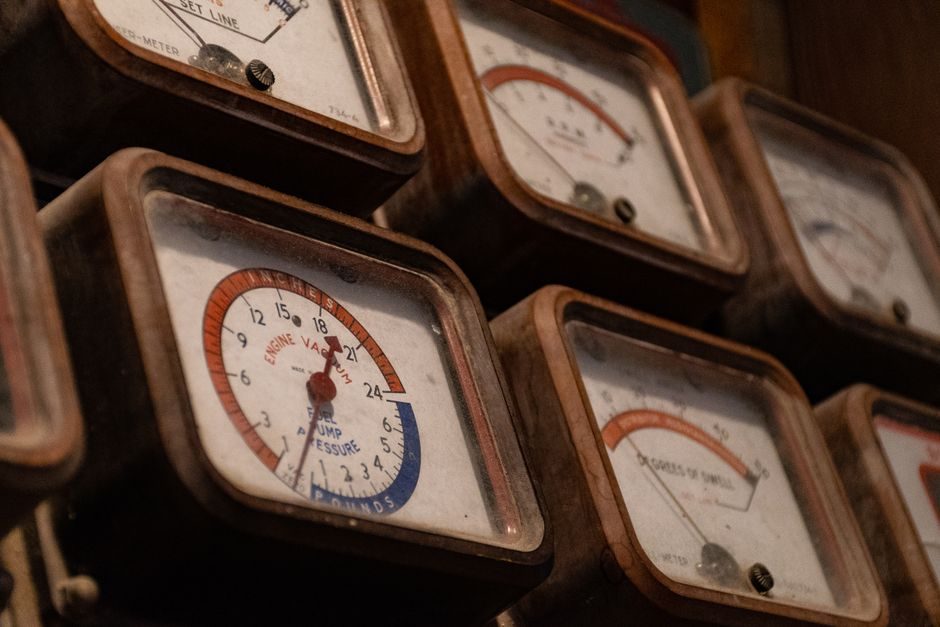
An electricity meter without communications registers cumulative kWh via an electromechanical disc or a single-chip metrology IC and exposes only a local mechanical or LCD readout to the utility reader [S6].
A smart meter layers a metrology MCU, a separate communication SoC, a non-volatile memory, and a wide-area backhaul (PLC, RF mesh, or cellular) on top of that same metrology front end, enabling AMI remote read, remote disconnect, tamper events, and TOU tariffs [S2][S7].
Functional Architecture: Metrology Front End vs AMI Stack
A conventional single-phase meter from Chinese OEMs such as the Lk800I-Ak4 panel-mount family exposes a 72×72 mm bezel, a 3-digit or 6-digit electromechanical register, and no digital port beyond a calibration pulse, with a 5-piece MOQ at US$11.50-13.50 per unit on Made-in-China [S4]. Inside, the metrology front end is a single shunt plus an energy-IC that drives a stepper counter; accuracy class is typically 1.0 or 2.0 to IEC 62053-21, and there is no MCU, no RTC, and no isolation between logic and line voltage beyond the metrology IC's own creepage.
A smart single-phase meter, by contrast, integrates a metrology AFE (e.g. ST's family documented in their metering applications page) with a host MCU, a communication modem, and an independent tamper-detection chain, then routes data to a data concentrator over a WAN and onward to utility head-end through a home area network also carrying gas and water meter reads [S2][S7]. The functional split is the reason the same physical kWh sensor sits inside both designs and why the bill-of-materials delta between the two is driven almost entirely by the communication SoC, the metrology MCU, and the isolation barrier, not by the current sensor itself [S6].
Decision Criteria: When a Plain Meter Is Still the Right Call
Plain electromechanical and basic electronic meters are specified for sub-100 A single-phase residential connections where the utility has no AMI plan, the consumer cannot be remotely disconnected, and the procurement officer is buying on landed cost under a hard ceiling of roughly US$15 per point [S4]. They are also the right call for explosion-risk panel readouts where adding a radio modem is forbidden by the hazardous-area classification.
Smart meters are specified when at least three of these hold: the utility runs or plans AMI, the tariff is TOU or demand-based, remote disconnect is contractually required, theft detection at the socket is operationally meaningful, or the regulator mandates interval data (15-min or 30-min) for demand-response programs [S2][S6]. A suburban or commercial C&I site consuming more than about 50 MWh per year will normally cross the payback threshold for the smart-meter premium within the meter's first reading cycle.
Protocol and Data-Centric Comparison
On protocol surface, a plain electricity meter speaks only an LED calibration pulse or an optional IEC 62056-21 optical port, with no persistent storage beyond the cumulative counter [S6]. A smart meter speaks DLMS/COSEM over HDLC, ANSI C12.18/19/21/22, or wireless M-Bus at the CENELEC A-band PLC layer (u-one's smartmeter-checker exposes the ECHONET Lite profile used in Japan, mapping 30+ OBIS codes for cumulative and instantaneous channels) [S1][S7].
On data granularity, the plain meter reports total kWh read on-site once per billing cycle, while the smart meter streams load-profile records, voltage sags, power-quality events, and tamper logs at 15-min or 30-min intervals, stored locally and pushed to the head-end through the concentrator [S2][S7]. On security, the smart-meter identity path is increasingly protected by RSA-based authentication with signature verification on the head-end side, as documented in Dongguan Power Supply's 2022 study that ported the RSA algorithm to a Linux-embedded metrology platform and demonstrated signature verification outpaces signature generation [S3]. On cost, the OEM export catalog still shows three-phase panel-mount electromechanical ammeters in the LC5135A class negotiated against 50-piece MOQ, well below the smart-meter band even before the communication module is counted [S4].
Field Diagnostics and Tamper Detection Capability
Plain meters are passive: a technician walks up, reads the cyclometer disc, and may visually inspect a tamper seal; there is no event log, no timestamp, and no remote signal if the cover is opened or the line is bypassed [S6]. Smart meters expose field diagnostics as a first-class output: event flags for cover-open, magnetic-field tamper, neutral disturbance, current reversal, and over-voltage are written to non-volatile memory with a UTC timestamp and pushed to the head-end within the next AMI window, allowing the utility to dispatch a field crew before the bypass yields a full billing cycle of unmetered energy [S2][S6].
Diagnostic depth on the smart side is the reason a growing number of utilities write tamper-event density into the procurement specification as a contractual KPI, and it is the reason analog front ends in new smart designs include a separate anti-tamper AFE channel that is galvanically isolated from the metrology AFE so a tamper event cannot corrupt the billing register [S6]. This separation is also why retrofitting a communication module onto an existing electromechanical meter is rarely done: the metrology front end lacks the event flags, the RTC, and the isolation to be a trustworthy AMI endpoint.
Integration Effort: Stand-Alone Read vs AMI Rollout
A plain meter integration is a one-port job: the utility reader walks a route, the handheld optically reads the register, and the data lands in the billing system within the meter-read cycle. There is no head-end, no concentrator, no key-management ceremony, and no firmware-over-the-air plan; the only integration line is the optical IEC 62056-21 port and the LED pulse that the field tester clips to [S6].
A smart meter integration ties four systems together: the meter itself, a data concentrator (PLC or RF mesh), a head-end software stack (DLMS/COSEM server, key management, OTA), and the billing system that consumes interval data for TOU settlement [S2][S7]. Promising pilots for residential consumption dashboards, such as alijarasyidi's Indonesian smart-meter reference architecture, expose web and mobile dashboards plus a payment-gateway hook, but each of those nodes is an integration surface that must be secured and version-controlled before a utility will accept the meter on its network [S5][S8].
Limitations, Failure Modes, and Sourcing Realities
Plain meters fail in obvious ways: the disc jams, the gear train strips, or the register fogs, all of which the utility catches on the next read. Their only operational blind spot is undetected bypass, which is why high-theft grids still prefer them in some markets purely because a smart meter's electronic register can be more easily attacked if the tamper chain is not engineered correctly [S3][S6].
Smart meters add a longer failure list: communication-module hang, RTC drift, super-cap discharge after a brownout, firmware bugs surfaced by OTA, and key-management compromise of the RSA-anchored identity path that the Dongguan study explicitly warns about [S3]. On sourcing, the Made-in-China export list still shows legacy electromechanical panel meters at sub-US$15 with 5-piece MOQ and LC5135A-class units negotiable at 50-piece MOQ, while the smart-meter band is dominated by brand-name SoC platforms and is rarely available below a 100-piece MOQ with a 60-90 day lead time [S4]. Sourcing teams should therefore spec a smart meter's MCU family, communication chipset, and DLMS/COSEM firmware version in the purchase order rather than treating the meter as a commodity, mirroring the Electricity Meter Buying Guide 2026 approach to phase, access, and protocol gating.
Trackable Signals to Watch Through 2026
Until at least two of those three land, the smart-vs-plain meter decision for any new build should be driven by tariff complexity, theft exposure, and AMI roadmap alignment rather than by headline unit price, the same gating logic that frames the Safety Barrier Buying Guide 2026 on adjacent hazardous-area instrumentation.
Spec-level background on the components involved: smart camera.