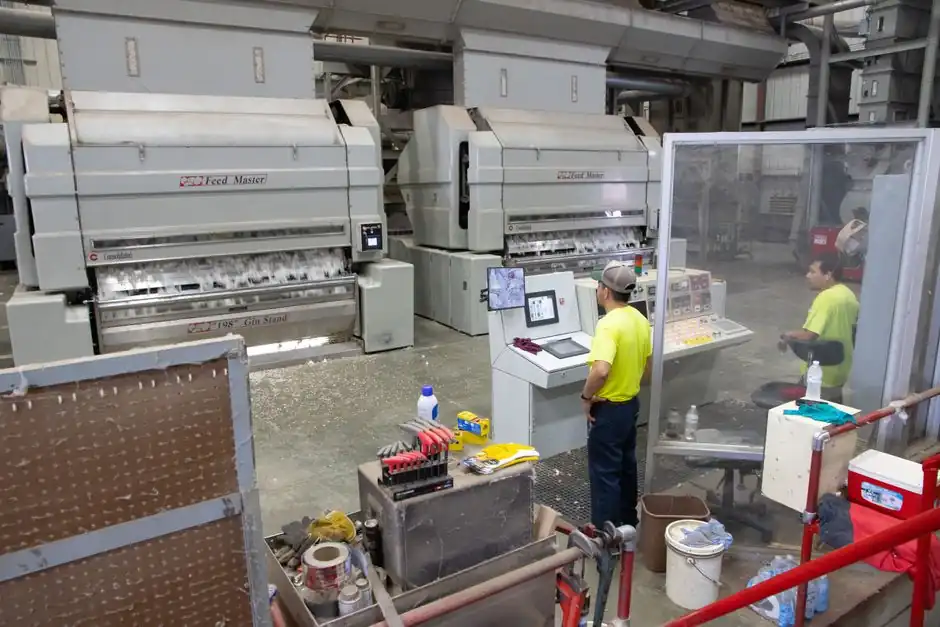
Green-hydrogen gigafactory lines in 2026 are specified to a 1 GW solution-level ceiling, with Farley Laserlab's HGTECH alkaline line declaring up to 1 GW capacity, 1.5–2.6 m pole-plate compatibility, and ~6 minutes per electrode plate with online flatness and airtightness inspection [S1][S4].
The constraint set has shifted from chemistry to cell-handling: LEAD Intelligent's published 1 s/pcs bipolar-plate cycle at ±0.1 mm positional tolerance is now cited as the reference benchmark for hydrogen-electrolyzer production, mirroring the automation envelope of fuel-cell stack lines [S8]. For an overview of how stack, plate, and BoP lines split the work, see the electrolyzer manufacturing equipment spec map.
Alkaline vs PEM/AEM Line Architecture
Alkaline and PEM/AEM lines diverge at the cell stack and diverge again at the BoP: alkaline lines are dominated by laser turn-milling of large 1.5–2.6 m bipolar/pole plates and 1 m–2.5 m electrode plate diameters, while PEM/AEM lines use modular cell-stack assembly with catalyst-coated membranes, ion-exchange membrane coating, and MEA / GDL integration as upstream steps [S1][S2][S4]. LEAD Intelligent's PEM & AEM assembly line is explicitly designed for large-scale production of both chemistries, with seal/framing MEA 5-in-1 and 7-in-1 stations feeding the stack press [S2].
For alkaline, the process flow is turn-mill of pole frame, laser cut of pole plate and electrode mesh, support-mesh and electrode-mesh welding, stamping of the protruded plate, pressing-plate welding, diaphragm and gasket lay-up, and final general assembly with screw fastening plus cold and hot tightening followed by airtight detection [S4]. The full automatic molding line concept transfers directly to the laser-based pole-plate cells, where the fixture set is engineered for multi-product compatibility and fast changeover between plate sizes [S1][S4].
Cycle Time, Throughput, and Capacity Anchors
Jinchencorp's published Alkaline Electrolyzer Assembly & Test Line cycles the 1000 Nm³/h electrode frame at 5 minutes per piece with 8 operators and an annual output above 60 electrolyzers, and is stated as upgrade-compatible with a 2000 Nm³/h variant [S3]. Farley Laserlab's electrode-plate cycle is stated as approximately 6 minutes per piece, and the line is engineered for unmanned operation with up to 12 on-site safety inspectors rather than line operators [S1][S4].
Cycle numbers matter because the gigawatt arithmetic is unforgiving: a 1 GW alkaline line with ~250–500 mW/cm² operating density and 1–2.5 m diameter cells needs tens of thousands of plates per year, which is why the published bipolar-plate cycle target sits at 1 s/pcs and the stack-assembly layer is the bottleneck, not stack chemistry [S8]. Siemens Energy's 100 MW Elyzer reference plant is sized for gigawatt-scale series production of electrolyzer stacks and bundles stack to full turnkey delivery in one hand [S7].
Handling, Stacking, and Vertical Integration for ≥20 t Units
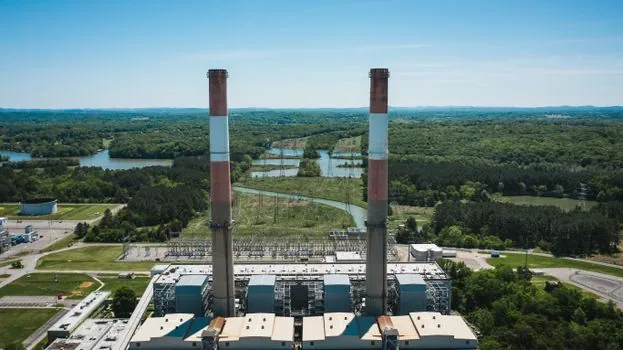
Single-unit electrolyzer weights above 20 tonnes break conventional crane-and-fixture workflows: Gradin's turnkey vertical integration case delivers fully mechanized vertical assembly of large electrolyzers with positioning accuracies and flipping controls that manual methods could not hold, eliminating the manual hazards on the heavy lift [S6]. The Jinchencorp line mirrors the same logic with a lifting platform for manual operation, crane hoisting for storage, and an automatic vertical-to-horizontal transition to clear the heavy unit out of the cell for transport [S3].
At the cell layer, the line-frequency furnace class of equipment and the molding line cell pattern both inform the heat-and-press sub-cells, but the stack-assembly press, MEA seal/framing station, and the resin-sand line-style buffer/storage approach are the practical references for pacing high-tonnage work-in-process between cells [S2][S3].
Weld Quality, AI Inspection, and Vision-Guided Robotics
Farley Laserlab's line bakes in AI-assisted process control with visual-guided robots for flexible material positioning and high-precision assembly of pole plates, nickel meshes, and plate meshes, plus AI-driven laser weld adaptive tracking, focus tracking, and compensation [S1][S4]. Quality gates run online: dimensional inspection, flatness, airtightness, and weld appearance, with the welding heads equipped for real-time quality monitoring and immediate anomaly alarms [S1][S4].
The implication is that weld inspection is no longer an end-of-line gate; it is a per-station interlock, and the line-scan camera class of machine vision is the natural fit for continuous weld-seam monitoring on long pole-plate seams. The same pattern carries into the conveyor sorting line buffer, where vision-guided robots hand off the inspected plate into the next cell without breaking the 1 s/pcs rhythm at the stack layer [S4][S8].
Stack, Plate, and BoP Capex Levers
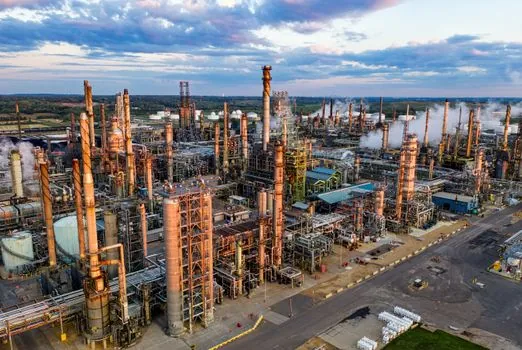
The BoP share is the second-biggest lever after stacks, so any line design has to lock down rectifier, water purification, gas conditioning, and HVAC sizing before the cell cadence is frozen. For a sense of where the dollars land across stack, plate, and balance-of-plant, the electrolyzer manufacturing cost breakdown walks through the localization levers a 2026 buyer actually pulls. Shuntian Equipment's PEM stack line is explicitly modular, with quick adaptation to multiple stack sizes and rapid capacity expansion, which is the structural answer to the BoP-stiffness problem [S5].
For a process engineer sizing 2026 capacity, the watch items are: bipolar-plate cycle drift above 1 s/pcs, weld-monitoring uptime on the laser cells, and airtightness-test yield on the final assembly cell. Any of those slipping past the published ±0.1 mm tolerance envelope will, per LEAD Intelligent's reference benchmark, undo the gigawatt-scale claim regardless of how clean the upstream BoP looks [S8].