The 2026 electrolyzer-supply squeeze is now a materials problem first and a stack-assembly problem second: PEM units are gated by iridium and platinum loading, solid-oxide cells by yttrium-stabilized zirconia (YSZ) electrolyte and nickel fuel-electrode supply, and every architecture by titanium bipolar-plate sourcing [S1].
Demand-side pressure is structural. GlobalInfoResearch's 2026-2032 electrolyzer supply/demand tracks explicitly list PEM, ion-exchange-membrane, and global hydrogen stacks as separate supply/demand curves, signalling that scale-up is now tracked at the technology-family level, not the generic "electrolyzer" level [S2].
Where the PGM and Critical-Metal Risk Actually Lives
In PEM water electrolysis (PEMEC), the anode catalyst is iridium or ruthenium-based, and the cathode is platinum-based; the US DOE 2022 deep-dive flags both as high material-cost, high supply-risk, and high trade-disruption (HMT/PMT/SED/TD/AP flags) [S1]. The same assessment tags the PEM ionomer as a high-hazard processing chemical, which is why most 2026 PEM line-builds pair PGM-free-coated bipolar plates with explicit iridium-recycling loops.
Solid-oxide electrolyzer cells (SOEC) carry a different risk profile: yttrium-stabilized zirconia (YSZ) electrolyte, a nickel / nickel-oxide fuel electrode, and lanthanum strontium cobalt ferrite (LSCF) or lanthanum strontium manganite (LSM) air electrodes are the constrained inputs [S1].
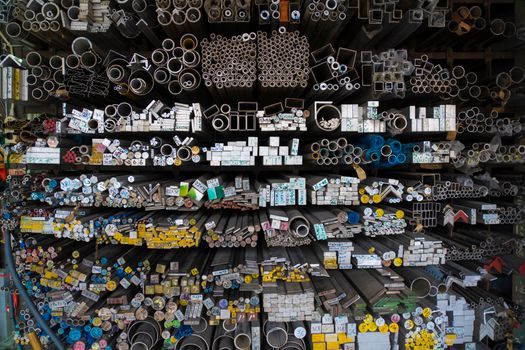
Titanium bipolar plates — used in both PEM and many alkaline stacks — are flagged by DOE as high material cost and high trade exposure [S1]. A 1 MW PEM stack typically uses on the order of hundreds of square metres of Ti plate after blanking, and ASTM B265 Grades 1-2 are the working materials; in plain terms, the same Ti supply that services chemical-plant pressure transmitters and seawater flow meters is being pulled into electrolyzer balance-of-plant.
Three Electrolyzer Architectures vs Three Risk Vectors
Choosing a 2026 electrolyzer is now a risk-vector decision, not a cost decision. PEM offers fast cold-start and dynamic load-following that pairs cleanly with renewable power supplies, but its bottleneck is the 0.5-2 mg/cm²-class iridium loading multiplied across GW. Alkaline remains the lowest material-risk path because it uses non-PGM catalysts, but it pays in current density (typically 0.2-0.6 A/cm² operating) and footprint. SOEC delivers the highest electrical efficiency (roughly 75-85% LHV H₂ on hot operation) but needs 700-850 °C heat integration, and is gated by YSZ powder and Ni supply rather than PGM [S1].
A project with weak PGM hedging and no long-term iridium offtake should not underwrite a multi-hundred-MW PEM pipeline; a project with no high-temperature heat source should not underwrite SOEC.
The Hydrogen and Carbon Capture Technology World Expo 2026 panel on "Electrolyser Production and Supply Chain Challenges" frames the issue in operational terms: "strategies to enhance supply chain resilience, secure critical raw materials, and foster European collaboration to strengthen electrolyser production" [S3]. The panel's existence is itself a signal that the bottleneck has shifted from capex to materials and logistics.
Manufacturing-Capacity and Logistics Gating
Beyond the periodic table, the 2026 squeeze shows up in three concrete logistics signals. First, stack-assembly gigafactory ramp is slower than announced nameplate: press commissioning, automated membrane-electrode-assembly (MEA) lines, and titanium-bipolar-plate coating capacity are the binding steps, not the switching-mode power racks that feed them. Second, long-lead raw material offtake is now being signed in 3-5 year horizons, mirroring lithium and PGM offtake patterns. Third, EU/EFTA logistics inside the Alternative Fuels Infrastructure Regulation (AFIR) framework is making European electrolyzer delivery a customs-and-trucking problem as much as a manufacturing one [S3].
For spec-driven buyers, three checklist items now belong in any electrolyzer RFQ: (1) declared PGM loading in mg/cm² and total grams per stack; (2) titanium grade and plate-coating specification; (3) iridium and platinum recycling or take-back clause tied to end-of-life. A vendor that cannot answer those three in writing is signalling that the supply-chain risk has been pushed onto the buyer.
What This Means for Project Sourcing
The 2026 buyer posture is: qualify two stack architectures, not one. Specifying both PEM and alkaline gives the project a PGM-independent fallback if iridium prices move, and a footprint-independent fallback if alkaline suppliers de-risk their own nickel and diaphragm supply. SOEC remains a high-efficiency option only for sites with steady high-grade heat, and even there it should be qualified alongside a PEM or alkaline hedge. [S1]
Standard coverage is uneven and worth flagging: pressure-equipment integrity for electrolyzer balance-of-plant (vessels, industrial valves, separators) follows ASME BPVC Section VIII and the PED for EU builds, while electrical safety follows IEC 61508 SIL frameworks for the rectifier/transformer and the BoP pressure sensors feeding the control loop. The supply-chain pinch does not change these, but it does change delivery lead times on the BoP, so BoP procurement should be released before stack PO in 2026 if a firm project COD is targeted.
For related context on how the supply crunch is reshaping green-hydrogen project pipelines, see the green hydrogen supply-chain cost lever breakdown and the 2026 electrolyzer-power-offtake gate analysis; a wider project-pipeline view sits in the upstream-downstream 2026 spec map.
Trackable signals for the next 90-180 days: (a) quarterly iridium and platinum spot price moves against the 12-month trailing average, (b) announced PEM and SOEC gigafactory ramp-vs-nameplate slippage, and (c) EU and US incentive-rule clarifications under AFIR and 45V that can shift offtake bankability overnight. Any of those moving materially will redraw the 2026 electrolyzer-supply risk map.