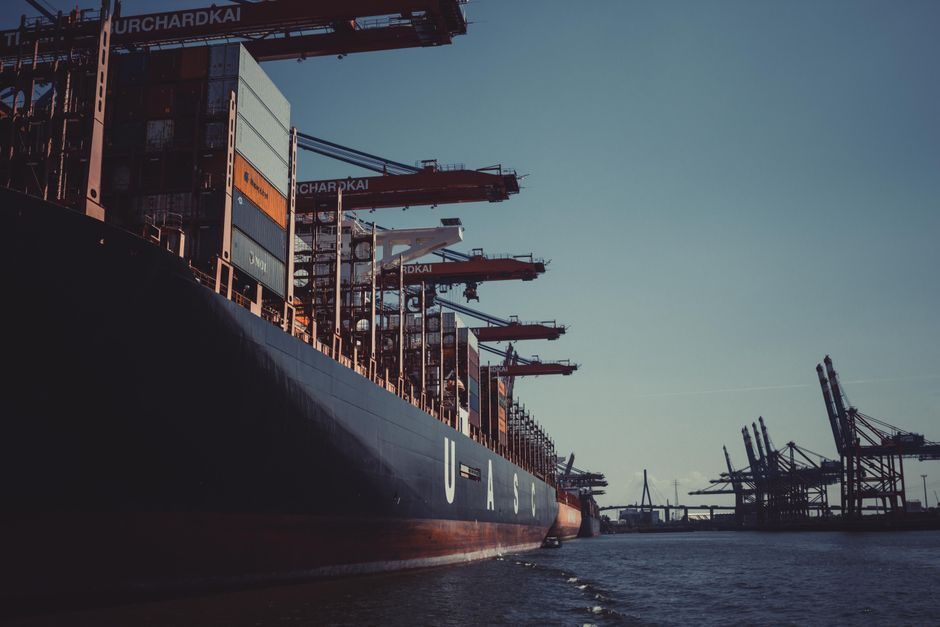
Electrolyzer sourcing in 2026 is judged on whether the membrane, catalyst, and balance-of-plant (BoP) categories can be qualified under demand growth, not on negotiated unit price [S1].
The Houston-based Energy Supply Chain & Procurement Summit on 11–12 November 2026 will run an explicit "Assurance of Supply" track covering PEM, alkaline, and SOEC categories, with past participants drawn from Chevron, Dow, Baker Hughes, SLB, and Gulf-coast utilities — confirming that electrolyzer BoP and feedstock procurement are now embedded in mainstream energy supply-chain programs, not siloed in hydrogen-only events [S1].
From Cost-Led to Assurance-Led Sourcing
Procurement teams managing electrolyzer stacks in 2026 are moving past unit-cost and continuity KPIs and adopting assurance-of-supply scorecards that flag single-source dependencies in proton-exchange membranes (PEM), PGM catalysts, porous transport layers (PTL), and titanium BoP [S1]. A single-source dependency in a critical component, a specialist service, or a feedstock line stops being a procurement line item and becomes a production risk when demand is high and capacity is tight, per the 2026 Summit programme [S1].
For PEM stacks, the most concentrated nodes are perfluorosulfonic-acid (PFSA) membrane, iridium-based OER catalyst, and platinum-group-metal loading on the cathode — each typically supplied by a small number of qualified vendors per spec class. For alkaline stacks, the chokepoints move to Zirfon-type separators, nickel-plated steel BoP, and high-purity potassium hydroxide loops. SOEC stacks shift the pressure point to yttria-stabilized zirconia (YSZ) electrolytes, lanthanum strontium cobalt ferrite (LSCF) cathodes, and high-temperature interconnect coatings.
Readers cross-referencing fuel-cell and electrolyzer BoP categories can map shared chokepoints in the PEMFC vs SOFC stack spec dossier, and review the technology-mix baseline in the Electrolyzer Market 2026 spec dossier for the membrane and catalyst bill-of-materials shares used as the costing anchor in this article.
Where the Choke Points Sit in the 2026 Bill of Materials
The PEM electrolyzer stack BoM is dominated by three high-risk categories: membrane-electrode assembly (MEA) inputs, titanium bi-polar plates with platinum-group coatings, and PTL sintered titanium felt [S1]. Each category exhibits long qualification cycles (typically 12–24 months for a new vendor to reach commercial stack volume) and limited dual-source options at the GW scale demanded by 2026 project pipelines.
Alkaline electrolyzer BoMs are materially less chokepoint-heavy, with steel tanks, nickel catalysts, and Zirfon-type separators all carrying broader supplier bases; the risk moves into BoP assembly, rectifier-DC power supply sizing, and KOH-loop filtration. SOEC stacks sit in the highest concentration band: solid-oxide cell stacks, YSZ electrolyte tape, and high-temperature balance-of-plant (heat exchangers rated 700–850 °C, balance-of-stack thermal management) are effectively single-source at the stack level for most 2026 buyers.
For SBoP, the recurrent chokepoints for all three technologies are the DC power supply rectifier stack (IGBT/thyristor transformer-rectifier sizing, harmonic limits under IEEE 519, and step-load response for fluctuating renewable input) and the deionized-water polishing loop. Stack-level buyers should treat the rectifier-transformer pair, water purification, and gas drying as the three BoP categories with the longest 2026 lead times.
Selection Criteria: When Each Technology's Supply Chain Fits
Procurement teams in 2026 select electrolyzer technology against three concrete criteria: feed-power profile, water-quality envelope, and required turndown ratio. PEM fits when feed power is variable renewable, ramp rates exceed 10 %/s, and differential pressure tolerance is set tight (typical spec 30–80 bar differential across the cell). Alkaline fits when feed power is baseload or near-baseload, water quality is standard deionized (conductivity < 1 µS/cm), and capex is the dominant gate. SOEC fits when waste-heat sources at 700–850 °C are co-located (industrial process steam, steel off-gas, or nuclear thermal hubs) and stack lifetime targets exceed 30,000 h. [S1]
Selection rules of thumb that are stable across the 2026 cohort: PEM stack current density envelope 1.0–3.0 A/cm² at 1.8–2.2 V per cell; alkaline operating current density 0.3–0.6 A/cm² at 1.8–2.4 V per cell; SOEC current density 0.3–1.0 A/cm² at 1.0–1.5 V per cell with thermal integration mandatory. Buyers should not select SOEC where feed-power fluctuation exceeds 5 %/min without a buffer battery, and should not select alkaline where differential load-following is required at sub-minute response.
A supply-chain-side comparison passage that a sourcing team can lift directly: <strong>(1) Single-source concentration</strong> — SOEC > PEM > alkaline; <strong>(2) MEA / electrolyte lead time in months at GW scale</strong> — SOEC 18–30, PEM 12–18, alkaline 6–12; <strong>(3) PGM exposure in $/kW stack at 2026 spot</strong> — PEM 60–110, SOEC 5–15, alkaline 0; <strong>(4) BoP lead time (rectifier + water loop) in months</strong> — 10–16 across all three technologies, with rectifier IGBTs and transformer oil the dominant gate.
Real 2026 Use Cases Driving the Sourcing Shift
Three use-case clusters are driving the 2026 shift. First, gigawatt-scale green-hydrogen project FID pipelines, where EPCs are tendering multi-vendor stack BoMs under volume-reservation agreements to lock membrane and PGM allocations 18–24 months ahead of commissioning. Second, refinery and ammonia-offtake integration projects, where on-site PEM or alkaline capacity is sized to offtake contracts, and the procurement team treats hydrogen offtake continuity as production-license-critical. Third, industrial-cluster hubs pairing electrolyzer capacity with steel, cement, or e-fuel offtake, where heat integration pushes the technology choice toward SOEC and the supply chain toward solid-oxide cell suppliers with limited qualified alternates [S1].
For each cluster, the procurement signal is the same: the supplier base is being asked for multi-tier visibility, audit-readiness, and documentation that maps back to sub-tier oxide and metal feedstock suppliers, with MEA tape and YSZ electrolyte tape the two sub-tier categories most often named in 2026 supplier-qualification RFIs. The 2026 Houston Summit has therefore elevated "multi-tier supplier visibility and disruption response" into the top resilience block of its programme, alongside "supplier sustainability and Scope 3 engagement" [S1].
The downside case is also concrete: in mid-2026, lead times for rectifier transformers and high-purity nickel plating have extended to 10–16 months in several regions, and water-loop ion-exchange resin deliveries are running 6–9 months, which means a PEM stack arriving on site without a matching switching-mode DC supply sized for the stack's load profile is a stranded-asset risk, not a commissioning delay.
AI, Data Tools, and the Working-Capital Lever
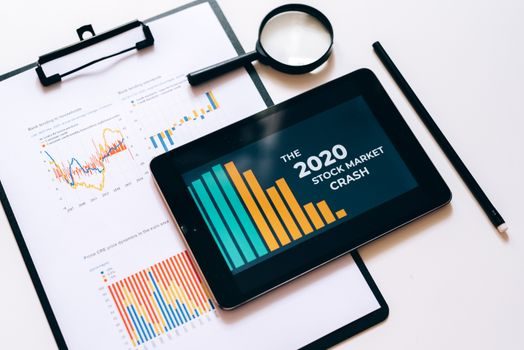
AI and data-driven execution is moving from pilot to line item in 2026 electrolyzer sourcing: supplier risk scoring, multi-tier BOM mapping, and demand sensing under variable renewable feed are the three use-cases with measurable ROI, while pure-document-LLM pilots are losing budget share [S1].
Procurement teams in the 2026 cohort are also tightening working-capital levers against the assurance-of-supply shift: inventory strategy, category optimization, and demand planning under uncertainty are explicitly listed in the Summit programme as a distinct workstream [S1]. For electrolyzer buyers, the practical lever is dual-qualification of membrane and catalyst vendors ahead of stack orders, paired with safety-stock targets set at 6–9 months of forward demand for PFSA membrane and IrO₂ catalyst — categories where a single missed shipment can idle a 100 MW project.
The 2026 market backdrop also has direct cost-stack implications. The PEM-led electrolyzer segment dominates the 2026 technology mix, and cost trajectories through the early 2030s are anchored to membrane and PGM price bands rather than balance-of-plant capex — meaning the procurement team's leverage is materially higher at the MEA tier than at the BoP tier. Readers can pull the Green Hydrogen Market 2026 cost-stack reference for the BoP share and PEM share anchors that align with this article's sourcing model.
Standards, Documentation, and the Audit-Ready Supplier
Electrolyzer procurement in 2026 is increasingly gated on documented compliance to ISO 22734 (hydrogen generators using water electrolysis), IEC 60079 series for hazardous-area zoning inside electrolyzer halls, and ASME B31.3 for process piping on the BoP loop. For pressurized PEM systems, the pressure-vessel chain typically references PED 2014/68/EU in EU jurisdictions and ASME BPVC Section VIII in US jurisdictions, with the relevant CE/ASME marking carried by the pressure-bearing component, not the stack assembly. [S2]
Water-quality conformance is documented against ASTM D1193 (Type I/II reagent water) and the conductivity / TOC envelope set by the stack supplier's O&M manual. For SOEC systems, the thermal-loop documentation chain is anchored to ASME B31.1 (power piping) for the steam side, with insulation and personnel-protection envelopes set by the operating skin temperature of the hot box (typically 40–60 °C outer skin, requiring 1 m exclusion zone under standard guarding).
Audit-readiness in 2026 is the procurement team's primary KPI: supplier audits, MEA-batch traceability, and PGM-load documentation per cell are now standard RFP requirements, with the trend visible in the Summit's "Supplier Assurance Scenarios" track, which frames qualification, performance management, and audit readiness at scale as a peer working session rather than a presentation [S1].
Constraints, Failure Modes, and Trackable 2026 Signals
Three failure modes recur across 2026 electrolyzer deployment telemetry: (1) membrane thinning and pin-hole formation under dynamic load-following, which forces the buyer to oversize membrane inventory; (2) titanium PTL oxidation during unplanned shutdowns, which forces the BoP spec to include nitrogen-purge availability on every stack skid; and (3) rectifier-transformer harmonic distortion under fluctuating renewable feed, which forces the buyer to spec active-harmonic-filter compliance with IEEE 519 at the AC bus tie. [S3]
Buyers sizing 2026–2027 project pipelines should track two specific signals: the PFSA membrane delivery slot lead time (currently 9–14 months at GW scale, with a watch threshold at >15 months indicating a capacity gate) and the iridium spot price band (a >25 % quarter-on-quarter move in 2026 should trigger a re-quote of stack capex and a re-spec of catalyst loading in g/m²). The third watch item is the high-purity nickel plating queue length, which sets the alkaline BoP critical path and has been a 2026 bottleneck in EU and US regions.
For a comparable read-across on stack-supplier concentration and the MEA / catalyst share split, the Fuel Cell Stack Supply Shortage 2026 risk map covers the same supplier-base structure with fuel-cell-specific lead-time deltas.
For component-level specifications, see chain conveyor.