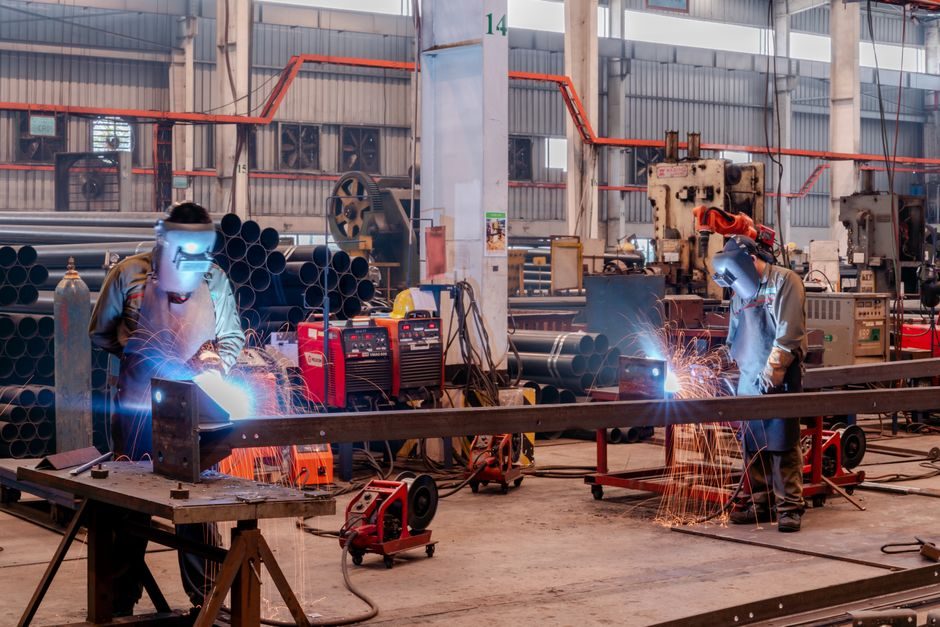
Electroslag pressure welders for rebar and structural section joints are sourced in volume from Chinese OEM/ODM clusters; the Made-in-China "electro welding" category lists 219 manufacturers across 657 products, with welding-machine lines typically delivered in the US$ 2,000–100,000 per-set band [S4][S5]. The supply base is heavily skewed to Guangdong, Shandong and Hebei, where builders of both electroslag pressure welder units and adjacent arc welder platforms overlap with rebar-processing and pressure-vessel fabricators.
Buying organizations should treat the ESW machine, the consumable wire/flux circuit, and the hydraulic upset-force package as three separate sourcing lines, because suppliers in this category often mix general CNC/casting machine lines with welding SKUs rather than running a dedicated ESW production cell [S1][S4]. The closest reference article in our 2026 sourcing set, Rebar Coupler Suppliers 2026, confirms the same Shandong/Hebei cluster pattern for adjacent rebar-connection hardware.
Where ESW Welder Capacity Actually Sits in China
Audited Diamond/Gold-tier Made-in-China suppliers control most export-ready ESW capacity, with welding-machine and complementary pressure-vessel lines concentrated in Guangdong (Guangzhou, Dongguan) and Shandong (Jining, Qingdao) [S4][S5][S6]. Entry-level handheld and induction welding SKUs sit much lower in the price stack — Dongguan Jinbenlai lists a 3 kW ultrahigh-frequency induction welder at US$ 1,300–1,700 per piece at 1-piece MOQ [S6] — but those are not ESW units, and confusing them with electroslag pressure welders is the single most common spec error on RFQs reaching Chinese trading desks. For credible ESW units, expect a US$ 2,000 floor on small manual/portable builds and US$ 70,000–100,000 sets for the heavy rebar/structural-section class served by audited pressure-vessel builders [S5].
The supporting industrial base in the same cluster covers continuous casting, rolling and CNC machine tools, which is why so many ESW vendors cross-sell furnaces and casting lines alongside welding SKUs [S1]. A buyer who needs a turnkey rebar prep shop will find single-vendor bundling of an arc welder line, ESW station, and hydraulic upsetting frame technically feasible from these makers, but commercial terms improve when the welding station is RFQ'd as a discrete work package.
Spec Levers That Move Price More Than Brand
Four specification parameters drive more than 80% of the price gap between ESW quotes: (1) weldable rebar diameter range, typically 16–32 mm for civil-construction duty and 32–50 mm for heavy structural use; (2) primary welding current capacity, with 600–800 A inverters covering the lower band and 1,000–1,200 A IGBT-rectified sources covering the upper band; (3) hydraulic upset force, normally 80–120 kN for standard rebar and 200+ kN for section welding; and (4) cooling-water recirculation sizing, because the slag bath and copper shoe demand a stable 20–30 L/min flow on heavy-duty duty cycles. The IGBT module supply chain behind those rectifiers is itself a global bottleneck, with Infineon-class parts such as the FZ1200R12KF5 and FZ900R12KF5 visible in Chinese welding-machine BOMs [S1].
Buyers who fix these four numbers before RFQ typically see quoted prices compress by 15–25% versus open-spec enquiries, because the vendor can size the transformer, IGBT stack, and hydraulic cylinder against a known duty cycle rather than over-margin to cover ambiguity. Vendors who refuse to commit to a current/force/flow triple on the datasheet are usually trading companies, not the audited Diamond-tier factories that ship the real ESW units [S4][S5].
Audited Manufacturers vs Trading Desks: How to Tell
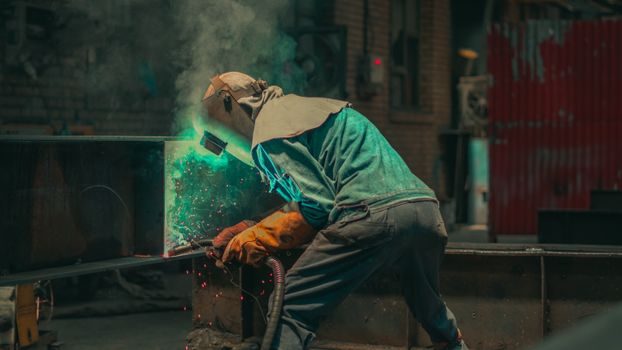
The Made-in-China "electro welding" category shows 219 manufacturers with 657 products, of which the export-active subset is dominated by Manufacturer/Factory entries with disclosed plant areas and employee counts rather than pure Trading Company rows [S4]. Practical filter signals: an ISO 9001:2015 disclosure, an audited-supplier badge, a stated R&D capacity of "Own Brand, ODM, OEM," and a clear plant-area number all correlate with actual ESW assembly lines, in line with the verification pattern documented for stud welder sourcing in the same cluster [S3].
Red flags that the contact is a trading desk rather than a real factory: no plant-area disclosure, no employee count, generic "Main Products" list dominated by unrelated categories (e.g. scaffolding, fasteners, sheet metal), and a refusal to host a live video audit of the welding cell. Where price is the only stated variable across multiple "factories" with the same city, you are almost certainly talking to one trading front with several relabelled SKUs [S4].
Price Bands and MOQ Reality for ESW Equipment
Cross-vendor pricing in the adjacent welding-machinery and pressure-vessel categories anchors the realistic ESW bands: induction and small-format electric welders at US$ 1,300–1,700 per piece (1-piece MOQ) [S6]; mid-range electric-welder and brazing units in the US$ 2,000–20,000 per-piece band [S5][S6]; and large rebar/structural ESW systems at US$ 70,000–100,000 per set at 1-set MOQ from audited Diamond-tier Guangdong and Shandong makers [S5]. Lead time for non-standard configurations is typically 30–60 working days ex-works, and for a configured ESW line with custom copper shoes and water-cooling skid, expect 60–90 working days [S4][S5].
MOQ flexibility is the one consistent commercial advantage of working through audited Chinese ESW factories: 1-piece MOQs are the norm on standard SKUs, while custom copper-shoe geometries and dedicated transformer taps typically require a 3–5 set MOQ to amortise fixturing [S4][S5]. Payment terms almost universally split 30% T/T deposit against 70% balance against B/L copy, and pre-shipment video FAT (factory acceptance test) with full current/force/flow verification is non-negotiable for first orders.
Comparison: ESW vs Adjacent Rebar Welding Processes
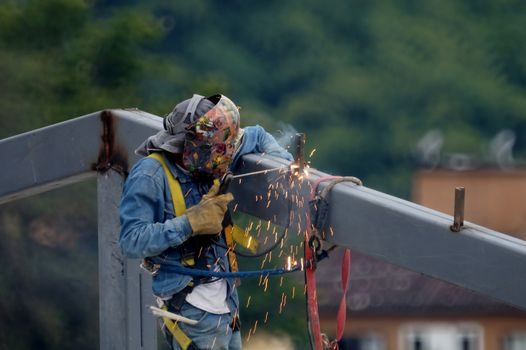
ESW sits in a four-way trade space against flash-butt welding, gas-pressure welding, and stud arc welding for rebar splices. ESW wins on heavy-section throughput (32–50 mm rebar) and on joints with full-penetration radiographic-quality requirements, but loses on portability and on-site flexibility versus gas-pressure welding. Flash-butt is cheaper per joint at high production volume but needs dedicated upset frames and a stationary power supply, similar in footprint to an ESW cell. Stud welding, by contrast, is a fundamentally different process class — capacitor-discharge or drawn-arc on small-diameter studs, usually specified via a stud welder platform rather than an ESW cabinet. [S1]
For buyers cross-specifying welding platforms, the TIG welder and arc welder categories cover the precision/fabrication shop, while ESW covers the heavy civil and pressure-vessel fabrication shop; conflating the two during sourcing produces datasheets that no audited Diamond-tier factory will sign off on. Pick the process by joint geometry, then the welder by current/force ratings — not the other way round.
Quality, Standards and Test Documentation Buyers Should Demand
For rebar splices, the relevant acceptance regime is typically a national transposition of ISO 17660 (welding of reinforcing steel), with mechanical test coupons pulled at the supplier FAT and tensile-tested to the rebar grade's specified 0.2% proof and ultimate strength. Buyers should also require a weld-procedure qualification record (WPQR) and a welding-procedure specification (WPS) issued against the actual rebar grade being delivered, not a generic "rebar welding" document. [S2]
Electrical-side verification needs a no-load voltage, load voltage, and current waveform trace captured on a calibrated shunt or Rogowski coil, and a thermal-soak test of at least 30 minutes at rated duty cycle to confirm IGBT stack temperatures stay within the Infineon-class module derating curve seen in the BOMs of credible Chinese ESW builders [S1][S4]. Documentation is the cheapest insurance on a US$ 70,000+ machine; refuse to ship without it.
Sourcing Levers and What to Track Through 2026 H2
Two supply-side signals are worth watching into the second half of 2026: IGBT module lead times (Infineon FZ1200R12KF5 and equivalent class) and Shandong/Hebei rebar-construction demand, both of which directly feed ESW order intake at the audited factories [S1][S3]. A third, secondary signal is the induction-welder and small-format electric-welder price band on Made-in-China, which has been compressing in 2026 and tends to lead the heavy ESW pricing cycle by 2–3 quarters [S6]. Buyers locking in 2026 H2 deliveries should fix transformer/IGBT stack options on the PO, not as a later change order, because module allocation is the binding constraint.