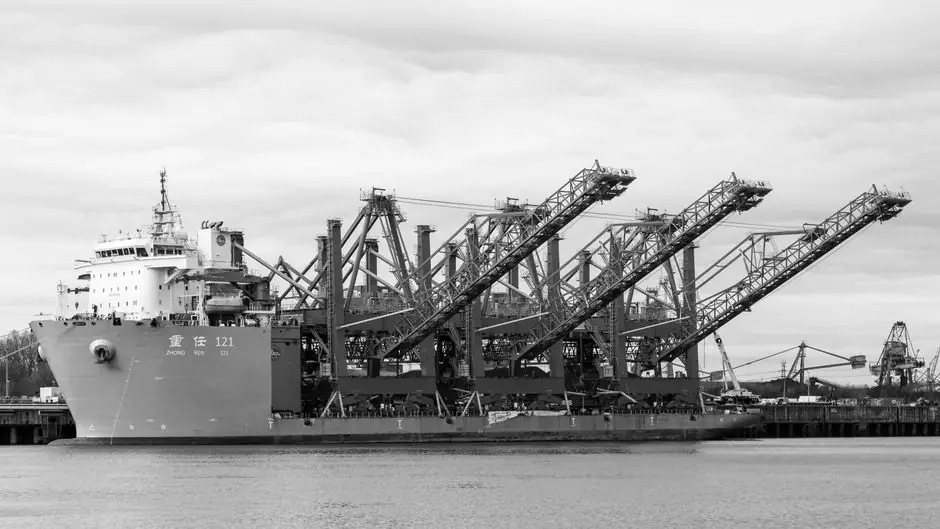
Both elevator-type and rail-guided mast stacker cranes travel along a bottom rail fixed to the concrete floor and an upper guide rail mounted on the rack profiles, with the rails absorbing lateral forces during extraction and insertion cycles [S2]. The structural split is the mast count: elevator-style units are typically single-mast designs aimed at light unit loads, while rail-guided mast cranes for pallets are commonly twin-mast (double-column) configurations designed to cradle heavier or bulkier loads [S1][S2].
Within the broader stacker crane market, which reached USD 8.265 billion in 2025 and is projected to climb to USD 16.03 billion by 2035 at a 6.85% CAGR, double-mast units dominate the installed base while single-mast units are recording the fastest growth on the back of light-duty AS/RS demand [S5]. Both families qualify as stacker crane hardware and serve automated storage and retrieval aisles where forklifts are typically excluded.
Structural Layout and Guidance System
Rail-guided mast stacker cranes are characterized by a mast or column system equipped with grippers or load handling devices that travel along floor rails to retrieve items, with a guide rail on the rack providing torsional stability [S1]. The twin-mast variant incorporates two vertical columns that bracket the load, with the cradle and forks seated between them; the single-mast variant concentrates all guidance and lifting in one column, with a side-mounted or over-mast extraction mechanism [S2][S3].
AFE Crane describes the architecture as "a double girder crane, either underhung or top running, with a unique carrier and telescoping mast assembly in place of a conventional hoist," in which the carrier traverses the bridge length while the mast extends vertically to lift and position the load [S3]. The telescoping mast is the defining kinematic feature of an elevator-type unit: instead of a hoist reeving, a nested mast profile is extended or retracted by a winch or chain drive, which keeps overall machine height low and lets the crane fit in lower-ceiling facilities [S3][S7].
Load Capacity and Lifting Height
Single-mast elevator-type stacker cranes for pallets peak at roughly 1.65 t per load in single-deep configurations and roughly 1.1 t in double-deep configurations across the Interlake Mecalux MT-1 through MT-5 line, with maximum heights scaling from 59 ft to 148 ft as payload drops [S2]. Twin-mast rail-guided units are the preferred configuration for "a common application requiring double columns, a pallet stacker crane," because the two columns share the vertical load and provide a stable cradle for bulky items [S1].
Travel kinematics are similar across both styles: maximum travel speed in the Mecalux single-mast line is 722 ft/min with 2 ft/s² acceleration, and maximum lift speed is 217 ft/min at 2 ft/s² [S2]. Operating temperature range is rated from -22 °F to 104 °F, with WMS/WCS-controlled motion that allows 24/7 duty in cold storage and ambient aisles alike [S2]. These numbers do not change with the mast count, but the load envelope does: a twin-mast crane typically travels slower per ton to keep sway within the aisle tolerance, while a single-mast light-load crane can run at the upper travel limit without exceeding sway budgets.
Throughput, Footprint, and AS/RS Integration
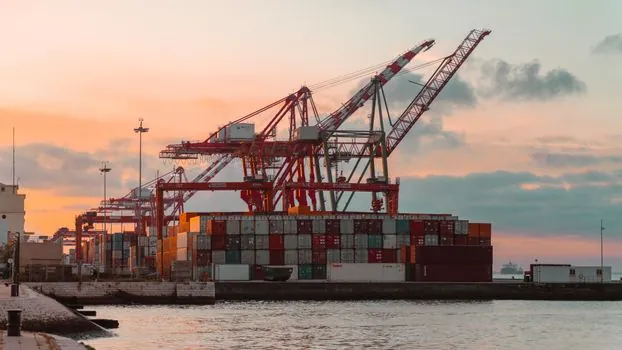
Single-mast elevator cranes are described as providing "the utmost functionality and efficiency in installations with lighter loads," making them the default pick for miniload AS/RS with boxes and totes as well as for light-pallet aisles [S2]. Dematic, Konecranes, Mitsubishi Logisnext, Toyota Industries, Crown, Jungheinrich, Hyster-Yale, and SSI Schaefer are listed as the major OEMs operating across both single- and twin-mast product lines in the 2025 stacker crane market [S5].
For deeper storage, both single- and twin-mast cranes accept single-, double-, or triple-deep extraction via telescopic forks, with double- and triple-deep telescopic forks available as an option on the Mecalux MT family [S2]. AFE Crane lists extraction options of "telescopic forks, pallet shuttles, or on-board conveyors" with PLC and WMS integration as standard delivery items on engineered stacker crane builds [S3]. Storage density, not mast count, is the dominant lever on throughput: tri-mast stacker cranes are explicitly tracked as a separate category in the 2025 market segmentation, alongside single- and double-mast units [S5].
Selection Criteria: Single-Mast vs Twin-Mast
Use single-mast elevator-type when the load stays at or below 1.65 t, the aisle is light-pallet or miniload, and the height budget climbs to 148 ft; choose twin-mast rail-guided when the payload is bulkier, longer, or asymmetric, and the cradle needs a structural seat between two columns [S1][S2]. Vertical storage efficiency is a shared benefit of both designs, and both remove the forklift from the aisle, which is the primary safety argument for specifying either over manual handling [S4].
Quick decision matrix: <ul><li>Capacity: single-mast up to 1.65 t single-deep / 1.1 t double-deep; twin-mast selected for heavier or longer loads [S1][S2].</li><li>Height: single-mast MT-5 reaches 148 ft; twin-mast engineered builds are commonly built into the same envelope but at lower payload [S2][S3].</li><li>Footprint: single-mast uses a narrower aisle profile; twin-mast increases the column-to-column width but enables on-board load cradling [S1][S3].</li><li>Extraction: both styles accept telescopic forks, pallet shuttles, or on-board conveyors; double-/triple-deep forks are optional on single-mast [S2][S3].</li><li>Duty: both rated 24/7 from -22 °F to 104 °F with WMS/WCS control [S2].</li></ul>
For applications where a pallet stacker function is the primary need, twin-mast still wins on structural stability. For light-load or box-level miniload AS/RS where vertical real estate matters more than tonnage, single-mast elevator-type cranes lead the field. A practical example of the decision logic in a different handling domain is the spec-level edge-of-dock vs pit-mounted dock leveler trade-off, which uses the same "operating envelope vs structural cost" framing as mast-count selection.
Use Cases and Industry Fit
Stacker cranes in general are used in AS/RS for high-bay warehouses, paper and metal coil storage, industrial die storage, and automotive die retrieval and casting support, and they are routinely paired with overhead cranes in manufacturing cells [S1]. In automotive stamping plants, the crane retrieves dies and transfers them to the press line; in casting, it supports the handling of molten masses; in body-in-white, it positions the body as components are added [S1].
Automated stacker cranes "move within storage aisles automatically, uninterruptedly, safely, and without errors," with operator-free running as a baseline rather than an upgrade [S8]. The American Crane definition reinforces the point: "a stacker crane is an overhead crane system that utilizes a non-hoist load-handling device, e.g., a mast suspended from a bridge trolley and equipped with forks" [S9]. Demag also notes that lighter single-mast loads can be paired with a "special gripper or tool" tailored to the product, such as coil or die tooling, when off-the-shelf forks are the wrong fit [S1].
Failure Modes and Engineering Limits
The dominant operational limit on a stacker crane is sway of the suspended load during travel and extraction, which sets the maximum practical travel speed, acceleration, and lift speed in the aisle [S2]. Exceeding 2 ft/s² acceleration on either axis is not supported by the Mecalux MT line, and going above 722 ft/min travel is similarly off the catalog curve [S2]. Stacker crane relevance has been questioned in dense, high-throughput e-commerce sites where cube-based AS/RS competes on density, but the stacker crane remains the right tool for heavy, long, or palletized unit loads that cube storage cannot handle [S4].
Structural risk concentrates at the mast-to-cradle interface, which is why twin-mast designs are mandated for bulky payloads: a single column cannot safely cradle a long or offset load without inducing bending moments that the rail guidance is not designed to absorb [S1]. Cold storage operation down to -22 °F requires WMS/WCS-controlled motion, since human-in-the-loop picking is impractical at that temperature and the crane itself must be rated for the low-temperature steel and lubricant regime [S2]. Engineered stacker crane builds from suppliers such as AFE Crane are noted as "less common in the industry" than catalog single- or twin-mast units, but they remain available for unusual reach, span, or environmental envelopes [S3].
Standards, Sourcing, and Specification Hygiene
Specifying a stacker crane is essentially a controls-and-software problem wrapped in a steel structure problem: the WCS executes WMS commands, the PLC handles I/O, and the mechanical envelope must match the rack upright spacing, the load footprint, and the cold-storage rating [S2][S3]. AFE Crane's spec checklist lists load characteristics, storage density, warehouse layout, environmental conditions, load capacity, lifting height and speed, horizontal travel, positioning precision, extraction system type, single- vs double-mast, WMS/WCS integration, automation level, safety features, and energy recovery as the engineering inputs that must be locked before a build quote is meaningful [S3].
Market context for sourcing: the 2025 stacker crane market is sized at USD 8.265 billion and is forecast to reach USD 16.03 billion by 2035 at 6.85% CAGR, with Asia-Pacific the fastest-growing region and North America the largest installed base [S5]. The same report flags double-mast units as the dominant installed type and single-mast units as the fastest-growing, a signal that light-duty elevator-type designs are the segment to watch for new AS/RS investment [S5]. For project teams, the engineering controls and WMS integration questions parallel the controls debate in adjacent material handling domains, for example the DIN-rail vs 19-inch rack industrial Ethernet switch decision, where the spec is dictated by the cabinet envelope, not by the marketing of the device.
Trackable signals to watch: 2026-vintage OEM product releases from Konecranes, Dematic, and Jungheinrich around single-mast light-load AS/RS at heights above 100 ft; cold-storage rated stacker crane projects in pharmaceutical and food retail distribution; and continued migration of twin-mast engineered builds into paper, coil, and die storage where single-mast cranes cannot be retrofitted [S1][S5]. The two architectures will coexist for the foreseeable future, with the choice driven by payload, height, and aisle tolerance rather than by a single dominant design.
The underlying component specifications are covered under bucket elevator.