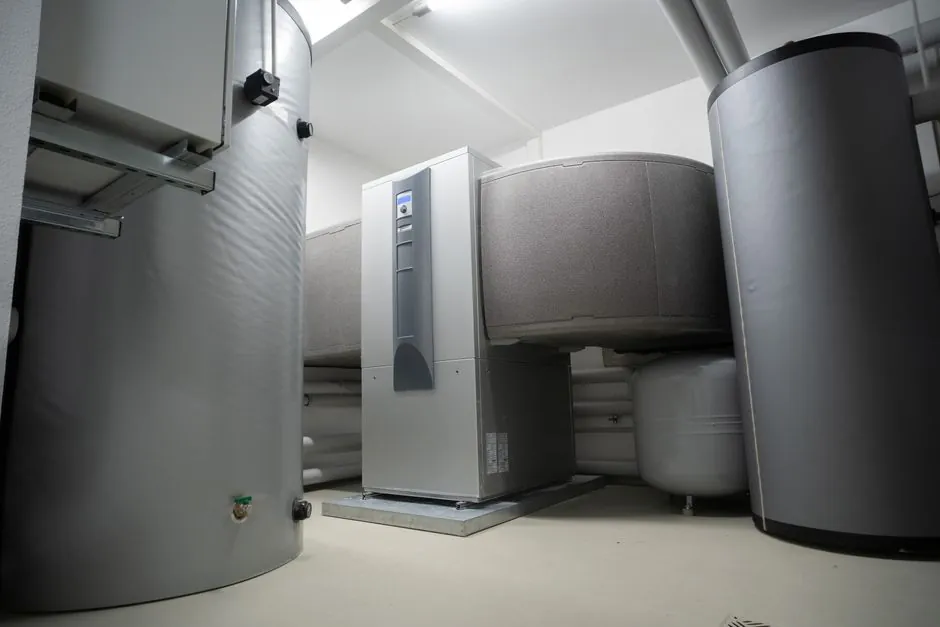
Battery energy storage crossed USD 81.6 billion in 2026 and is forecast to reach USD 195.0 billion by 2036 at a 9.1% CAGR, with lithium-ion holding 72.8% of deployed systems and systems above 10,000 kWh representing 44.6% of installed capacity [S4].
The competitive map in 2026 is split across three layers: cell manufacturers fighting over LFP versus solid-state roadmaps, integrators scaling containerized platforms, and developers navigating FEOC-compliant supply under U.S. tax-credit rules, with the U.S. alone adding 3.3 GW/8.4 GWh in Q1 2026, a 54% jump over the prior Q1 record [S1].
Lithium-Ion, Solid-State, and Long-Duration: Three Chemistry Tracks
Solid-state batteries led the next-generation storage category with 51.6% share in 2025 and are projected at a 9.9% CAGR through 2031, with energy density targets of 400-500 Wh/kg enabling passenger-EV ranges near 700 miles per charge [S5]. BYD has scheduled sulfide-based solid-state pilot output in 2027 and mass output near 2030 at roughly 400 Wh/kg, a 60% uplift over its current Blade Battery platform, while CATL is piloting 500 Wh/kg condensed cells for electric aircraft entry from 2027 [S5].
Grid-scale lithium iron phosphate (LFP) remains the volume backbone: utility-scale projects in the U.S. Q1 2026 added more than 2.3 GW/6.8 GWh, and Wood Mackenzie projects 200 GW/655 GWh of cumulative U.S. installed capacity by 2031, with the utility sector contributing 85% of that build [S1]. For projects requiring 8-100 hour discharge, iron-air and iron-flow chemistries are absorbing redirected capital as policy mandates push for longer-duration assets, while Europe's 50% lithium recovery rule effective by 2027 is reshaping cell-economics at end of life [S5].
Containerized BESS and Front-of-the-Meter Scale
Containerized battery energy storage systems are the fastest-growing form factor, with the segment projected at a 24.1% CAGR from 2026 to 2035 and front-of-the-meter deployments accounting for 63.4% of total BESS installations in 2026 [S6][S4]. Containerized architecture is now the default for utility-scale projects because it standardizes fire suppression, HVAC, and DC string integration inside a 20- or 40-foot ISO footprint, which is a practical driver behind the 85% utility share of U.S. installations between 2026 and 2031 [S1].
Grid services represent 38.9% of application demand, and utility-owned systems hold 46.2% of installed projects, confirming that storage is being absorbed into regulated grid planning rather than treated as a merchant add-on [S4]. For procurement teams evaluating storage rack layouts and storage cage containment for new containerized BESS sites, the dominant spec pattern is a 372 kWh to 6+ MWh per container, with LFP cells at the module level and PCS-rated outputs sized for 2-4 hour C-rates.
Regional Competitive Map: U.S., Europe, and Asia-Pacific
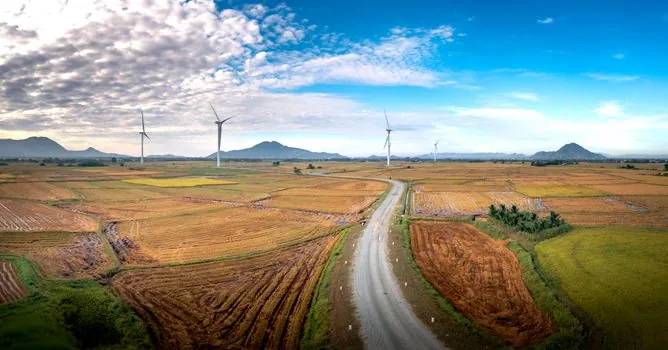
Asia-Pacific held 45.1% of next-generation storage revenue in 2025 and is forecast at a 10.1% CAGR through 2031, anchored by China's solid-state battery standard rollout and South Korea's USD 40 billion K-Battery program [S5]. India posts the fastest national growth rate at 11.5% CAGR, driven by solar buildout and peak-load demand, while the global installed base climbs from 931.7 GW in 2026 to 3,735.3 GW by 2033 at a 21.9% CAGR [S2][S4].
Europe is on track for 45 GWh of installations in 2026, with order books above 100 GWh going to NextG Power and Chinese cell-makers, and sodium-ion emerging as a serious contender in the C&I and utility-scale segments [S9]. In Japan, grid-scale BESS is expanding under new business models and competitive procurement frameworks that reward longer-duration assets, complementing the broader EU focus on recycling and circular-economy recovery [S7][S5]. For related demand forecasts across EU, U.S., and ASEAN, see the energy storage demand outlook.
FEOC, 45X Tax Credit, and the U.S. Supply Reshuffle
Foreign Entity of Concern (FEOC) restrictions are now in force, and developers with mature pipelines rushed to safe-harbor capacity in late 2025, with most remaining projects now requiring long-term supply agreements with domestic manufacturers to qualify for the USD 35 per kWh Section 45X production tax credit [S1][S5]. Lower-tier developers that cannot secure domestic cell supply face acquisition or a turn toward low-cost Chinese OEMs, a structural split that is pulling new gigafactory capacity online across the U.S. Southeast and Midwest.
Residential storage posted a record 1.3 GWh in U.S. Q1 2026, up 86% year-over-year, but Wood Mackenzie projects a 5% residential contraction for full-year 2026 as Section 25D tax credit constraints and permitting rule changes compress margins [S1]. Community, Commercial and Industrial (CCI) installs reached 97.7 MW in Q1 2026, up 27% quarter-over-quarter, with California alone contributing 75 MW and a 215 MW pipeline across Illinois, Maryland, Massachusetts, and New York [S1]. For a deeper look at cell-versus-integrator-versus-application market share, see the 2026 BESS market share slice map.
Selection Criteria: Matching Chemistry to Use Case
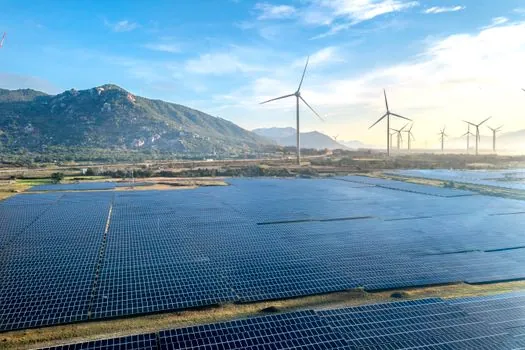
For procurement engineers, the 2026 decision tree breaks down by duration and duty cycle: LFP containerized BESS for 2-4 hour utility frequency regulation and peak shaving, iron-flow or iron-air for 8-100 hour renewable firming, and solid-state for mobile and high-energy-density applications such as aviation and defense [S5]. Tesla, BYD, LG Energy Solution, and Fluence remain visible across large grid-linked projects, with Chinese cell-makers continuing to set the cost-per-kWh floor that domestic OEMs must close through 45X credits [S4][S1].
Spec teams should weigh energy density (Wh/kg), cycle life at depth-of-discharge, round-trip efficiency, operating temperature window, and total LCOS against project duration needs, with the energy meter and energy management layers of the BESS acting as the revenue-stacking interface to grid services. For projects where ASRS or warehouse automation intersects with cell-pack assembly, also review the storage handling spec map to align throughput with BESS container staging.
What the Numbers Tell Buyers Right Now
Three verifiable signals stand out for late-2026 spec decisions: BESS installations globally are projected to scale from 768.5 GW in 2025 to 3,735.3 GW by 2033, a 21.9% CAGR, while the BESS dollar market grows at a more modest 9.1% CAGR because cell ASPs are declining [S2][S4]. U.S. Q1 2026's 3.3 GW/8.4 GWh beat prior Q1 by 54% and is dominated by 2025 tax-deadline pull-through, which means Q2-Q3 2026 comparisons will be tougher before the 45X-anchored domestic pipeline catches up [S1][S3].
Next-generation chemistries remain a USD 2.48 billion 2026 slice growing to USD 3.9 billion by 2031 at 9.49% CAGR, which is small relative to the legacy BESS market but high-leverage for the 17.8% CAGR marine and aviation application segment that pilots solid-state entry from 2027 [S5]. Track these verifiable nodes: (1) U.S. Q2 2026 SEIA Storage Market Outlook release for post-45X pipeline visibility, (2) EU 50% lithium recovery enforcement starting in 2027, and (3) BYD and CATL solid-state pilot output dates versus the Toyota 2027-2028 745-mile launch window [S1][S5].