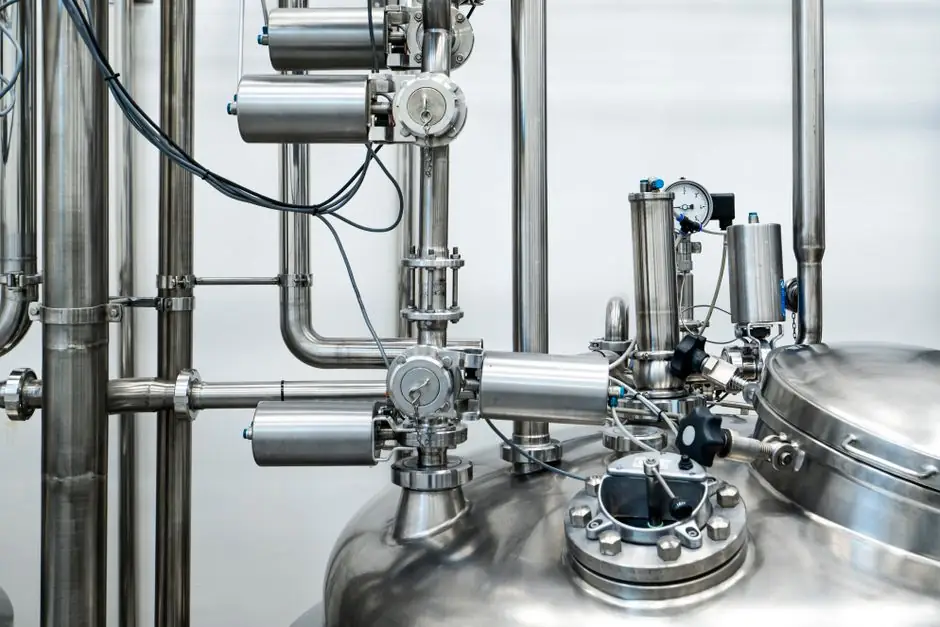
Prismatic lithium battery module and PACK assembly lines for BESS manufacturing span throughput ranges of 12 to 22 pieces per minute (PPM) at 99% or higher yield, with current 587Ah, 314Ah, and 50 to 314Ah cell compatibility windows across commercial product lines [S2][S3][S5].
Equipment vendors including Lead Intelligent, Chintiyan, Libattery, ACEY, and Tmax supply turnkey module and PACK production lines for industrial and commercial energy storage (C&I ESS), residential energy storage, and utility-scale battery energy storage system (BESS) manufacturing, with both standardized configurations and customized factory layouts [S1][S2][S3][S4][S5][S6][S7].
Core Process Stages from Cell Infeed to PACK EOL
An industrial and commercial energy storage module laser production line runs three sequential sections: cell sorting, module line, and PACK assembly, with station counts varying by throughput target and automation depth [S1][S4]. Cell sorting covers forklift loading, six-axis robotic cell handling (5 cells per grip batch), barcode scanning, OCV testing with OK/NG sortation, adhesive application, end-plate epoxy board placement, and laser engraving [S4]. Module line stations include AI polarity detection, pole cleaning, manual connecting-piece loading, laser welding, weld-scar detection, collection-harness installation and welding, module shell insertion, and DCIR detection [S4]. PACK assembly covers liquid-cooled plate cleaning and gluing, module scanning and box insertion, voltage acquisition harness routing, BMS installation, component and panel installation, EOL testing, and airtightness testing, with finished product offloaded by gantry crane [S4].
Cell processing at the front end consistently includes OCV testing, robotic stacking, and module compression; the welding and PACK stages converge around busbar laser welding, liquid cooling plate leak testing, BMS integration, and EOL inspection across vendors [S3][S4]. For BESS production equipment with energy-recycling architectures, discharge energy from battery packs is fed back into the line, reducing thermal output and improving facility-level energy efficiency [S7].
Throughput, Yield, and Footprint Specifications Across Vendors
Throughput varies sharply with cell format and line architecture: Lead Intelligent's 587Ah large-capacity energy storage cell line runs at 22 PPM; Chintiyan's 314Ah prismatic liquid-cooled module and PACK line runs at 12 to 15 PPM with annual capacity of 500 MWh to 1 GWh; the Shuoding industrial and commercial line lists 12 PPM and overall line dimensions of approximately 46000 mm x 4700 mm x 2852 mm for the front section and 32000 mm x 2750 mm x 2900 mm for the rear section [S2][S3][S4]. Yield is consistently specified at 99% or higher at the single-machine level [S3][S4].
Utility demand for a typical 12 PPM module line runs above 80 kW at 380 V +/- 5% / 50 Hz, with instrument air at 260 L/min and 0.5 to 0.8 MPa; smaller battery test and formation equipment like the TMAX-BTS100-100-8CH operate from 600 mm x 800 mm x 1990 mm enclosures with 10% to 95% RH non-condensing humidity tolerance [S4][S7]. ACEY's flexible PACK line accepts 50 to 314 Ah prismatic cells, a cell-format window that covers the current generation of C&I ESS, residential ESS, and outdoor cabinet ESS products [S5].
Equipment Class Comparison: Cell Format, Throughput, Cooling, and Use Case
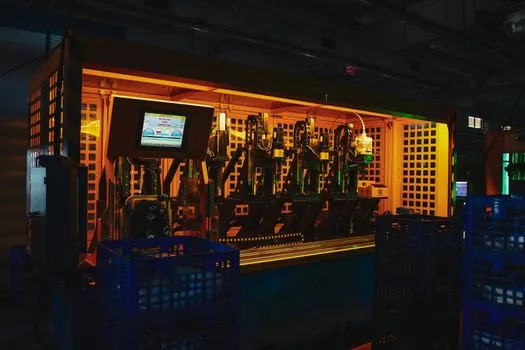
Choosing the right energy storage assembly line is a four-axis decision, with each axis driving a different specification. A direct comparison of the main equipment classes currently offered for ESS manufacturing: [S4]
Large-format cell assembly (Lead Intelligent 587Ah, 22 PPM): engineered for utility-scale BESS and large C&I projects where per-cell energy density at 587Ah cuts module count and parallel-string complexity [S2]. Prismatic liquid-cooled module and PACK line (Chintiyan 314Ah, 12-15 PPM, 1P13S module config): targeted at C&I ESS with integrated liquid cooling plate assembly, leak testing, and BMS installation for direct outdoor cabinet or containerized BESS deployment, with annual capacity of 500 MWh to 1 GWh [S3]. Flexible prismatic PACK line (ACEY, 50-314Ah): suited to mixed-SKU residential, C&I, and outdoor cabinet ESS producers needing to swap cell formats without retooling [S5]. Generic C&I laser line (Shuoding, 12 PPM, six-axis robotic handling, 80 kW power demand, 99% single-machine yield): a baseline module line for mid-volume C&I and home ESS production [S4].
The 587Ah class is a relatively new high-capacity cell format for utility BESS, where the higher per-cell capacity reduces the number of cells and busbars in a container, while 314Ah remains the dominant C&I ESS format; 50 to 100 Ah class cells are more typical for residential storage modules [S2][S3][S5]. Equipment buyers specifying a line should match the cell format axis to their target market (residential, C&I, or utility BESS) before negotiating throughput and automation options.
Selection Criteria: When to Specify Each Line Class
For a new C&I ESS factory targeting 500 MWh to 1 GWh annual output with liquid-cooled outdoor cabinet products, a 12 to 15 PPM prismatic line configured for 314Ah 1P13S modules gives the best fit, because the liquid cooling plate cleaning, bonding, and leak testing stations are integrated into the PACK section [S3]. For a residential and C&I ESS producer running mixed SKUs across 50 to 314 Ah prismatic cells, a flexible PACK line with 50 to 314 Ah compatibility avoids the capex of a second dedicated line as cell procurement shifts over the production mix [S5].
For utility-scale BESS manufacturers running 587Ah large-format cells, the higher 22 PPM throughput reduces the number of parallel production lines needed to hit GWh-scale annual output, but the line is less useful for mixed-format producers [S2]. The Chintiyan cell capacity figure of 314 Ah is paired with a 1P13S module configuration, meaning 13 cells in series per module, a common C&I ESS topology [S3]. For process engineers building factories for the additive manufacturing material supply chain or related industrial sectors, energy storage module and PACK lines remain a separate equipment class, since the cell format, welding, and EOL test requirements diverge from generic industrial automation.
Real Use Cases and Factory Layout Considerations
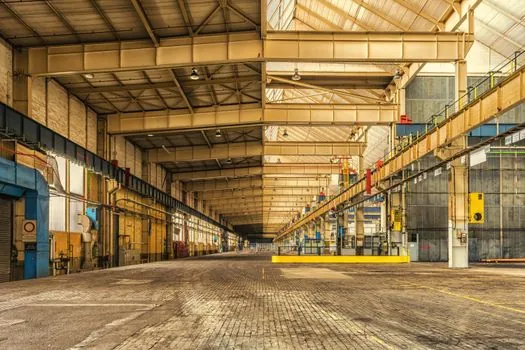
A BESS container producer running 587Ah cells at 22 PPM will typically pair the cell assembly line with a downstream module and PACK line for container integration, with annual output at the cell stage feeding directly into utility-scale BESS container builds [S2]. A C&I ESS producer running 314Ah 1P13S liquid-cooled modules at 12 to 15 PPM with annual capacity of 500 MWh to 1 GWh can deploy the line as a standalone module and PACK factory, with finished outdoor cabinet ESS units shipped directly to commercial and industrial customers [S3].
Factories that already produce residential ESS modules often add a C&I laser line for higher-power products, since the same prismatic cell base can be assembled into either format with a line changeover; vendors including Libattery and Shuoding explicitly advertise modular flexible design and customizable automated production line solutions according to customer needs [S1][S4]. Floor space is a key constraint: a 12 PPM C&I laser line occupies a front section of approximately 46000 mm x 4700 mm and a rear section of approximately 32000 mm x 2750 mm, with power demand above 80 kW and instrument air at 260 L/min and 0.5 to 0.8 MPa [S4].
Standards, Compliance, and Quality Control Architecture
Equipment-level compliance for export-grade BESS production machinery is typically CE certified, with vendor-level warranty of 2 years limited and lifetime support, per the Tmax BESS production machine datasheet (model TMAX-PC-103) [S6]. Quality control architecture across vendors centers on barcode traceability, gas tightness testing, and EOL inspection as the three mandatory quality gates in liquid-cooled ESS module and PACK lines [S3]. Single-machine yield is specified at 99% or higher, with OCV and DCIR testing at the cell and module stages feeding into the EOL test database [S3][S4].
The Tmax BESS production line equipment family adopts a recyclable-energy design architecture in which the discharge energy of the battery pack is recycled and reused, achieving energy conservation, lower thermal energy output, and a smaller facility HVAC load; the same architecture principle shows up in energy management systems for the finished BESS product [S7]. Buyers should confirm with the vendor that the line's PLC and MES data export formats are compatible with their factory-level traceability and EOL test database before procurement, since some equipment vendors export in proprietary formats.
Failure Modes, Limitations, and What to Verify Before Purchase
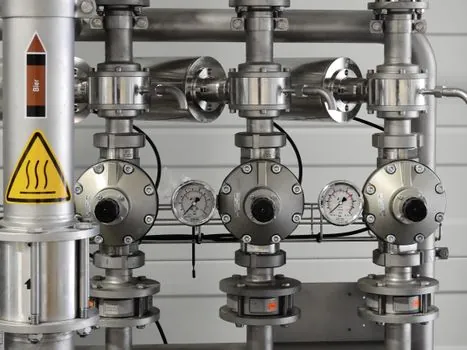
The 12 to 15 PPM prismatic liquid-cooled line is currently the production benchmark, but the figure is paired with a 99% yield and a 1P13S module config, meaning throughput drops if module configuration shifts to 1P16S or 1P20S without retooling [S3]. Six-axis robotic cell handling is specified to grab 5 cells per batch in the cell sorting section, so lines that demand higher single-batch pickup may need robot re-spec or alternative EOAT [S4].
The 22 PPM figure for the 587Ah line is at the cell stage, not the module stage; downstream module and PACK equipment must be sized to match cell-stage throughput to avoid line balancing losses [S2]. Buyers should also verify that the 12 to 15 PPM and 22 PPM figures are measured under the same definition (pieces per minute at the bottleneck station) and at the same yield target, since vendor datasheets sometimes quote the upstream station rather than the line-end figure. Other failure modes to probe during vendor FAT include laser welding spatter on busbars at production speed, AI polarity detection misclassification rate, and EOL test false-reject rate on BMS integration. The 22 PPM 587Ah figure is a Lead Intelligent product release, while 12 to 15 PPM at 314Ah is a Chintiyan specification, and 12 PPM is the Shuoding C&I laser line figure, so the same nominal PPM class can sit behind very different cell formats and downstream architectures [S2][S3][S4]. For buyers looking at storage cage and material handling equipment to feed cells into the line, throughput matching to the bottleneck station is the first spec to lock.
Track next: 587Ah cell format rollout at additional C&I ESS vendors beyond the Lead Intelligent reference line, and the emergence of higher-PPM (above 25) liquid-cooled module lines as 1P20S and 1P26S configurations scale into 2027 BESS container designs. For related reading on factory equipment spec selection, the Wheel Loader vs Excavator: Spec Cut and Job-Site Match article covers equipment-class selection criteria useful for ESS factory logistics planning.