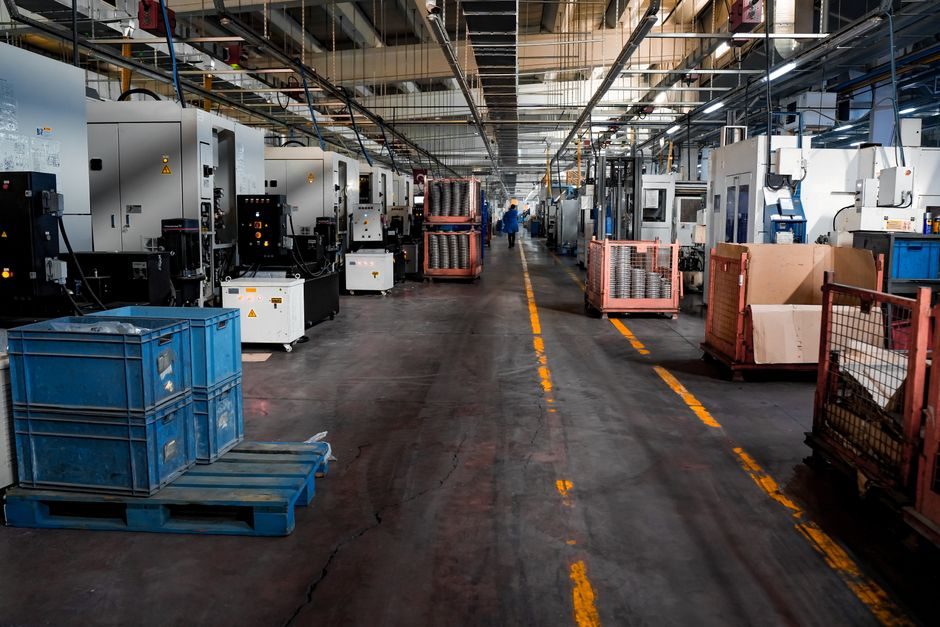
As of 2024 rankings, 14 Chinese battery energy storage system (BESS) integrators held 63% of the global market, with Sungrow at 14% and CRRC at 8%, while the top ten global integrators included seven Chinese firms [S9].
Globally, the DirectIndustry manufacturer index lists 162 energy storage system products across vendors such as CATL, SAFT, Saft, Jinko Solar, VARTA Microbattery, CAMEL GROUP, and PILLER, spanning containerized utility systems down to 5–20 kWh residential racks [S1]. For an engineer building a sourcing shortlist, the first cut is by voltage class and use case rather than brand recognition.
Three BESS Product Tiers by Voltage and Capacity
Tier 1 utility / front-of-meter systems operate at 1,040–1,500 V DC with 2,300–5,015 kWh per container, exemplified by Saft Intensium Max at 1,100 kW / 2,300 kWh, FPR-ESS-5015kWh-L-1500V, and the CATL 1,331.2 V / 4,070 kWh platform [S1][S2].
Tier 2 commercial and industrial (C&I) systems cluster at 400 V AC / 512–584 V DC with 215–1,000 kWh per cabinet, such as Torphan's 800-cell 512 V 500 Ah LFP rack (448–584 V DC window) and FPR-ESS-125kW/261kWh [S2][S4]. Tier 3 residential units run 46.4–55.2 V DC at 5–20 kWh, including VARTA.wall (4.4–10.5 kW output) and the HESS series from CAMEL GROUP [S1].
LFP Has Become the Default Cell Chemistry
Lithium iron phosphate (LiFePO4 / LFP) cells now anchor the majority of BESS SKUs surveyed, with Torphan publishing 800 pieces of 3.2 V 100 Ah LFP in a 160S5P layout rated 512 V DC nominal and 448–584 V DC operating window [S4].
LFP is preferred over NMC for stationary storage because of higher thermal-runaway onset temperature and longer cycle life under daily deep cycling, though energy density per kilogram is lower. CATL's electrochemical platform for power-generation storage, Saft's Intensium Max, and the FPR 280 Ah semi-solid cell all target utility duty cycles with LFP or LFP-blend chemistries [S1][S2].
How to Read a BESS Supplier Datasheet
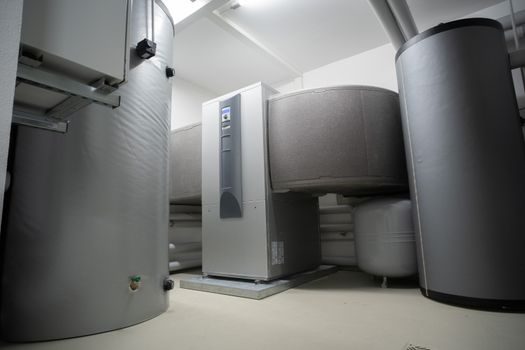
Five parameters separate a credible BESS datasheet from a marketing sheet: PCS rated power in kW, battery capacity in kWh, DC voltage window, round-trip efficiency, and cycle life at stated depth-of-discharge [S1][S2].
A spec engineer should also verify BMS topology (master-slave vs distributed), liquid-cooling vs forced-air thermal management, IP rating of the enclosure, and UL 9540 / IEC 62619 certifications. The DirectIndustry listing for Jinko Solar's 3,440 kWh container cites 20% lower auxiliary power consumption, liquid cooling, and real-time monitoring, all of which are now baseline rather than premium features [S1]. For C&I cabinets like FPR-ESS-125kW/261kWh, PCS, BMS, and EMS are typically integrated into one skid to simplify permitting and grid interconnection paperwork [S2][S7].
Containerized BESS: 20 ft and 40 ft Standard Skids
Standard BESS containers are 20 ft HQ or 40 ft HQ, with a typical 20 ft Mobile-BESS skid at 400 V AC, 250 kW PCS (200 kW or 630 kW optional), and 350 kWh battery capacity, scalable to project requirements [S1].
Larger 40 ft containers reach 0.6 MW / 1.8 MWh, sold on Made-in-China at US$ 54,056–56,386 per piece by Elecnova, with a 500 kW / 1 MWh 20 ft variant at the same price band for tariff arbitrage and peak-shaving use cases [S3]. For microgrid and remote-island duty, the Zhejiang Bangzhao 120 kWh LiFePO4 cabinet (US$ 35,000–50,000 per set MOQ) pairs a BMS-managed LFP battery with PV genset input, sized for off-grid industrial sites [S6].
Where Chinese Integrators Sit on the 2024 Leaderboard
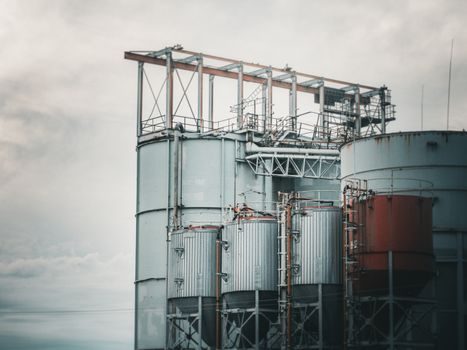
The 2024 global BESS integrator leaderboard shows Sungrow at 14% share (gap to Tesla narrowed from 4 points in 2023 to 1 point in 2024), CRRC at 8%, and seven of the top ten slots held by Chinese firms including Sungrow, CRRC, Envision Energy, Huawei, HyperStrong, BYD, and Xinyuan Smart Storage [S9].
Beyond the top ten, the top-20 Chinese integrator list adds Zhongtian Energy Storage and DianGong Times, reflecting the depth of the domestic supply chain [S9]. For buyers outside China, the practical consequence is that LFP cell supply, PCS stack assembly, and EMS software all pass through a small number of Chinese vendors; cell-level traceability, UN 38.3 transport certification, and IEC 62619 cell testing are the right gating documents at supplier qualification.
Selection Criteria: Matching Supplier Tier to Project Risk
For utility-scale projects above 100 MWh, the shortlist should be limited to top-10 global integrators with audited cell sourcing, because warranty enforcement and grid-code compliance dominate capex decisions [S9].
For C&I projects in the 100 kW–1 MW band, mid-tier Chinese OEMs such as FPR New Energy, DCGROUP (founded 2010, LFP-focused), TORPHAN, and Scupower are competitive on price, with FPR citing 3 GWh of cumulative delivered, under-construction, and in-development capacity [S2][S5]. For residential and small commercial, established brands such as VARTA, CAMEL, and HESS-class products at 46.4–55.2 V DC are the safer pick, with installer network depth mattering more than cell-level differentiation [S1]. A grid-scale BESS sourcing reference and the 2026 BESS spec boundaries article line up additional lithium-ion vs long-duration trade-offs for the same shortlist process.
Trade-off Matrix: Tier 1 vs Tier 2 vs Tier 3 BESS
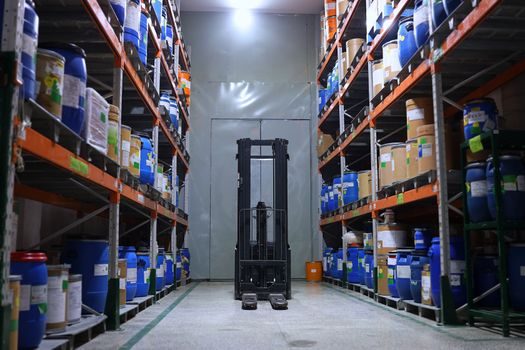
Tier 1 utility (1,000–5,000 kWh, 1,040–1,500 V DC) delivers the lowest $/kWh but longest lead time and tightest grid-code burden; Tier 2 C&I (215–1,000 kWh, 400–600 V DC) balances capex against permitting complexity and is the sweet spot for factory peak-shaving; Tier 3 residential (5–20 kWh, 48 V DC) trades energy density for installer simplicity and safety [S1][S2][S4].
On cycle life, LFP cells in Tier 1 and Tier 2 systems routinely claim 6,000–10,000 cycles at 80–90% DoD, while Tier 3 residential units typically spec 4,000–6,000 cycles at lower DoD. Containerization (20/40 ft HQ) applies to Tier 1 and upper Tier 2 only; below 100 kWh, cabinet form factors with integrated HVAC and fire suppression are the norm [S1][S3][S7].
Common Failure Modes and Sourcing Pitfalls
Three pitfalls recur across BESS procurement: undersized PCS relative to peak load, missing UL 9540A fire-propagation test data, and cell suppliers without UN 38.3 and IEC 62619 documentation at the lot level. [S2]
A datasheet that lists only nominal kWh without a guaranteed round-trip efficiency at the system's rated C-rate is another red flag, because auxiliary losses for HVAC and BMS can eat 5–8% of throughput in liquid-cooled containers [S1]. Finally, warranty terms that exclude DC-DC converter and EMS software from coverage effectively push integration risk back to the buyer, a clause worth flagging during contract review with any top-20 integrator [S9].
Signals to Track After Sourcing
Watch the 2025–2026 BESS integrator leaderboard for share movement between Sungrow and Tesla, and audit cell suppliers for sodium-ion or semi-solid-state variants, since FPR already lists a 280 Ah semi-solid cell on its commercial lineup as of 2026-07 [S2].
Track the TOPCon supply-chain patent pressure for adjacent PV-plus-storage projects, and the TOPCon patent and degradation anchor for paired PV+BESS tariff-shift sizing.
For component-level specifications, see energy meter, storage cage, and storage rack.