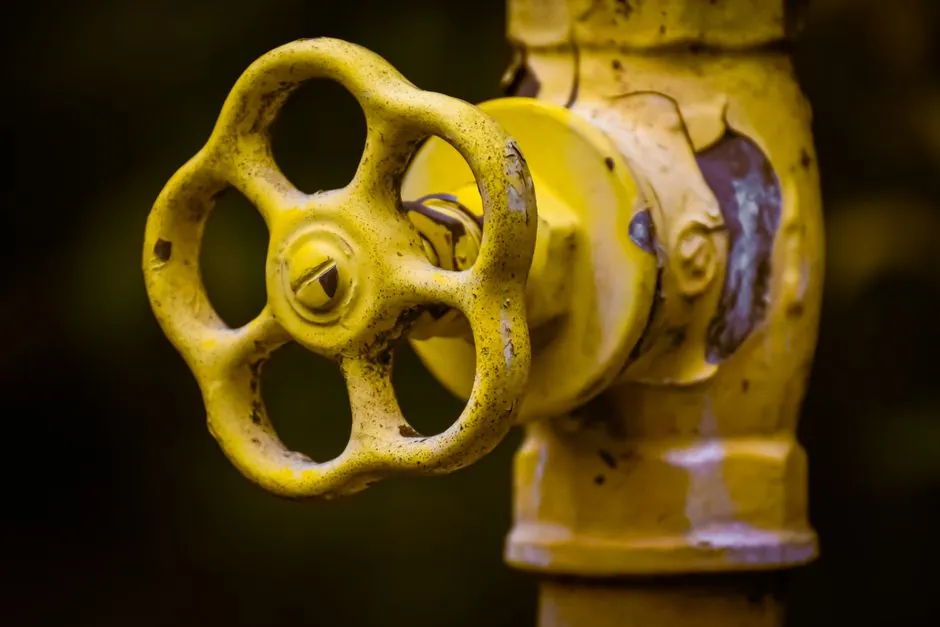
EPDM and PTFE address different problems in diaphragm valves: EPDM is an elastomer optimized for water, steam, acids, and alkalis, while PTFE (including PTFE-faced laminates over EPDM) is a chemically inert fluoropolymer required for aggressive solvents, strong oxidizers, and high-purity service [S1][S2][S3].
PTFE diaphragm cost is typically 5–10× the EPDM price on the same valve body, so a wrong material call multiplies both capex and downtime exposure [S2]. The selection question is not "which is better" but "which chemistry, temperature, and cycling profile does this service actually have" [S4].
Material property baseline: EPDM rubber vs solid PTFE
EPDM (Ethylene Propylene Diene Monomer) shows tensile strength of 10–20 MPa, with good elastic recovery and stable long-term behavior on non-oily fluids, making it the default for water treatment, wastewater, and clean-fluid lines [S2]. EPDM tolerates acids and many alkalis but swells in aromatic and aliphatic hydrocarbons, losing physical properties after solvent exposure [S2].
PTFE behaves almost oppositely: near-universal chemical inertness across strong acids, strong bases, organic solvents, and oils, with a published service range of roughly −40°C to 250°C on diaphragm valves and a low coefficient of friction that reduces wear against the body [S2]. PTFE is not an elastomer, so its elastic recovery is weaker than EPDM or FKM, and it is more sensitive to repeated mechanical flexing, positive inlet pressure, and assembly loads [S4][S6].
Temperature and pressure operating windows
PTFE diaphragms in manual diaphragm valves are commonly rated for −40°C to 250°C, with one AODD-pump OEM publishing a general range of 40°F to 212°F (about 4°C to 100°C) for its PTFE diaphragms, a narrower band that reflects pump-specific mechanical limits rather than PTFE's intrinsic thermal capability [S2][S4].
EPDM diaphragms operate within a more limited thermal envelope, typically capping well below PTFE's upper limit, and degrade faster in the presence of hydrocarbons and certain polar solvents; Viton (FKM) sits between the two, with a published range of −20°C to 200°C and tensile strength of 15–25 MPa [S2]. For a cross-material elastomer vs metal-gasket comparison on heat, see this temperature range decision map.
Chemical compatibility decision logic
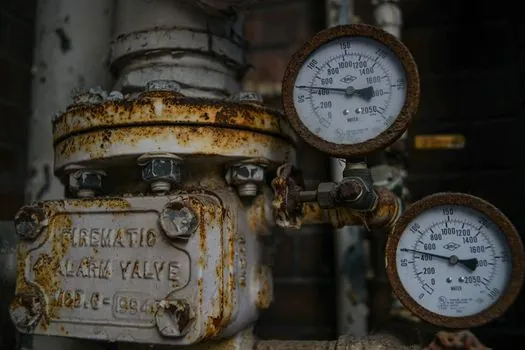
For water, steam, dilute acids, alkalis, and polar cleaners, EPDM is the correct first choice on cost and resilience; for strong acids, strong bases, organic solvents, halogenated media, and ultra-high-purity transfer, PTFE (solid or PTFE-faced) is the correct first choice, regardless of price [S1][S3][S4].
Compatibility must be checked against the full wetted path, not only the diaphragm: pump body, valve seats, O-rings, and center-body material can still fail in aggressive service even when a PTFE diaphragm is installed, and concentration, temperature, contaminants, and cleaning chemicals can flip a "compatible" rating on a chart into a real-world failure mode [S4]. PTFE-faced EPDM laminates, where a thin PTFE skin is bonded over an EPDM core, recover much of the chemical and temperature envelope of solid PTFE while keeping EPDM-like flexure, and are now a common middle-ground build for diaphragm pumps [S7].
Mechanical behaviour, cycling, and failure modes
PTFE's lower tolerance for mechanical deformation is the dominant failure driver, not chemical attack: excessive inlet pressure, high cycling rates, abrasive slurries, and over-torqued assembly can all shorten PTFE diaphragm life or crack the facing [S4].
EPDM's failure mode is the mirror image: solvent-induced swelling, hydrocarbon attack, and aging at the upper end of its temperature window, rather than fatigue cracking, and it tolerates far more mechanical abuse per cycle than solid PTFE [S2][S6]. The practical consequence: in a clean, low-pressure water line, EPDM will typically outlast PTFE simply because the flexing never stresses PTFE's weak point; in a hot, aggressive solvent line, EPDM will swell and fail long before the PTFE is mechanically challenged [S1][S4].
Cost, lead time, and total-cost trade-off
On a per-diaphragm basis, PTFE typically costs 5–10× EPDM, with Viton (FKM) sitting between at 2–3× EPDM, a price gap that is significant on large valve inventories [S2]. For a gasket-side comparison where FKM and EPDM meet mineral oil, this FKM vs EPDM decision guide gives the per-fluid breakdown.
Total cost of ownership inverts the simple unit-price view: in aggressive service, an EPDM diaphragm that lasts weeks before swelling is far more expensive than a PTFE diaphragm that lasts years, while in benign water service the PTFE premium buys no life extension and only adds stocking complexity [S1][S4]. PTFE's more complex processing also raises minimum-order quantities and lead time for special sizes compared with EPDM, which is a near-stock item at most pumps, valves, and piping distributors [S2].
Selection criteria: when each material wins
Choose EPDM when the fluid is water, steam, dilute acid, dilute alkali, or a polar water-based cleaner; when temperatures stay within the elastomer's window; when cycling is frequent and pressure spikes are possible; and when cost and lead time dominate the spec [S1][S2].
Choose PTFE (solid or PTFE-faced) when the fluid is a strong acid, strong base, organic solvent, halogenated compound, or any media where an EPDM or FKM chart shows "not recommended"; when temperatures exceed EPDM's envelope toward the 200–250°C band; when FDA or ultra-high-purity requirements apply; and when the user explicitly accepts the 5–10× material premium in exchange for chemical inertness [S2][S4]. Choose Viton (FKM) as the middle option when oils, fuels, and moderate-temperature solvents are in play, and the price premium over EPDM is justified by life-cycle gain [S2].
Two cross-comparisons clarify the choice on a per-criterion basis: on chemical resistance, PTFE ≈ Viton > EPDM in aggressive service, while EPDM ≥ Viton > PTFE in benign water/steam; on mechanical flex life, EPDM > Viton > PTFE; on temperature ceiling, PTFE (up to ~250°C) > Viton (up to ~200°C) > EPDM; on unit cost, EPDM < Viton (2–3×) < PTFE (5–10×) [S2][S4]. The decision therefore reduces to: which axis (chemistry, temperature, cycling, cost) dominates this specific line [S1][S4].
Use-case shortlist and sourcing notes
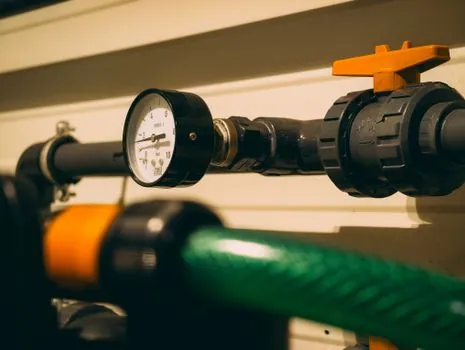
Typical EPDM fits: municipal water, RO permeate, cooling-water chemical dosing, low-pressure steam, CIP with alkaline detergents, and PTFE dosing-free acid neutralization [S1][S2]. Typical PTFE / PTFE-faced EPDM fits: sulfuric and hydrochloric acid manifolds, solvent transfer in API and pharma plants, sodium hypochlorite injection, hot caustic service, and any line where the OEM publishes an EPDM rubber "X" or "not recommended" code in the chemical chart [S3][S4].
For each project, pull the OEM chemical-compatibility chart for the specific concentration and temperature, then verify that the valve body, seat, and O-ring set match the diaphragm, since the diaphragm alone does not protect mismatched downstream wetted parts [S4]. Where PTFE is mandated by chemistry but cycling is heavy, spec a PTFE-faced EPDM laminate rather than solid PTFE, then confirm the OEM's published positive-inlet-pressure and temperature limits for that laminate grade before purchase [S4][S7].