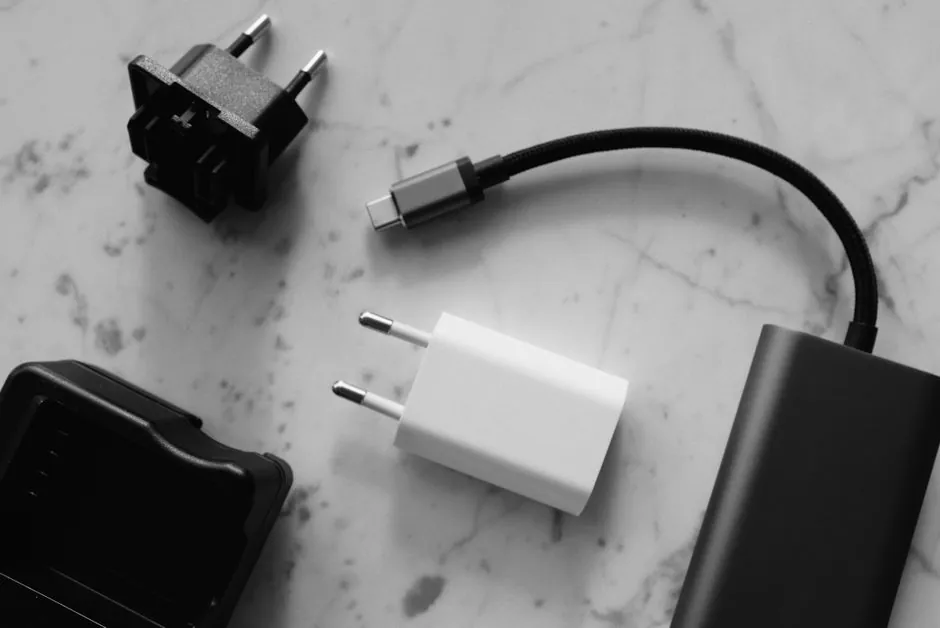
EV charger OEM/ODM manufacturing in 2026 is concentrated in Chinese industrial clusters (Zhejiang for EV controllers, Guangdong for portable power and GaN chargers) supplying UL/ETL/CE-certified Level 2 AC and Level 3 DC units with full PCBA, enclosure and OCPP integration customisation [S1][S4][S5].
CPOs, brand owners and fleet buyers evaluating these suppliers need a spec-first framework: which model (OEM, ODM, or hybrid) fits which commercial situation, what certification set is non-negotiable, and which design artefacts the manufacturer must own versus which the buyer should keep in-house.
Defining OEM, ODM and the Hybrid OBM Tier
OEM (Original Equipment Manufacturer) execution means the buyer supplies a complete specification, including enclosure drawings, PCBA schematics and firmware behaviour, and the factory executes assembly, test and shipment under the buyer's brand [S8]. The buyer's design lock-in is total, and the factory's value-chain activity is limited to fabrication, assembly and quality control.
ODM (Original Design Manufacturer) execution flips the ownership: the factory contributes a reference design and negotiates specification deltas with the buyer's product team, then produces under the buyer's brand [S9]. ODM factories must demonstrate product design and development capability, plus assembly capacity, and they typically retain reusable IP blocks (power topology, OCPP stack, connector mechanics) that they license across multiple brand customers.
A third tier, OBM (Original Brand Manufacturer), is where the factory sells under its own brand and conflicts with existing OEM/ODM customers; this path is structurally rare in EV charger supply chains and is flagged here mainly because some CPO RFPs conflate the three [S8].
Decision Criteria: Control Depth, Certification, MOQ and Lead Time
Four criteria separate a defensible OEM selection from a defensible ODM selection: design ownership, certification scope, MOQ flexibility and NRE cost recovery [S1][S4].
On design ownership, OEM contracts push 100% of the BoM and firmware liability to the buyer, which is rational when the buyer already has an in-house power-electronics team and wants to lock connector and cable architecture for a 10-year fleet refresh cycle. ODM contracts share that liability and amortise the factory's reference design across the buyer's volume, which compresses time-to-market from a typical 9 to 14 months for a clean-sheet OEM programme to roughly 4 to 7 months for an ODM adaptation.
On certification scope, the working set for North American export is UL 2594 (AC) and UL 2202 (DC fast), supplemented by ETL listing through Intertek; for the European Union, CE under the Low Voltage Directive and the EMC Directive, plus EN 61851-1 for the charging station itself; for the UK, UKCA; FCC Part 15 for unintentional radiators is essentially universal [S1]. The Linkpower and Winline product pages explicitly bundle ETL, FCC, CE and UKCA as a "full compliance for global export" stack, and they run OCPP 1.6J and OCPP 2.1 on their AC and DC families [S1][S6].
On MOQ, the EV-charger tier diverges sharply from the portable-power-bank tier exposed on the same Made-in-China.com listings: an emergency USB power bank from Shanghai Touch ships at MOQ 2,000 pieces at US$ 6.39-9.15 per piece [S3], while a VEKON EV charger controller from Zhejiang requires formal ODM engagement with no published per-piece band, reflecting the much higher per-unit BoM cost of a 7 kW AC or 30 kW DC module [S4].
Product Range and Certification Stack Across Major Suppliers

Linkpowercharging (Guangdong) offers a Level 2 / Mode 3 AC family with OCPP 1.6J and 2.1, a Level 3 / Mode 4 DC family built on 30/40 kW modular power units, and an OEM/ODM service covering PCBA, logo, case design, exterior moulding and API integration, with ETL, FCC, CE and UKCA listed as the certification stack [S1].
Winline Technology (Shenzhen) markets a parallel "next-generation" stack with the same Level 2/Level 3 split and explicit OEM/ODM positioning, also targeting CPOs and global infrastructure rollouts [S6]. VEKON (Yuqing, Zhejiang, established 2002, ~300 staff, registered capital 2.4 million CNY) sits further up the BoM: its main products are RCCB, MCB, RCCB relays, EV chargers, RCMU and charger controllers, and it lists ODM service as its R&D capacity, which is the deeper integration tier [S4].
Portable-charger and power-bank adjacencies matter because they expose pricing bands CPOs sometimes use as a benchmark: Borun Intelligence (Guangdong) ships a 65 W GaN fast charger combined with a 2,000 to 5,000 mAh power bank at US$ 17.30-18.50 with a 10-piece MOQ [S5], and an Ullwin Shanghai solar power bank at US$ 22-24 with a 1,000-piece MOQ [S3]. These are consumer-grade benchmarks, not EVSE pricing, but they confirm the Guangdong cluster's pricing discipline at the low-power end of the same OEM/ODM supply chain.
Application Routing: Who Should Buy OEM, Who Should Buy ODM
Choose OEM when the buyer needs connector or cable lock-in across a multi-year fleet, must keep firmware signing keys in-house, or has an existing power-electronics group that can author a complete BoM and schematic package. The trade-off is a 9 to 14 month development window and a higher NRE line, partly because the factory cannot amortise a reference platform onto the buyer's volume. [S3]
Choose ODM when the buyer is a CPO, hospitality group or fuel retailer entering EV charging for the first time and needs a working OCPP 1.6J/2.1 back-office integration in months, not years. The Linkpower and Winline ODM packages explicitly bundle OCPP integration and enclosure customisation, which is precisely the layer most first-time CPOs cannot staff internally [S1][S6].
Choose a hybrid (factory reference design, buyer-owned firmware and branding) when the buyer wants to skip the enclosure and PCBA design cycle but needs to retain back-office software ownership, a common shape for European utility-affiliated CPOs that run their own roaming hub.
For related context on how similar OEM/ODM trade-offs play out in adjacent power-electronics categories, see the power-grid OEM vs ODM selection map.
Failure Modes and Common Specification Pitfalls
Three specification pitfalls recur in 2025-2026 EV charger ODM engagements, and they map directly to control architecture choices on the factory side [S1][S4].
First, OCPP version mismatch: a factory may ship OCPP 1.6J firmware on a charger whose hardware can run OCPP 2.1, but the upgrade path is rarely free and is sometimes contractually blocked, so the buyer ends up with a stranded asset when the national roaming hub moves to 2.1. The fix is to require OCPP 2.1 certification evidence (a SiC test report or an OCA-issued certificate) before signing the ODM SOW [S1].
Second, certification leakage: ETL is not equivalent to UL listing in all U.S. jurisdictions, and CE under the Low Voltage Directive is not equivalent to UKCA post-Brexit; a charger that ships "CE + ETL" only is non-compliant in Great Britain, and that gap is a common RFP omission [S1].
Third, modular power-unit granularity: Linkpower's 30/40 kW modular blocks are a useful procurement lever, but the buyer must specify the paralleling architecture (ring bus, star, or daisy-chain) up front, because retrofitting the controller topology in the field requires a new EMC test pass and a fresh FCC Part 15 verification [S1].
Side-by-Side Selection Matrix: OEM vs ODM vs Hybrid
For procurement teams writing the actual SOW, the comparison below summarises the four decision dimensions for each engagement model.
OEM scores lowest on time-to-market (9-14 months), highest on design ownership (100% buyer-side), mid on certification cost (buyer pays for every test pass) and mid on per-unit cost (no platform amortisation). ODM scores highest on time-to-market (4-7 months), lowest on design ownership (factory retains reference IP), lowest on incremental certification cost (most certificates are pre-existing) and lowest on per-unit cost for a standard configuration. Hybrid sits in the middle on every dimension and is the right answer for utility-affiliated CPOs that need back-office software control but not enclosure ownership.
The most expensive line item hidden in OEM contracts is the second-source qualification of the controller IC and the connector, because the buyer, not the factory, owns the obsolescence monitoring. In ODM contracts, that monitoring cost is rolled into the per-unit price; the buyer trades cash for a single point of accountability. Neither model is universally cheaper, and the correct answer depends on whether the buyer's finance team prefers capex amortisation across a long fleet life or opex on a per-unit recurring line.
Standards, Sourcing and Verifiable Next Signals

Standards to anchor the SOW against: UL 2594 for AC EVSE, UL 2202 for DC fast, EN 61851-1 for the European charging-station side, IEC 61851-1 globally, IEC 62196 for the connector family, and OCPP 1.6J or 2.1 from the Open Charge Alliance for back-office integration; FCC Part 15 Class A is the practical U.S. EMC floor, and CE/UKCA cover the European and British markets respectively [S1]. For grid-side metering and demand-response integration, buyers will also touch industrial valve and flow meter procurement at the site level, because a DC fast site is a small utility substation, not just an appliance.
Trackable signals for the next procurement cycle: (a) whether OCA issues a formal OCPP 2.1 certification tier that distinguishes "hardware-capable" from "firmware-certified" chargers, because that gap is where stranded-asset risk lives; (b) whether ETL-listed factories in Zhejiang and Guangdong begin publishing per-piece pricing on 30 kW DC modules comparable to the US$ 17.30-18.50 power-bank band that Borun currently publishes [S5]; (c) whether the Made-in-China.com "R&D Capacity: ODM" tag continues to migrate from trading companies to actual manufacturers, since the platform currently lists many trading-company "OEM/ODM" entries that are not vertically integrated [S2][S3][S7].
For the relevant spec sheets and selection criteria, see additive manufacturing material.