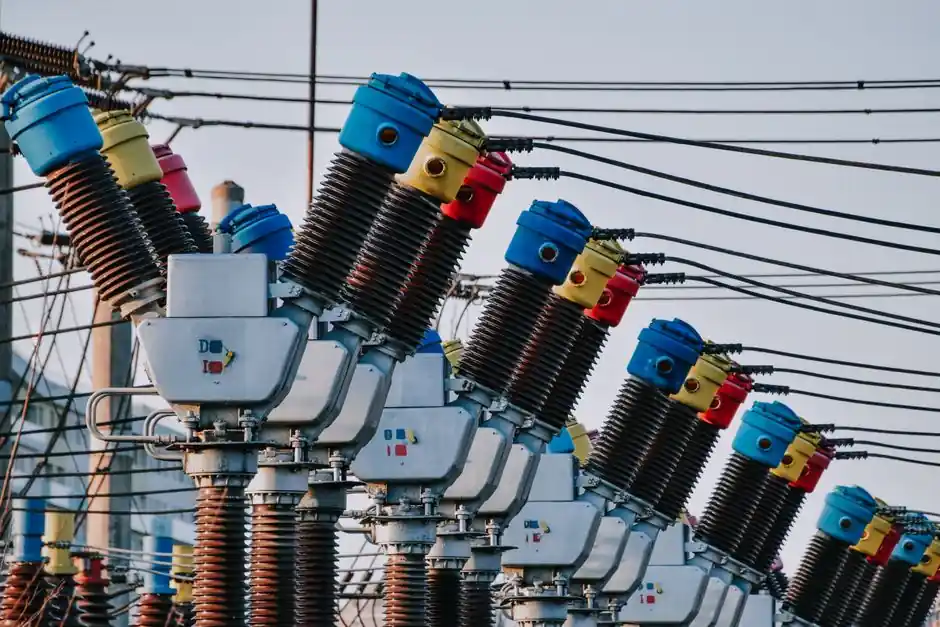
Ex d flameproof enclosures contain an internal explosion and cool escaping gases through machined flame paths, while Ex e increased-safety enclosures prevent ignition in the first place by eliminating arcs, sparks, and hot surfaces above the gas group's auto-ignition limit [S2]. The two protection concepts coexist on the same Zone 1 motor starter, where the contactor chamber is built Ex d and the terminal chamber is built Ex e, a so-called Ex de combination now standard on most ATEX/IECEx motor protection gear [S2].
The decision between the two is driven by what lives inside the box: devices that intrinsically make sparks or arcs during normal operation (contactors, relays, switches, fluorescent control gear) almost always require an Ex d chamber, whereas passive wiring, terminals, and cable entries are routinely specified as Ex e to cut weight, cost, and maintenance time [S1][S7]. Ex e is described in OEM guidance as "more lightweight and compact than Ex d" because the enclosure does not need to contain a 1.0 MPa-class internal deflagration pressure, so wall thickness, fastener torque, and flange machining are all reduced [S7].
How Ex d Flameproof Protection Works
An Ex d enclosure is engineered to withstand the pressure developed during an internal explosion and to prevent flame transmission to the surrounding atmosphere through a controlled flame path [S3]. The flame path is a precision-machined gap on the lid-to-body joint, on the shaft of a rotating operator, or on a bushing, typically held to a gap of 0.10-0.20 mm and a length of 6-25 mm depending on gas group, so that hot gases cool below the auto-ignition temperature of the external atmosphere before they exit [S2][S4].
Materials for Ex d housings are cast aluminum alloys (commonly AlSi) or stainless steel grades AISI 304 and AISI 316L, with borosilicate glass used for inspection windows, because the enclosure must absorb the mechanical shock of the internal deflagration without rupture or permanent deformation [S3][S4]. Installation discipline is strict: every flame path must remain undamaged, every cable entry must use a certified Ex d cable gland, and the fastener torque on the cover bolts is specified by the certificate, not by the installer [S2][S4].
How Ex e Increased-Safety Protection Works
Ex e increased-safety protection assumes that arcs, sparks, and excessive surface temperatures will not occur during normal operation, and the design rules are aimed at proving that assumption: enhanced creepage and clearance distances on terminals, IP54 or higher enclosure sealing, restricted surface temperatures relative to the T-class, and mechanical impact resistance to at least 7 J on accessible parts [S1][S3]. The Ex e approach is widely used on junction boxes, marshalling cabinets, lighting junction housings, and any enclosure that contains only passive components [S1][S2].
Because Ex e equipment does not need to survive an internal explosion, the enclosure can be lighter, the cover can be hinged, and the entry threads can be standard metric, which together deliver a measurable reduction in installed cost and a simpler maintenance routine compared with Ex d equivalents [S1][S7]. OEM commentary places the simplification chiefly in three areas: no flame-path machining, no heavy cover bolts, and no need to depressurize the enclosure before opening [S7].
Ex d vs Ex e Decision Matrix
Comparing the two concepts against four engineering criteria gives a clean selection rule. On ignition source inside, Ex d allows and contains them, while Ex e excludes them by design [S2][S6]. On enclosure mass and cost, Ex d is heavier and more expensive because of flame-path machining and thicker walls, while Ex e is lighter and cheaper [S1][S7]. On inspection and maintenance, Ex d requires tooling discipline (no field drilling, no thread damage, no unauthorized gaskets), while Ex e follows standard electrical-enclosure practice [S2][S7]. On typical Zone 1 product fit, Ex d is specified for control stations, motor starters, and some luminaires, while Ex e is specified for terminal boxes, junction boxes, and increased-safety luminaires [S2].
For Zone 1 and Zone 2 applications the most common single decision rule is simple: if the equipment intrinsically produces sparks or hot surfaces during normal operation, the chamber must be Ex d; if it does not, Ex e is usually sufficient [S6]. Hybrid enclosures marked Ex de use Ex d for the contactor side and Ex e for the terminal side, which is the dominant factory pattern for Zone 1 motor starters and floodlights today [S2]. For an explainer of the wider protection-type family, see the explosion-proof electrical equipment overview.
ATEX, IECEx, Gas Groups, and T-Class
Under the ATEX Directive 2014/34/EU and the IEC 60079 series, Ex d and Ex e are Equipment Protection Level (EPL) Gb concepts and are accepted in Zone 1 (and Zone 2 by extension), while EPL Gc is for Zone 2 only [S3][S5]. The certificate string on the nameplate, for example "Ex db IIB T4 Gb", tells the engineer the protection type (db), gas group (IIB), maximum surface temperature class (T4, which means 135 °C), and the equipment protection level (Gb) [S2][S3].
Gas groups run IIA (propane), IIB (ethylene), and IIC (hydrogen, acetylene) with hydrogen demanding the tightest flame-path tolerances, and T-classes run T1 (450 °C) to T6 (85 °C), each capped well below the relevant gas auto-ignition temperature [S2][S3]. Surface-temperature limits are especially tight in dust atmospheres, where the maximum surface temperature must sit at a defined safety margin below the dust cloud or dust layer ignition temperature, a margin that is set per material in the IEC 60079-31 dust-protection standard [S3]. For the broader ruleset around protection concepts, see the explosion-proof equipment encyclopedia entry.
Typical Applications by Site
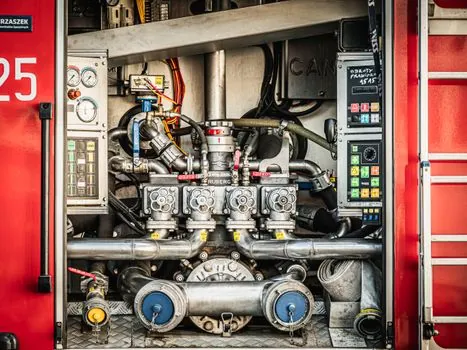
Ex d enclosures are commonly used for flameproof control stations, hazardous-area lighting with certified flameproof construction, motor starters and switchgear where the certificate permits, and plugs, sockets, and isolators in hazardous areas [S2]. In oil refineries, offshore platforms, and chemical reactors, the motor starter for a Zone 1 pump is the textbook example: contactor in an Ex d chamber, terminals in an Ex e chamber, one shared Ex de nameplate [S2][S4]. For a closer look at how this plays out in a Zone 1 lighting build, the explosion-proof light selection guide covers Ex d and Ex e luminaire variants side by side.
Ex e enclosures are the default for junction boxes, marshalling cabinets, increased-safety luminaires, and any passive wiring enclosure in Zone 1 or Zone 2, and they are the workhorse of the ATEX distribution segment [S1][S2]. The explosion-proof distribution overview walks through the typical Zone 1 distribution panel built almost entirely from Ex e busbar housings, terminals, and Ex e cable entries. Ex e also covers terminal chambers on Ex de motor starters and lighting gear, and it is the predominant technology on the operator-interface side of Zone 1 control stations [S1][S2].
Common Mistakes When Specifying Ex d or Ex e
Three specification errors show up repeatedly. The first is treating Ex e as a cheaper drop-in for Ex d: Ex e cannot be used where the equipment intrinsically arcs, and any later addition of a contactor, relay, or indicator lamp with a switching contact can void the entire enclosure's certificate [S2][S6]. The second is field-drilling or field-tapping an Ex d enclosure to add a cable gland, which destroys the certified flame path and the IP rating in a single operation [S2]. The third is mismatching gas group: an Ex d IIB enclosure is not automatically safe in a hydrogen (IIC) atmosphere, because the flame-path gap and length requirements tighten as the gas group moves from IIA to IIC [S2][S3].
A second family of errors is paperwork: many inspectors find that the ATEX/IECEx certificate number, the EPL, the gas group, the T-class, and the ambient temperature range are not all on the nameplate, or that the ambient range is narrower than the site's actual minimum and maximum [S2][S3]. The full marking chain (Ex d or Ex e, gas group, T-class, EPL, certificate, and installation instructions) must be checked against the area classification document before energizing, and the maintenance plan must respect the same chain, including gasket replacement intervals on Ex d covers [S2][S4].
Material and Mechanical Considerations

Stainless steel grades AISI 304 and AISI 316L dominate offshore, pharmaceutical, and chemical-plant Ex d builds because of chloride resistance, while cast aluminum (commonly AlSi) is preferred offshore for weight reduction and is also widely used for smaller Ex d housings on luminaires and control stations [S3][S4]. For Ex e, the material choice is more flexible, since the enclosure does not have to contain a deflagration, and glass-reinforced polyester (GRP) is common for Zone 1 junction boxes where non-metallic, non-corroding enclosures are wanted [S3].
On the assembly side, every Ex d cable entry must use a certified barrier gland or compression gland, the silicone gaskets on the cover must be replaced on a documented interval, and the powder-coat or paint finish must not bridge the flame path, since any foreign material in the joint is treated by the standard as a non-conformance [S2][S4]. On explosion-proof button stations, the actuator shaft is the most flame-path-sensitive component, and shaft bearings, O-rings, and operating levers must match the original certified parts.
On the labor side, the explosion-proof labor and installation rules cover the practical side of torque values, gas-group-specific cable glanding, and inspection intervals that distinguish Ex d from Ex e enclosures. As a sanity check, surface temperature is the single most-cited value on the nameplate after the protection type itself, and T4 (135 °C) is the most common spec for Zone 1 motor gear, with T5 (100 °C) and T6 (85 °C) reserved for higher auto-ignition gases or for confined thermal-mass designs [S2][S3].
Track these signals next: confirm the latest revision of the IEC 60079-1 (Ex d) and IEC 60079-7 (Ex e) standards against your certificate database, since this is where flame-path dimensions, T-class ranges, and the rules for Ex de combination enclosures are revised; and watch the IIC gas group column, because hydrogen and acetylene handling is the segment where Ex d versus Ex e selection most often drives hardware choice on new builds.
This topic is covered further in ASTM A536 60-40-18 vs 80-55-06: Spec Decision Map for Ductile Iron Castings.