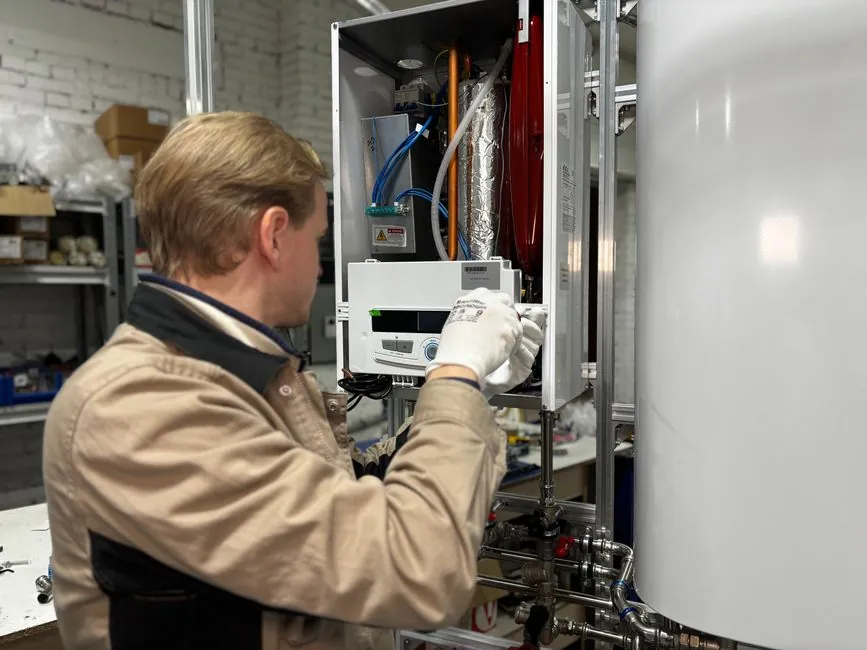
Paramagnetic oxygen analyzers used in chemical and petrochemical service are frequently installed inside purged and pressurised (Ex p) enclosures when the analyzer itself is not certified for the surrounding Zone 1 or Zone 2 atmosphere, with the purge system selected to match the analyzer's internal release risk [S1][S2].
Expo's case-study work on gas detectors in Zone 2 specifically chose Ex p over other protection concepts because many alternative Ex protection methods were not operationally compatible with the analyzer, leaving purge and pressurisation as the most flexible and cost-effective path [S1].
Why Ex p Wins for Uncertified Paramagnetic Cells
Two competing protection philosophies are used for process analyzers in hazardous areas: containment in explosion-proof (Ex d) cast enclosures, and exclusion through purge and pressurisation (Ex p) that holds a protective gas inside a standard enclosure above the ambient hazard [S2].
Paramagnetic oxygen cells are physically large, often need a flowing sample stream, and cannot easily be packaged inside a heavy Ex d cast housing with flame arrestors on every gas port, so designers regularly route the analyzer into a purged cabinet where the cell sits in a benign internal atmosphere [S1][S4].
For sample conditioning hardware, leak-tight purge cabinets are also a common way to host oxygen detectors, sample pumps, and flow meters on the same skid without re-certifying each instrument [S4].
Ex p Purge Types X, Y, Z and When Each Applies
Ex p purge systems are categorised by how much reliance is placed on the purge cycle versus the enclosure's own integrity, and the selection maps directly onto the zone classification and the internal source of release [S2].
Type X purge reduces the enclosure's interior classification from Zone 1 to a non-hazardous area and is specified for Zone 1 analyzer cabinets, while Type Z reduces Zone 2 to non-hazardous and is the typical minimum for Zone 2 detector skids [S2]. Leakage compensation and continuous-dilution variants sit alongside these as alternative operating modes for cabinets that cannot tolerate a full shutdown purge [S2].
Expo's product line mirrors this split, offering MiniPurge Type X, MiniPurge Type Z (Y), SmartPurge II, SmartPurge Z, and a Dust Protection Type X and Z family that share the same control topology but differ in the purge cycle and leakage threshold they enforce [S1].
Containment vs Exclusion: Decision Criteria for Analyzers

Engineers choosing between an Ex d explosion-proof cabinet and an Ex p purged cabinet for a paramagnetic oxygen analyzer usually score the options on the same four criteria, and the table that follows is the one to use in a hazard analysis meeting [S2][S4].
First, internal source of release: paramagnetic analyzers handling flammable sample blends (for example, O2 in H2) carry an internal release risk that purges with continuous dilution address better than an Ex d housing, while analyzers handling non-flammable air or inert gas can sit in either topology [S2][S3].
Second, serviceability: Ex p cabinets allow the door to be opened under permit-to-work after a controlled purge cycle, which matters for electrochemical or paramagnetic cells that need periodic cell replacement, whereas Ex d cabinets generally require gas-free plant shutdown and a full flame-arrestor inspection [S2][S4].
Third, thermal management: paramagnetic cells drift with temperature, so the enclosure needs active cooling or a temperature-controlled purge, a feature that is far easier to add to a sheet-steel purged cabinet than to a cast Ex d enclosure [S2].
Fourth, certification scope: an Ex d analyzer is one certified assembly, but a purged cabinet can host any combination of dissolved oxygen meter style sensors, sample handling, and HMI on a single declaration, which lowers the per-instrument certification cost on analyzer skids [S2][S4].
Sample Gases, Internal Release, and Continuous Dilution
The single biggest design driver inside an Ex p analyzer cabinet is whether the sample gas itself is flammable, because that decides whether a one-shot purge is acceptable or whether the cabinet must run continuous-flow dilution with a defined minimum flow [S2].
Continuous dilution bleeds a controlled flow of protective gas through the enclosure at all times, holding the analyzer compartment above its lower flammable limit (LFL) margin even if a sample line develops a small leak, which is a common mitigation when the analyzer is fed from a process stream above its auto-ignition concern [S2].
Process Sensing's Michell XPM601 paramagnetic oxygen analyzer is certified to ATEX, IECEx, UKCA, and cQPSus with IEC 61508 SIL2 capability and is rated for measurement of 0 to 5% O2 in H2, exactly the flammable-sample case that drives continuous-dilution cabinet design [S3]. Companion pressure transmitters and flow hardware on the same skid are typically housed in the same purged envelope so they share one certification boundary [S2][S4].
Cabinet Construction, Leakage Targets, and Pressure Integrity
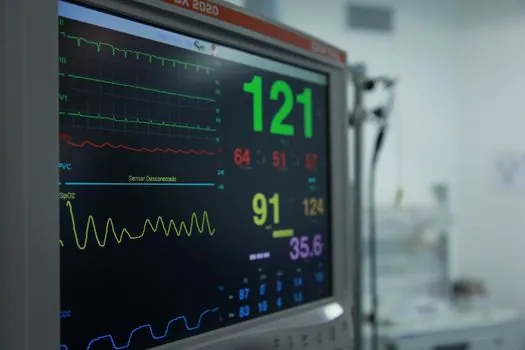
An Ex p cabinet is only as good as its leakage rate, because the entire safety argument rests on the cabinet being able to hold positive pressure relative to the surrounding hazardous atmosphere [S1][S2].
Expo's MiniPurge and SmartPurge families target pressurised enclosures with a defined leakage compensation rate, typically specified in volume exchanges per hour, and the cabinet must pass a leak test before the purge controller will allow the analyzer to be energised [S1]. Pre-start ventilation systems (PV 3PV, 5PV, 7PV) are used to flush the enclosure with a measured volume of clean air or inert gas before the analyzer power is applied, which is the only safe way to start an Ex p analyzer from a known gas-free state [S1].
For sample gas in and out, flame arrestors are still required on the analyzer's own gas ports even when the cabinet is purged, because the internal atmosphere can be ignited by a fault inside the cell before the enclosure's positive pressure has had time to respond [S4]. Sidecar ancillaries such as industrial valves and flow meters on the analyzer skid are usually placed in their own certified section or in a sub-enclosure that is independently purged, rather than relying on the main analyzer cabinet to do the job [S2][S4].
When NOT to Specify a Purged Enclosure
Ex p is not the right tool when the analyzer's process sample is itself above its auto-ignition temperature, because no protective gas inside the cabinet can dilute a sample that is already burning at the cell inlet [S2].
It is also a poor fit for very small, lightweight detector heads that could be supplied as factory-certified Ex d units with a much smaller cabinet footprint, since the purge controller, valve train, and pressure switch add cost and panel space that an Ex d head does not need [S1][S4]. Operators who need to swap the analyzer weekly should weigh the time spent on controlled-purge restart procedures against the simpler gas-free-and-open approach of an Ex d cabinet, especially in plants without reliable instrument air [S2][S4].
Standards Landscape and Where to Anchor the Design
Designers anchor Ex p analyzer cabinets against three standard families: the IECEx / IEC 60079-2 series for the purge and pressurisation concept itself, the NFPA 496 / NEC Class I framework that North American plants still use, and the ATEX 2014/34/EU equipment directive for EU installations, with the exact zone mapping done against IEC 60079-10-1 area classification [S2]. Functional safety for the analyzer inside the cabinet is typically addressed through IEC 61508 SIL 2 capability, as declared on instruments such as the Michell XPM601 paramagnetic and the Ntron SIL-O2 compact O2 analyzer [S3].
Trackable signals to watch over the next two quarters are new IECEx CoC issuances for combined Ex p plus SIL 2 oxygen analyzer skids, and any project references showing purge cycle times below the typical 5 to 10 minute pre-start ventilation window for Zone 1 cabinets [S1][S2].
See also our earlier report, AFS Grain Fineness Number Selection for Casting Surface Finish.