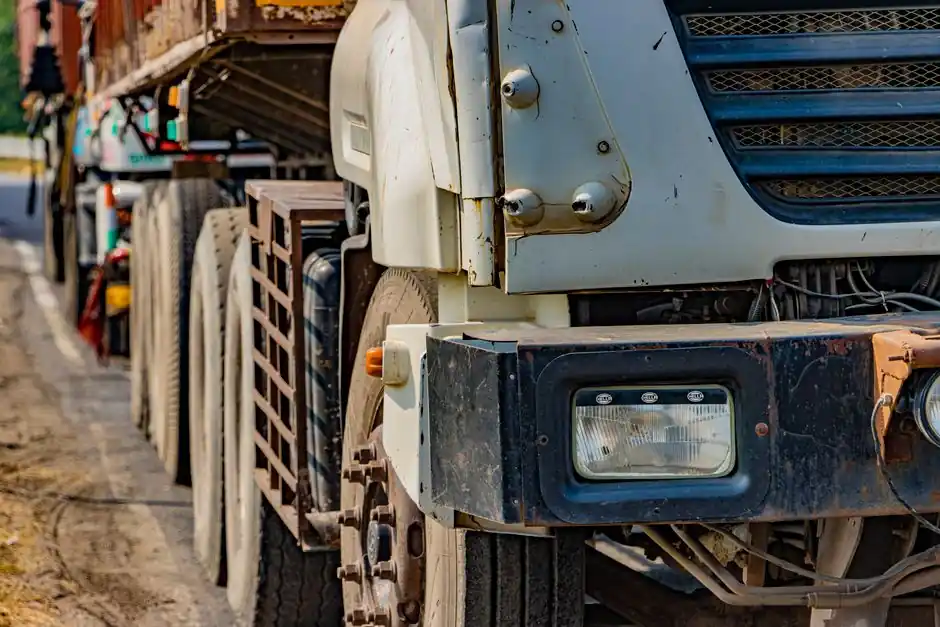
On U.S. Interstate highways, an unpermitted load may not exceed 8 ft 6 in (2.59 m) in width, 13 ft 6 in (4.11 m) in height, or 80,000 lb (36,287 kg) gross vehicle weight, and any one of these three thresholds being crossed triggers state-by-state oversize/overweight permitting on every leg of the route [S2].
Typical transport envelopes for tracked excavators span roughly 7 ft 6 in to 11 ft 1 in (2.29–3.38 m) wide and 8 ft 4 in to 11 ft 3 in (2.54–3.43 m) high once the boom is lowered and the bucket is removed, putting mid-size and large machines firmly inside permit-required territory before any attachment is added [S4]. The reference excavator spec sheet sits next to this haul-envelope question, since operating weight and shipping weight diverge once the boom, stick, and bucket are pinned or removed.
Where the Three Federal Thresholds Sit, and What Each One Triggers
Width above 8 ft 6 in, height above 13 ft 6 in, length above 53 ft (some states use 48 ft on the trailer plus load), or gross weight above 80,000 lb each independently requires an oversize/overweight permit in every state the load crosses, with permit fees, lead times, and escort-vehicle rules set per state rather than federally [S3][S5]. A second width trigger fires at 12 ft (3.66 m): above that, a load is generally treated as a super-load, with route surveys, police escorts, and often travel-time curfews layered on top of the standard permit [S7].
For height, the practical limit is the trailer's loaded deck plus the machine's shipping height, not the machine's cab-and-boom working height: a 10 ft 11 in (3.33 m) excavator on a 24 in (0.61 m) lowboy deck measures 12 ft 11 in (3.94 m) loaded, comfortably under the 13 ft 6 in cap, while the same machine on a standard 60 in (1.52 m) flatbed deck would push to roughly 13 ft 11 in and need permits plus route clearance checks for every overpass on the route [S4].
The 80,000 lb gross figure is the combined tractor plus trailer plus machine plus fuel plus any secured attachments, not the excavator's sticker weight, and the Federal Bridge Formula redistributes legal axle loads based on axle spacing so a long-wheelbase lowboy can legally carry more than a short-wheelbase flatbed of the same axle count [S2].
Trailer Choice Mapped to the Haul Envelope
Flatbed (5 ft + deck height) is only legal for machines whose loaded height stays under the route's clearance cap and whose weight is within the flatbed's per-axle rating; in practice this limits flatbeds to mini excavators in the 6,000–10,000 lb (2,722–4,536 kg) range [S2].
Step-deck drops the upper deck to roughly 3 ft 6 in (1.07 m), giving one to two extra feet of clearance and bringing mid-compact machines inside the 13 ft 6 in envelope without permits on favorable routes [S5]. Double-drop lowboy decks at roughly 18–24 in (0.46–0.61 m) above ground, which is what carries most 30,000–80,000 lb (13,608–36,287 kg) mid-size excavators in the John Deere 350 P-Tier class (about 81,000 lb operating weight) on a typical cross-state haul [S1][S5].
Removable Gooseneck (RGN) trailers drop the rear deck to the ground so the unit can be driven or winched directly on, and multi-axle RGNs distribute the load across enough axles to legally move 100,000–220,000 lb (45,359–99,790 kg) class machines such as the Cat 395 at about 207,400 lb (94,082 kg) operating weight, with permit tiers driven by axle count and per-axle weight rather than just the headline number [S1][S6]. A typical shipping spec set from active carriers: 33 ft length, 11 ft 1 in width, 10 ft 11 in height on the lowboy, dropping to 9 ft 8 in wide and 9 ft 9 in tall once the bucket and stick are removed, which is the configuration usually quoted on the bill of lading [S4].
Excavator Class vs. Shipping Footprint
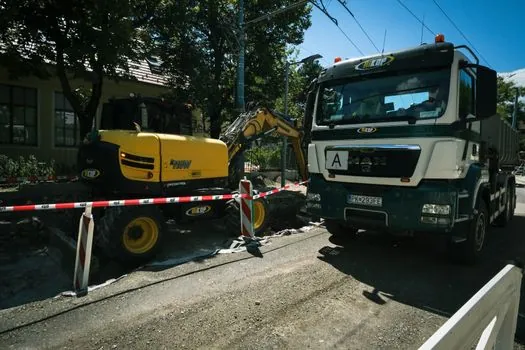
Mini excavators in the 6,000–10,000 lb (2,722–4,536 kg) band, such as the John Deere 35 P-Tier at 7,760–8,715 lb, normally ship at 5–7 ft (1.52–2.13 m) wide and 7–9 ft (2.13–2.74 m) tall on the trailer, fitting a step-deck or flatbed under the federal envelope with no oversize permit on most routes [S1].
Mid-size excavators in the 25,000–80,000 lb (11,340–36,287 kg) band typically run 8 ft 6 in to 10 ft 6 in (2.59–3.20 m) wide and 9 ft 6 in to 11 ft (2.90–3.35 m) tall on a lowboy deck, so width and height permits fire on almost every interstate move even when the gross-vehicle-weight check passes [S1][S4].
Large crawler excavators above 100,000 lb (45,359 kg) routinely hit 10–12 ft (3.05–3.66 m) shipping widths and 11–13 ft (3.35–3.96 m) loaded heights, pushing width into super-load territory above 12 ft and forcing axle-count engineering to keep per-axle weight under each state's bridge-formula limit [S1][S7]. Long-reach variants add 10–20 ft (3.05–6.10 m) of boom-overhang length and routinely run 90,000–130,000 lb (40,823–58,967 kg) shipping weight, with operators pinning the boom to the side of the stick to keep total loaded height under 13 ft 6 in [S6].
Permit, Pilot Car, and Time-of-Travel Rules by Width
Loads between 8 ft 6 in and 10 ft (2.59–3.05 m) wide generally take a single-state oversize permit with no escort, while loads 10 ft to 12 ft (3.05–3.66 m) wide add a front escort on two-lane roads and a rear escort on divided highways in most states; above 12 ft (3.66 m) the load is flagged as super-load and route surveys, bridge clearances, and sometimes police escorts are mandatory [S7].
State processing windows for a single oversize permit range from same-day issuance in permissive states to 10+ business days in tightly managed corridors, which is why multi-state routes are usually planned as a permit batch, not a sequential pull, and the carrier's permit team needs make, model, axle count, and exact shipping dimensions before booking the truck [S1][S3].
Travel-time curfews layer on top of the permit: most states prohibit oversize moves on state holidays, during peak commuter windows, or after dark when no escorts are running, and a Cat 395-class move at 11 ft 1 in wide and 10 ft 11 in tall is usually restricted to daylight, off-peak hours, with a lead pilot car on any two-lane segment of the route [S4][S9].
Pre-Load Preparation That Changes the Envelope
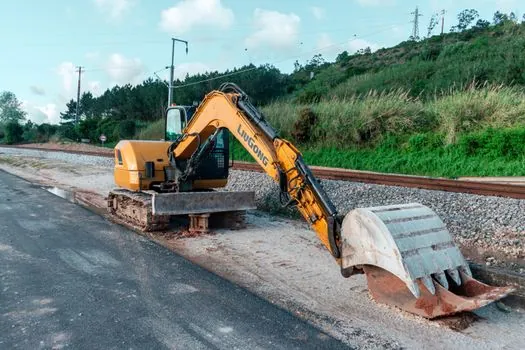
Lowering the boom against the stick, removing the bucket, and pinning the stick to the deck are the three moves that shrink the shipping envelope by 1–3 ft (0.30–0.91 m) of height and 6–18 in (0.15–0.46 m) of overhang length, which can drop the configuration from super-load to standard oversize in a single revision [S1][S5].
Removing the bucket alone shaves 400–2,000 lb (181–907 kg) of weight off the bill of lading and typically 1–2 ft (0.30–0.61 m) of forward overhang, which keeps the load inside standard 53 ft (16.15 m) trailer-length limits and avoids the length-permit tier that fires above 53 ft on most trailers [S3][S9]. The Cat 395 route-approval example is explicit: a quote drawn with the bucket removed and then shipped with the bucket still attached invalidates the permit envelope and forces a re-route, with the load held at the origin yard until new permits clear [S9].
Tie-down count and chain working-load-limit (WLL) scale with the machine: a 10,000 lb mini takes four point-rated chains at roughly 5,000 lb WLL each, while a 200,000 lb (90,718 kg) large crawler takes six to eight heavy-duty chains at 15,000 lb (6,804 kg) WLL or higher, with binders torqued so the machine cannot shift laterally, forward, or rearward under braking [S1][S2][S5].
Failure Modes and Common Sizing Mistakes
Underestimating shipping height is the single most expensive pre-load error: the operator measures the cab or counterweight height instead of the boom-folded envelope, the carrier books a flatbed, and the loaded rig arrives at the first overpass unable to clear 13 ft 6 in, with permits voided on the spot and the load impounded at a staging area [S1][S8].
Quoting on operating weight instead of shipping weight is the second classic mistake: operating weight includes fluids, a half-full fuel tank, and an operator, while shipping weight is dry, with the bucket and stick pinned or removed, and the difference can push a 79,000 lb (35,834 kg) quote into a 95,000 lb (43,091 kg) axle-distribution re-permit on a mid-size unit [S1][S8].
Skipping the route survey on a super-load is the third: a 12 ft (3.66 m) wide shipment on a rural two-lane state route with lane widths of 10 ft (3.05 m) cannot physically pass the opposing lane, so the state permit is issued, the pilot cars are dispatched, and the load physically cannot move without a route re-survey and a detour that adds 80–200 mi (129–322 km) to the haul [S7][S9].
Trackable Signals Worth Watching
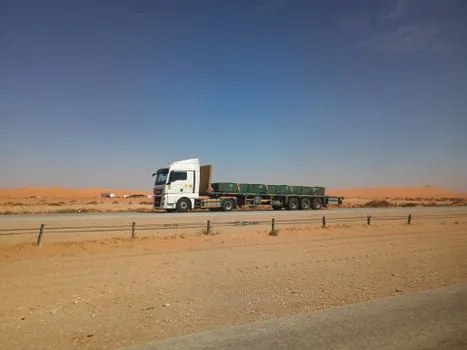
Two near-term signals are worth tracking on this question: (1) any state DOT notice revising the 8 ft 6 in width cap or the 13 ft 6 in height cap, since both have been stable at the federal level but a single state's pull-out cascades into multi-state re-permitting, and (2) OEM-published shipping envelopes for next-generation large crawlers, since shipping widths above 12 ft (3.66 m) on Cat 395-class machines keep pushing more moves into super-load tiers and changing the axle-count engineering on the trailer side. For related context on operating weight and bucket capacity as inputs to this shipping calculation, the excavator ground-pressure spec map carries the matching weight and track-width numbers used in axle-distribution planning. [S2]
Spec-level background on the components involved: excavator, height gauge, and road roller.