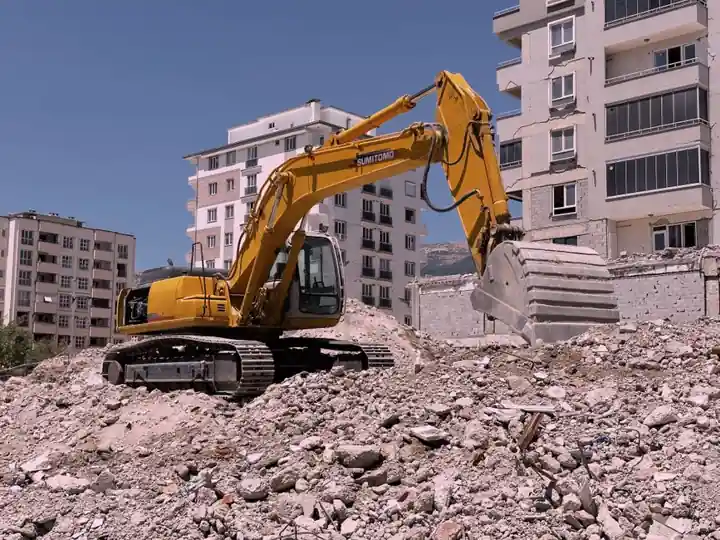
Mini, midi, and standard excavators are separated primarily by operating weight, with mini class defined at roughly 1–6 metric tons, midi at 7–10 t, and full-size standard crawler units starting around 12 t and running past 45 t [S1][S5]. The class boundary is not standardized: forum practitioners place the largest mini at 6 t and the smallest "full size" Cat at the 120/130 class (about 12–13 t), leaving the 7–10 t band as midi [S3]. Across major OEMs (Cat, Komatsu, Hitachi, Kubota, Volvo, John Deere, Bobcat, Takeuchi), spec deltas inside a class can be larger than the deltas across class boundaries on a single spec axis [S1].
Operating weight is measured with full fuel, hydraulic oil, and a standard bucket fitted, so a quoted 6.5 t "mini" is rarely the lightest configuration the brochure shows [S2]. The narrowest definition used in current market guides treats anything below 7 t as a mini, 7–45 t as standard crawler, and over 45 t as large mining-class [S5]. For procurement, the practical axes are: gate width, dig depth, breakout force, engine power, and whether the unit still hauls on a tag trailer.
Weight, Width, and Transport Class Boundaries
Mini excavator operating weights in the current market span 2,000–22,000 lb (roughly 1–10 t), but the "small mini" sub-band sits at 2,000–10,000 lb and the "medium mini" at 10,000–18,000 lb, with anything above 18,000 lb classed as a large mini or compact [S4]. True 1-ton micro machines retract to 28–32 in width, letting them pass through a standard 36-inch residential gate; 2-ton units sit at 39–45 in retracted width [S2].
Midi excavators in the 5–10 t Australian market reference sit at 40–70 hp, 4–5.5 m arm reach, and 40–55 kN bucket breakout force, and they require float transport plus a 1.8–2.2 m wide trailer lane [S7]. Standard crawler units at 20–45 t jump to 100+ m³/hr bucket productivity, but a 20 t class Cat still has to be floated in nearly every jurisdiction; only wheeled excavators can drive-on/drive-off between adjacent sites [S5][S1].
Dig Depth and Reach Across Classes
Dig depth tracks weight class but with wide intra-class scatter: 1-ton micros dig 5–6 ft, 2-ton units reach 7–8 ft, 3-ton minis hit 9–10 ft, 4-ton minis 10–12 ft, and 5–6 ton compact minis push 12–14 ft [S2]. Midi class machines in the 7–10 t band deliver 14–18 ft of dig depth with enough swing power to handle concrete chunks, cast iron pipe, and large root balls [S1].
For anything beyond roughly 12 ft of dig depth the next class up becomes mandatory, because mini lift capacity at full reach with a thumb attachment drops off fast [S1]. A standard 20 t class Cat 320-class machine typically posts 20–22 ft dig depth and 30+ ft reach, but a Komatsu PC300 in the same class can run a foot or more of additional depth depending on boom and stick configuration [S1]. When matching a machine to a foundation or sewer-lateral spec, check the OEM data sheet for the exact boom/stick combination, not the class average.
Engine Power, Hydraulics, and Breakout Force
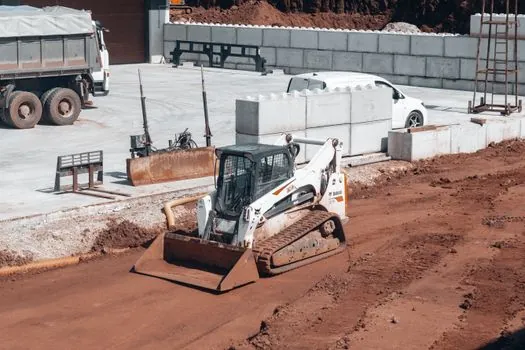
Engine power roughly tracks operating weight: the Bobcat E10 (2,593 lb) ships at 10.2 hp, the E19 at 14.8 hp, the E26 at 24.8 hp, and the E38 at 33 hp, all conventional diesel [S4]. Midi 7–10 t units run 40–70 hp depending on configuration [S7]. Standard 20 t class machines are typically 120–160 hp; 30 t class climbs to 200+ hp; 45 t class passes 300 hp [S1].
Bucket breakout force is the right metric for production digging in compacted soil or fractured rock. Midi-class breakout sits at 40–55 kN per the Australian market reference, while a 20 t standard class typically posts 130–170 kN [S7]. For a deeper look at how bucket breakout compares against arm crowd force on the same machine, the side-by-side spec breakdown in Excavator bucket breakout vs arm crowd force: spec-by-spec comparison is worth scanning before specifying a thumb or tilt bucket.
Mini, Midi, Standard: Decision Criteria Side-by-Side
Four criteria cleanly separate the three classes for typical North American and EU jobsite procurement: operating weight, dig depth, transport mode, and target application. The table below consolidates the 2026-vintage market guidance [S1][S2][S5][S7].
Mini (1–6 t) fits through a 36-inch gate, digs 5–14 ft, and hauls on a standard 7,000–14,000 lb GVWR tag trailer behind a 3/4-ton pickup; it is the right tool for residential utilities, landscaping, pool digs, and indoor demolition. Midi (7–10 t) needs float transport, digs 14–18 ft, and runs 40–70 hp; it is the right tool for commercial utility work, small foundations, parking lot demo, and mid-depth trenching. Standard crawler (12–45 t) needs a lowboy, digs 18–30+ ft, runs 120–300+ hp, and is the only practical option for road building, deep utility, quarry loading, and structural excavation. Across all three, wider/heavier iron costs more to mobilize: a standard 20 t move can run 4–8x the transport cost of a midi, so a 7–10 t midi is often the cheapest productive class for commercial work that does not need full-size swing power [S1][S7].
Use Cases and Job-Matching Rules
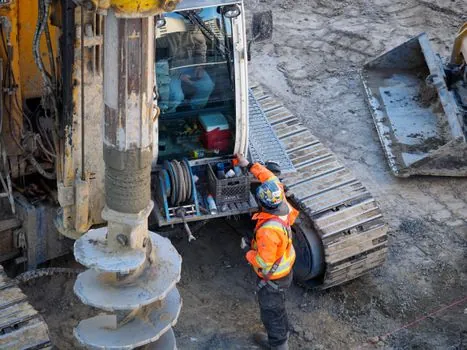
Use a 1–2 t micro when access defines the job: backyard sewer laterals through 34-inch gates, interior basement digs, greenhouse trenching, and cemetery work [S2]. A plumbing contractor running a 1.7-ton micro for residential sewer replacement can hit 4-ft trench depth, fit through 34-inch gates, and cover roughly 60% of urban service calls without mobilizing larger iron [S2].
Use a 3–6 t mini for general residential and light commercial work: the field guide estimates 3–6 t minis cover about 80% of residential and light commercial work by job count, because they balance trailer legality, dig depth, and bucket size [S2]. Use a 7–10 t midi the moment a job outgrows the mini on breakout force but does not justify float-moving a 20 t standard, which is the typical commercial utility, small foundation, and parking lot demo band [S1][S7].
For broader spec-chart context across operating weight, bucket capacity, and dig depth in a single view, the Excavator Spec Chart: Operating Weight, Bucket Capacity, Dig Depth reference consolidates the class bands. If lift capacity at radius matters more than raw dig depth (pipe laying, manhole setting, curb work), the Excavator Operating Weight vs Lifting Capacity: How Mass Translates to Rated Lift breakdown maps mass to rated load charts more directly.
Limitations, Failure Modes, and Sourcing Caveats
There is no industry consensus on class boundaries; OEM marketing, rental fleet labels, and operator forums all slice the tonnage bands differently, and the same 8 t machine can be sold as a "large mini" by one dealer and a "midi" by another [S3]. A 6-ton machine is the largest most operators call a mini, the 7–10 t band is universally accepted as midi, and 12–13 t (Cat 120/130 class) is the smallest generally labelled "full size" [S3].
The other common failure mode is buying on class label instead of transport reality. A 9 t midi still requires float transport and a 1.8–2.2 m lane, which kills the savings if the access road or bridge posting cannot take the load [S7]. A second common mistake is matching a mini to a job that needs 12+ ft of dig depth with a thumb attached; lift capacity at full reach drops sharply and the operator spends the day repositioning the machine [S1]. Finally, when spec'ing from a single data sheet, verify whether tailswing is zero, minimal, or conventional: a zero-tailswing E20 (4,306 lb, 54 in width) [S4] is a fundamentally different machine from a conventional-tailswing E19 (4,147 lb, 38.6 in width) even though both sit in the same nominal tonnage band [S4].
Spec-level background on the components involved: excavator, construction machinery and equipment, and lamps and light fittings.