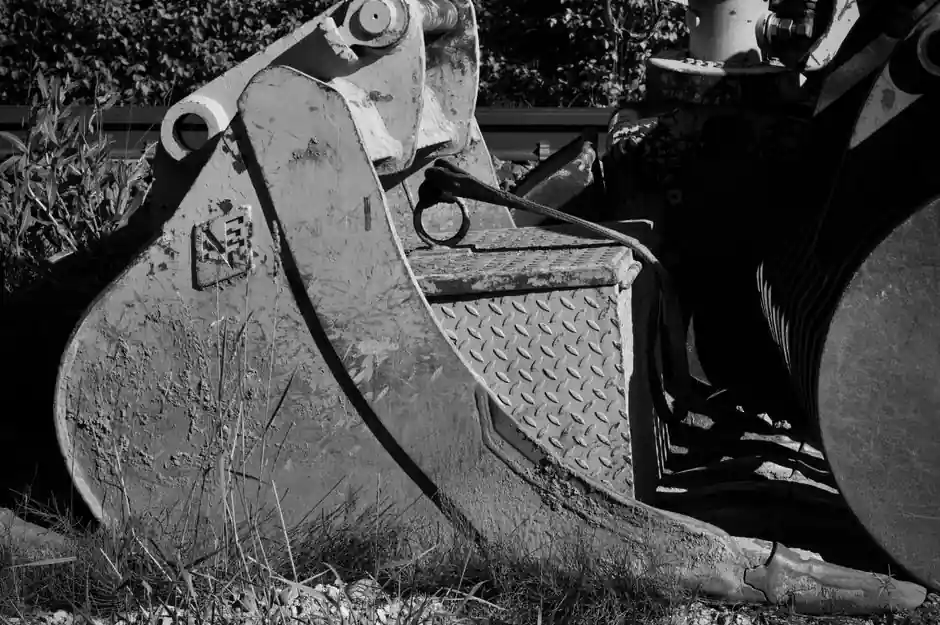
Bucket capacity and dig depth scale with operating weight in a predictable way: a 1–2 t mini excavator typically pairs a 0.02–0.05 yd³ bucket with 5–8 ft of dig depth, while a 30–70 klb mid-size machine handles 0.5–1.75 yd³ buckets at 19–24 ft of dig depth [S1][S3].
For buyers and rental coordinators, the practical decision is rarely the single number on a brochure; it is the cross-check between bucket breakout force, dig depth, dump height, and tailswing profile, because an undersized bucket on a long-reach boom destroys cycle time, and an oversized bucket on a compact chassis stalls the hydraulics [S4][S6].
How size classes set the bucket-and-depth envelope
Compact machines in the 1–10 t band cover the widest spread of bucket options, with digging depths running from roughly 5 ft on entry-level units to more than 15 ft on the largest compact models, and standard digging buckets generally weighing between 100 and 500 lb depending on size and capacity [S2][S3].
Standard mid-size excavators, 30,000–70,000 lb operating weight, deliver 19–24 ft of maximum dig depth and lift the workload into utility trenching, commercial site prep, and grading, which is the working envelope most rental fleets target for general contracting [S3].
Large excavators start around 80,000 lb and exceed 200,000 lb at the top end, where the bucket and boom geometry shifts toward mass-excavation duty cycles and the comparison metric changes from reach to hourly production [S3][S4].
Four-axis comparison: what to line up on a spec sheet
Stack any two candidates on four axes before you read the brochure copy: operating weight, maximum dig depth, bucket capacity range, and bucket digging force in lbf or kN, because the depth number alone tells you almost nothing about whether the machine can actually pull its rated bucket through the soil class on site [S4][S6].
On John Deere's P-Tier compact line, the 35 P-Tier hits 10 ft to 11 ft 4 in of dig depth with 6,085 lbf of bucket digging force at 7,760–8,135 lb, while the 50 P-Tier stretches to 11 ft 7 in to 12 ft 7 in of dig depth with 8,267 lbf of breakout at 10,560–10,847 lb, a clean illustration of the depth-to-force ratio a fleet should expect as it moves up a class [S5].
Kubota's KX057-5 at roughly 5.5 t pairs a 47.6 hp Tier 4 Final/Stage V engine with a longer boom geometry, while the K008-5 at 2,315 lb pairs a 10.1 hp engine with only 5 ft 8 in of dig depth and 2,205 lbf of bucket force, which is the floor of the compact category and useful as a lower-bound reference point [S5].
Bucket capacity is not a free choice
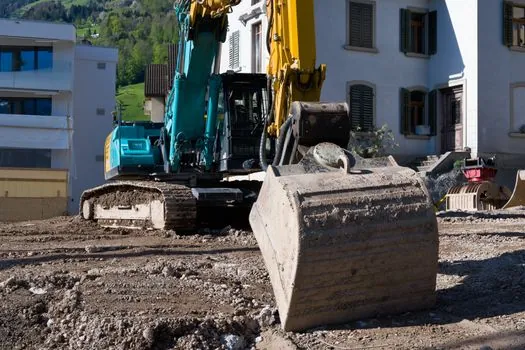
Heaped bucket capacity is published in cubic yards or liters, but OEM bucket charts are tied to material density assumptions, so a "1.0 yd³" bucket on a 20-ton machine is rated for general soil and will underperform on ripped rock or wet clay unless the supplier re-rates the stick and boom [S1][S4].
Bucket digging force, expressed in lbf or kN, drives penetration in compacted or rocky ground, and a higher breakout figure on a heavier class machine is what lets the same bucket rating translate into actual production on a hard dig [S4][S5].
Compact machines often ship with a mechanical quick coupler and auxiliary hydraulics so the same chassis can run trenching buckets, grading buckets, and augers, which means the "bucket capacity" you compare on a chart is really the standard digging bucket and your working bucket may be a size down [S5].
Dig depth alone misleads; pair it with dump height and tailswing
Two machines with identical dig depth can have very different real-world utility if dump height is below the truck sidewall or if tailswing exceeds the lane width, so any side-by-side should include dump height and a tailswing classification of zero, minimal, or conventional [S3][S4].
CAT's compact class starts around 13 hp at the low end with dig depths just beyond 5 ft, and the upper compact models approach 70 net hp with dig depths over 15 ft, but both ends advertise reduced or zero tailswing for confined access, which is a separate selection axis from raw depth [S3].
On Bobcat's mini line, the E10e electric at 2,648 lb digs 6 ft 5 in with zero tailswing for indoor work, while the E88 at the top of the mini catalog pushes past 19,000 lb, and the comparison only makes sense once you also fix the jobsite's width constraint and ventilation requirement [S2].
Who this comparison is for, and who it is not
This four-axis comparison is for rental coordinators, small-fleet owners, and project engineers who already know the trench depth and truck height they need and want a structured way to down-select 3–4 candidate models from a catalog of dozens [S1][S7].
It is less useful for production miners, demolition contractors running above 100,000 lb machines, and operators matching a machine to a specific long-term fleet utilization profile, where hourly fuel burn, maintenance intervals, and telematics integration dominate the decision over bucket-and-depth alone [S3][S6].
Selection criteria in priority order
Rank your jobsite constraints first, then the machine: 1) minimum dig depth plus a margin, 2) dump height against truck sidewall, 3) operating weight against ground bearing pressure and trailer capacity, 4) bucket digging force against the hardest material class on site, 5) bucket capacity as a productivity check, not a starting point [S4][S6][S7].
Counterweight, lift capacity at full reach, and engine power are real spec lines but they are second-order decisions once the depth, dump, weight, and breakout envelope is fixed, because a machine that cannot reach your trench or dump into your truck is useless regardless of its lift chart [S7].
Limits, failure modes, and sourcing caveats
Published dig depth is measured with the standard arm and no bucket, so real-world depth on a heavy bucket can drop by 6–12 in depending on the machine, and that delta is not always on the data sheet [S1][S4].
Bucket capacity ratings shift by heaped vs. struck, by ISO vs. SAE filling assumption, and by tooth configuration, so two vendors quoting the same yd³ figure may not be quoting the same payload in pounds per cycle [S4].
Spec pages from rental marketplaces and OEM portals are the most current cross-brand source, but always re-verify the figure against the manufacturer data sheet for the exact model year, because P-Tier, G-Series, and equivalent next-generation designations can change dig depth and breakout by a few percent within the same operating weight class [S3][S5].
For an overview of how excavators sit inside the broader equipment taxonomy, the construction machinery and equipment reference collects the related categories, and the excavator page consolidates the core terminology used in the comparison above.
For a related cross-spec selection workflow, see the spec-by-spec breakdown of smart vs analog pneumatic positioners, which applies a similar four-axis method to instrumentation, and the general purpose vs definite purpose AC motor selection guide for an analogous frame-size comparison in rotating equipment.
The underlying component specifications are covered under bucket elevator.