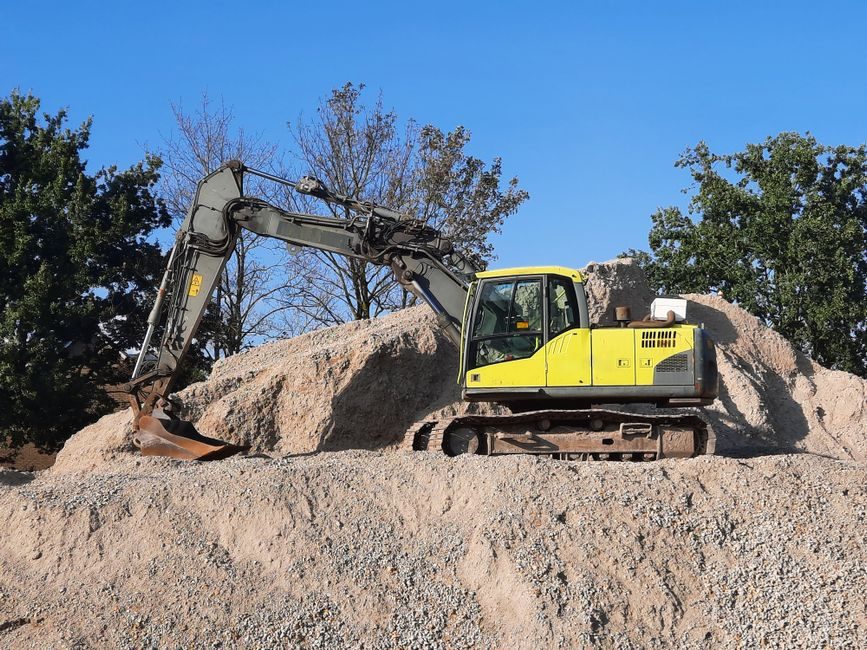
Excavator selection in 2026 is a class-and-tonnage-driven decision for any excavator buyer: operating weight, bucket capacity, engine power and emission tier set the primary gate, with reach, tail swing and undercarriage as secondary filters that determine job fit and total cost of ownership.
The market remains segmented into compact (under 6 metric tonnes), midi (6–20 t), large (20–40 t) and mining-class (40 t+) machines, and the 2026 pricing band across new units spans roughly USD 35,000 for a 1.5–2 t mini excavator up to USD 750,000+ for a 50 t class machine, with EPA Tier 4 Final and EU Stage V engines now standard on every tier sold into regulated markets [S1].
Operating Weight Class and Bucket Capacity as the First Gate
Operating weight and bucket capacity are coupled: a 1.5–2 t mini excavator typically carries a 0.04–0.08 m³ bucket, a 6 t midi machine lifts 0.15–0.25 m³, a 20 t class excavator works with 0.8–1.2 m³, and a 50 t mining machine pairs with 2.5–3.5 m³ rock buckets, with ISO 7451 governing the rated heap capacity declaration on OEM specification sheets [S1].
Buyers should match the bucket to material density rather than to nameplate maximum: 1.8 t/m³ for loose soil, 1.5 t/m³ for sand-gravel mix, and 2.4–2.6 t/m³ for blasted rock, because oversizing a bucket to chase cycle-time gains typically overloads the swing bearing and shortens boom-pivot bushing life well before the engine hours rating is reached. The compact end of the market overlaps with the 1–2 t class covered in the backhoe loader selection 5 spec gates for 2026 buyers guide, where the comparison is intentionally drawn on capacity, not on machine type.
Engine Power, Emission Tier and Hydraulic Flow
Diesel power in the 2026 spec window scales roughly linearly with class: a 2 t mini draws 11–15 kW, a 6 t midi runs 30–40 kW, a 20 t large machine delivers 110–130 kW, and a 50 t class excavator uses 270–320 kW at the flywheel, with EU Stage V and EPA Tier 4 Final aftertreatment (DPF + SCR + DEF) mandatory for any unit delivered into Europe, North America, Japan or Korea [S1].
Hydraulic pump flow, cross-checked against a bench flow meter at commissioning, is the second number to verify on the data plate: 30–50 L/min for a mini, 100–160 L/min for a midi, 220–300 L/min for a 20 t class, and 500–700 L/min for a 50 t unit, and the figure should be checked against the planned attachment because a hydraulic breaker at 1,500–2,200 blows/min typically needs 60–120 L/min while a rotating grapple or shears wants 80–200 L/min at 200–280 bar. A 2025 industry survey of construction-fleet buyers flagged that specifying engine power without the matching hydraulic curve is the single most common cause of attachment under-performance on delivered machines.
Working Range: Max Dig Depth, Reach and Lift Capacity
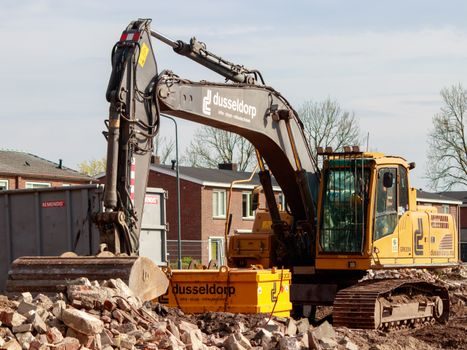
Working range separates machines of the same class: a 20 t excavator with 6.5 m max dig depth and 9.8 m ground-level reach is fundamentally different from a 20 t unit spec'd at 7.3 m depth and 10.7 m reach, and the latter typically carries a 1.0 m³ bucket where the former holds 1.2 m³ because the longer boom trades lift envelope for crowd force [S1].
Lift capacity at full reach over the side, per ISO 10567, should be reviewed at the actual planned load radius: a 20 t class machine usually lifts 4,000–5,500 kg at 6 m radius but only 2,200–3,000 kg at full reach, so any pipeline, manhole or timber-handling duty should be checked against the radius-specific load chart rather than the headline number. Buyers comparing an excavator to a backhoe on digging depth typically see the dedicated excavator win by 1.0–2.0 m at the same operating weight, which is one of the spec gates covered in the backhoe loader price and cost guide 2026 reference page.
Tail Swing, Undercarriage and Transportability
Tail swing radius is the gate that decides whether a machine fits the site: conventional tail-swing 20 t excavators swing 2.5–2.9 m over the rear, reduced-tail-swing (RTS) machines drop that to 1.4–1.8 m, and zero-tail-swing (ZTS) units stay inside the undercarriage footprint, a 0.5–1.5 m working envelope gain that matters on every urban or roadside job [S1].
Undercarriage choices — steel track, rubber track, or dozer-blade integrated — change ground pressure from roughly 30 kPa for a wide 400 mm rubber track on a 6 t midi up to 90–110 kPa for a 600 mm steel track on a 20 t machine, with the wider 700–900 mm track option on the 20 t class cutting that to 45–55 kPa for soft-soil sites. Transport weight is the binding constraint: most road regulations cap lowboy loads at 36–44 t gross, so a 20–22 t excavator usually travels on a single-axle lowboy while a 30 t+ machine needs a tri-axle and may need a dismantle-and-reassemble plan at the job site. The trade between a wheel loader and an excavator on stockpile reach is detailed in the wheel loader selection criteria reference.
Comparison Table: Class, Weight, Bucket, Power, Application
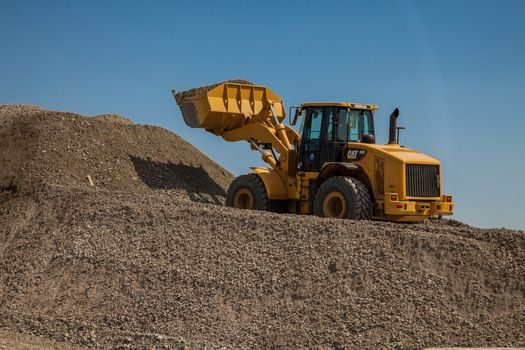
Four main classes line up against four buyer gates: operating weight, bucket capacity, flywheel power, and primary application [S1].
Compact (1–5.9 t, 0.02–0.15 m³, 8–35 kW) is set up for landscaping, utility trenching and indoor demolition, with trailer-portable transport under 4.5 t axle load. Midi (6–19.9 t, 0.16–0.6 m³, 40–95 kW) covers residential foundations, road shoulder work and pipeline spreads. Large (20–40 t, 0.8–1.8 m³, 110–230 kW) handles bulk earthmoving, quarry load-out and mid-scale demolition. Mining (40 t+, 2.0–4.5 m³, 250–400 kW) is dedicated to truck-loading at 4–6 passes per 90 t haul truck, with cycle times of 28–35 s. Pricing tracks the same band: roughly USD 35,000–80,000 for compact, USD 100,000–220,000 for midi, USD 230,000–520,000 for large, and USD 600,000–1,200,000 for mining class [S1].
Total Cost of Ownership: Fuel, Service Intervals and Resale
Fuel consumption on a 20 t excavator running at 60% load factor runs 10–14 L/h, dropping to 7–9 L/h for a 6 t midi and rising to 30–40 L/h for a 50 t mining unit, which over a 2,000 h annual utilisation gives a fuel line of USD 28,000–40,000 for the 20 t class at 2026 European retail diesel prices [S1].
Service intervals now published by major OEMs sit at 500 h for engine oil, 1,000 h for hydraulic oil (with a 2,000 h extension available on some Tier 4 Final platforms), and 5,000 h for the swing-bearing grease, and the 12–15% fuel-consumption gap between an older Stage IIIA machine and a current Stage V unit at the same job usually pays back the emission-tier premium inside 3,000–4,000 operating hours. Resale is class-sensitive: 5–8-year-old 20 t excavators with documented service records typically retain 45–55% of original list, while compact machines at the same age drop to 30–40% because of higher cosmetic wear. For a deeper dive into the cost band across tonnage, the excavator 2026 price and cost guide covers the class-by-class price spread.
Limitations and Common Specification Errors
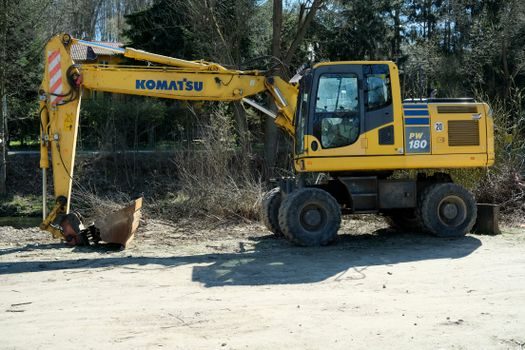
Two selection errors show up in most rejected-spec post-mortems: oversizing the bucket for the boom geometry (which loads the swing bearing and cuts machine life by 20–30%), and underspec'ing the hydraulic flow, the figure a cab pressure sensor will be asked to read on day one, for an attachment that will run 60% of the working hours (breaker, compactor, or rotating shear) [S1].
A 20 t excavator is also the wrong machine for a job that needs 1,200 mm trench width at 4 m depth inside a finished-floor building: a compact 3–5 t excavator with a 300–500 mm bucket gets inside the door, drives on the slab without breaking it, and finishes the dig in the same shift. A 50 t mining class excavator on a 500 m road-building job is the opposite mistake: transport and mobilisation swallow the budget, and a 20 t large class with a 1.2 m³ bucket will out-produce it on that scope. Match the class to the job, then verify the radius-specific load chart and the hydraulic flow curve before the purchase order is cut. Cross-check on adjacent earthmoving kit in the motor grader vs bulldozer 2026 spec cut reference, which lines the same gates up for the dozer and grader families used on the same sites.
Track these two nodes in the next 90 days: the EU Stage VI regulatory draft (non-road mobile machinery, expected to align emission limits more tightly with Stage V above 560 kW) and the 2026 OEM price-list refresh in Q3, which historically moves compact and midi list prices by 3–6% on Tier 4 Final carry-over inventory.